

Three jobs in four years. A six-month role that did not work out. A string of contracts that each ended on schedule. If your work history looks like this, you may worry that recruiters will see you as unreliable. The good news is that you can explain job hopping on your resume in a way that shows a clear story, real skills and solid reasons, instead of a pattern of quitting.
This guide is about frequent moves and short stints, not time out of work. If your concern is a gap between jobs, see our guide on explaining employment gaps instead.
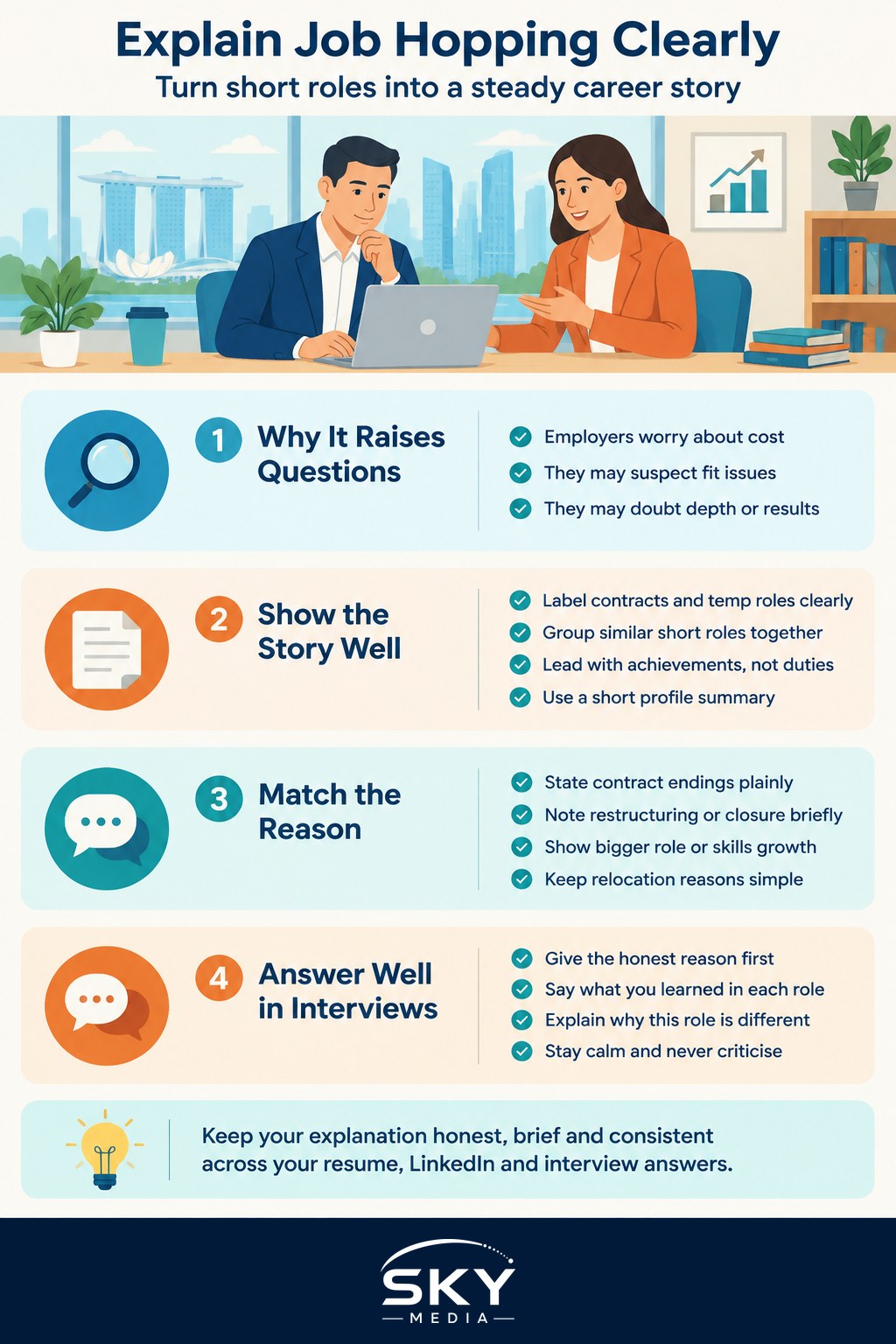
Why Employers Worry About Job Hopping
Understanding the concern helps you answer it. Hiring managers usually have three fears when they see many short roles:
- Cost. Recruiting and training a new hire takes time and money. They worry you will leave before they see a return.
- Fit or performance problems. Short stints can suggest you were let go, or that you clash with managers.
- Lack of depth. If you never stayed long, they may doubt you finished projects or built real expertise.
Your resume and interview answers should address each of these directly: show that moves were for good reasons, that you delivered results in each role, and that you are now looking to stay and grow.
It also helps to know that not all short roles look the same. Contract and project roles are normal in many industries, early-career moves are common, and restructuring or company closures are outside your control. The aim is to make those reasons visible.
How to Present Short Stints on the Page
Label contract and temporary roles clearly
Many “job hops” are actually fixed-term contracts, internships, or agency placements. If you do not label them, a recruiter scanning quickly will assume you left early. Add a short tag next to the job title:
- “Marketing Executive (12-month contract)”
- “Data Analyst (project role, ended on completion)”
- “Admin Assistant (temp via agency)”
Group related roles together
If you did several short assignments of the same type, combine them under one heading. For example, “Freelance Graphic Designer, 2023 to 2025” with bullet points for key clients and projects reads far better than five separate entries of four months each. The same works for several placements through one recruitment agency.
Lead with achievements, not duties
Short tenures are less worrying when every role shows a concrete result. Use numbers where you honestly can: time saved, sales handled, processes improved, customers served. Our guide on how to quantify achievements on your resume shows how to do this even for junior roles.
Use a summary to tell the story
A two to three line profile at the top can frame the whole history. For example: “Operations professional with experience across logistics, retail and e-commerce, built through a series of contract and growth-stage roles. Now looking for a long-term position to lead process improvement.” This tells the reader the moves were a path, not random.
Consider what to leave out
You do not always need every role on your resume. A very short job that is unrelated to your current direction may be left off, as long as you never misrepresent dates or lie if asked directly. Be careful and consistent, because background checks and application forms may ask for a full history. Honesty matters more than a tidy page.
Matching the Explanation to the Reason
Different reasons call for different framing. This table gives a quick guide.
| Reason for the move | How to show it on the resume | What to say if asked |
|---|---|---|
| Fixed-term contract ended | Label as “contract” with the duration | “It was a 12-month contract and I completed it.” |
| Company restructured or closed | Add a short note such as “role ended due to restructuring” | Briefly state the fact, then focus on what you achieved |
| Moved for a bigger role or skills | Show the step up in title or scope | “I took a role with more responsibility in X.” |
| Poor fit, left early | Keep the entry brief, focus on any result | Stay neutral, explain what you learned about the right fit |
| Relocation or family reasons | No note needed on the resume | Mention briefly, confirm you are settled now |
Answering the Question in an Interview
Expect the question “Why have you moved around so much?” Prepare a short answer, around 30 to 60 seconds, with three parts:
- The honest reason, briefly. “My first two roles were contracts, and the third company closed its Singapore office.”
- What you gained. “Across them I learned to get up to speed quickly and worked with three different systems, which is why I can start contributing fast.”
- Why this role is different. “I am now looking for a place where I can stay and grow, and this team’s focus on X is exactly what I want to build on.”
Some tips for delivery:
- Never criticise past employers or managers. Even when a role ended badly, a calm and neutral tone signals maturity.
- Do not over-explain. A long, defensive answer can create more doubt than the history itself.
- Back up the commitment. Show you researched the company and can talk about where you see yourself in two to three years there.
- Be consistent. Your answer should match what is on your resume and LinkedIn profile.
Making Your Next Move Count
If you are early in your career and worried about the pattern, a few habits help:
- Check fit before you accept. Ask about the team, the manager’s style, expected hours and how success is measured. Many short stints come from accepting a role too fast.
- Look at contract terms. If a role is a contract, know the duration and whether conversion to permanent is possible.
- Aim for one longer stay. Even one role of two years or more can change how recruiters read the rest of your history.
- Tailor every application. Highlight the roles most relevant to each job. Our guide on tailoring your resume for each job explains how.
Job hopping is not automatically a red flag, especially for young adults finding their direction. What employers really want to know is whether you will deliver and whether you will stay. A well-labelled resume, achievements in every role, and a clear, positive explanation answer both questions.
Frequently Asked Questions
Is it okay to leave a very short job off my resume? Sometimes. A very short job unrelated to your current direction can be left off, as long as you never misrepresent dates or lie if asked directly. Be careful, because background checks and application forms may ask for a full history. Honesty matters more than a tidy page.
How do I list several short freelance or agency assignments? Group related assignments of the same type under one heading, such as Freelance Graphic Designer with a date range, and add bullets for key clients and projects. This reads far better than several entries of a few months each, and the same works for placements through one agency.
What should I say if I left a role because of poor fit? Stay neutral, keep the resume entry brief and focus on any result you delivered. In the interview, explain what you learned about the right fit and never criticise past employers or managers. A calm tone signals maturity.
Do I need to mention relocation or family reasons on my resume? No note is needed on the resume. If asked, mention it briefly and confirm you are settled now. Keep your answer consistent with your resume and LinkedIn profile, and avoid over-explaining, which can create more doubt than the history itself.
How can I stop the pattern from continuing with my next job? Check fit before you accept by asking about the team, the manager’s style, expected hours and how success is measured. If a role is a contract, know the duration and whether conversion to permanent is possible. One longer stay can change how recruiters read the rest.
Further reading: How to Explain Being Fired in a Job Interview · How to Write a Resume for Career Returners