

Oral health is a lifelong need, and that steady importance makes a dentistry career singapore path worth a close look if you enjoy science, precision work with your hands, and helping people directly. Dentistry is the branch of healthcare focused on the teeth, gums, and mouth, covering prevention, diagnosis, and treatment. It is a skilled, hands-on profession that blends clinical knowledge with fine manual dexterity and a strong dose of patient care. This guide gives you an honest view of the field, the roles around it, the skills that help, and the pathways in, including the important fact that it is a regulated profession.
What dentistry involves
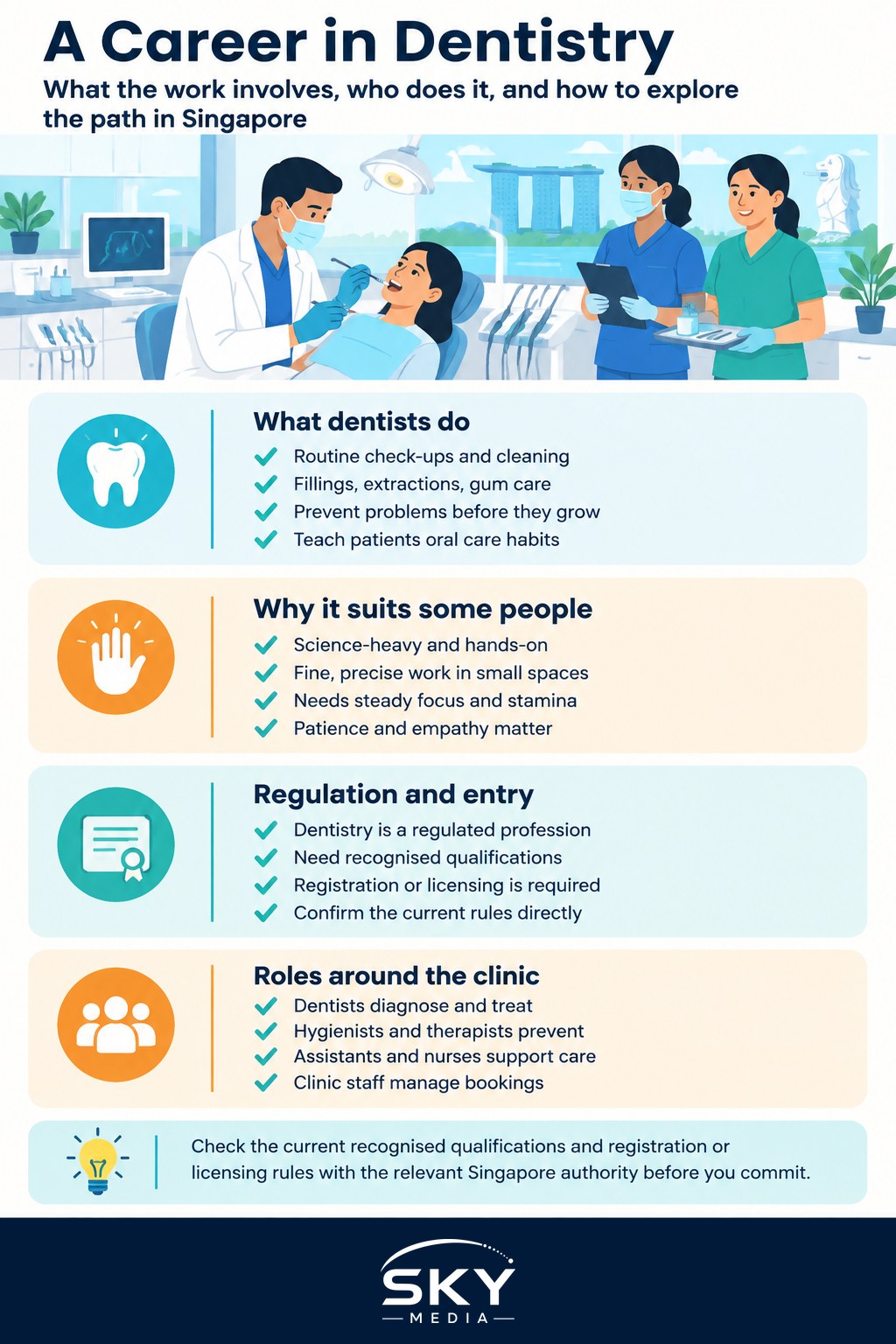
Day to day, dentistry ranges from routine check-ups and cleaning to fillings, extractions, treating gum disease, and more complex restorative or cosmetic work. Prevention is a large part of the job, since a lot of good dentistry is about stopping problems before they grow. Dentists also educate patients on how to care for their own oral health, which means communication is a real part of the work, not an afterthought.
The profession has areas of focus within it. Some practitioners work in general dentistry, while others move into specialised areas over time. It is honest to say the work is precise and physically demanding, often carried out in small spaces with fine instruments, and it requires steady concentration through the day. People who enjoy it tend to like detailed, tangible work and take satisfaction in seeing patients leave more comfortable than they arrived.
An important note: dentistry is regulated
Dentistry is a regulated profession in Singapore. Practising as a dentist requires the relevant recognised qualification and registration or licensing with the appropriate authority before you can work in the role. Because these requirements can change and involve specific conditions, you should always confirm the current rules directly with the responsible regulatory body rather than relying on general articles.
This guide deliberately does not list specific exams, licensing steps, timelines, or pass rates, because those details must come from the official source and can differ depending on where you trained. Treat registration and licensing as a real and non-optional part of the journey, and check exactly what applies to you, particularly if you studied or plan to study overseas.
Roles in and around oral health
Not everyone in a dental clinic is a dentist, and understanding the wider team is useful.
- Dentists diagnose and treat patients and hold the clinical and legal responsibility for care.
- Dental hygienists and therapists focus on preventive care and specific treatments within their scope.
- Dental assistants and nurses support the dentist during procedures and help care for patients.
- Clinic and practice staff manage reception, scheduling, and the running of the practice.
If you are drawn to the caring and clinical side but want to compare options, it helps to read about healthcare and nursing, which share the same patient-focused mindset. If the underlying science excites you most, biotech and pharma offers a different route into health-related work.
Skills and qualities that help
The academic path into dentistry is science-heavy, so a strong foundation in biology and chemistry matters. Beyond the science, fine manual dexterity and good hand-eye coordination are essential, since so much of the work is delicate and precise. Attention to detail and the stamina to concentrate for long stretches round out the technical side.
The human side is just as important. Many patients feel anxious about dental visits, so patience, empathy, and a reassuring manner make a real difference. Clear communication helps patients understand their options and costs, and it builds the trust that keeps them coming back.
How to explore the pathway
Because the qualification requirements are specific and regulated, your first move should be careful research rather than guesswork. Find out which qualifications are recognised, and confirm the current registration or licensing requirements with the appropriate Singapore authority. If you are still studying, focus on strong science results and look for ways to see the profession up close.
Real exposure helps you decide if the work suits you before you commit years to it. Seeking work experience or shadowing opportunities in a clinic, where allowed, gives you an honest feel for the environment. This is exactly the kind of work experience with no experience that both strengthens future applications and tests your genuine interest.
A realistic word on pay and outlook
Pay in dentistry varies by role, setting, seniority, and whether you are a dentist, a hygienist, or support staff, and it can also depend on whether someone works in public or private practice. Rather than relying on figures from forums, check a current salary guide from a reputable source and talk to people already in the field. Keep in mind too that training for the fully qualified role is long and demanding, so it is a significant commitment.
Demand for oral healthcare tends to be steady, supported by an ageing population and ongoing attention to health. At the same time, training places and roles are limited, so it remains a competitive and selective path that rewards real dedication and consistent effort.
Bringing it together
A dentistry career in Singapore can be rewarding for people who combine scientific ability with precise hands and genuine care for patients. Begin by recognising that this is a regulated profession, confirm the current qualification and registration requirements with the appropriate authority, and get real exposure to test your commitment. It is a demanding path, but for the right person, it offers skilled, stable, and meaningful work that helps people every single day.
Further reading: Exploring a Career in Veterinary Science in Singapore