
Search for a face laser in Singapore and you will find a confusing mix of names: pico, toning, fractional, resurfacing, Q-switched, CO2. Clinics often brand their packages differently, which makes it hard to tell whether two treatments are actually the same thing. This guide explains the main families of facial laser, what each is generally designed to target, and how they differ in intensity and recovery, so you can have a better-informed conversation with a doctor.
It is general information, not medical advice. Only a qualified doctor who examines your skin can tell you which treatment, if any, suits you.
How Facial Lasers Work in Plain Terms
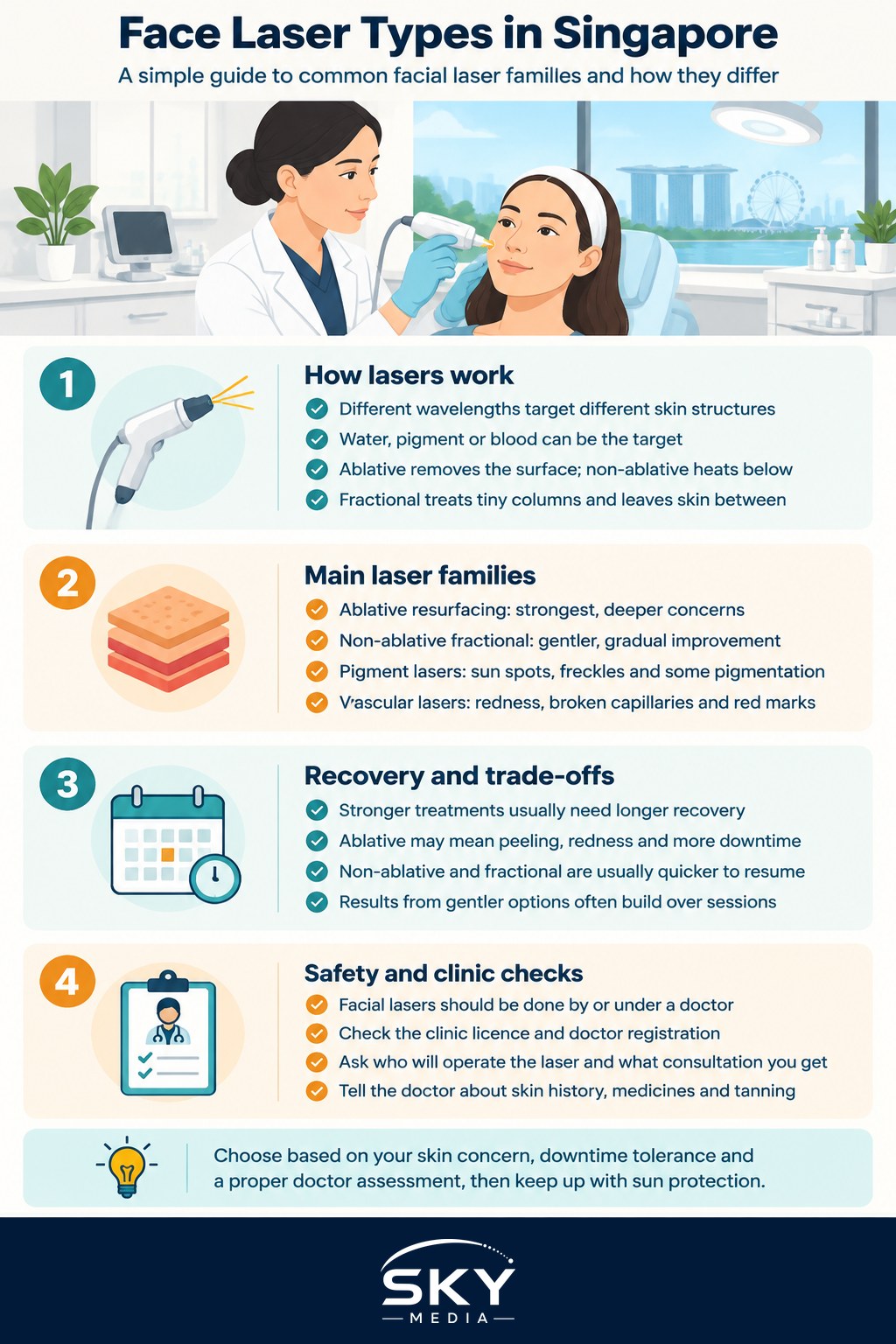
A laser sends light at a very specific wavelength. Different wavelengths are absorbed by different targets in the skin, such as water, pigment (melanin) or the red colour in blood vessels. When the target absorbs the energy, it heats up or breaks apart, and the skin’s healing response does the rest.
That is why there is no single “best” laser. The right tool depends on what you want to address:
- Texture, fine lines and scarring usually involve lasers that target water in the skin.
- Pigmentation such as sun spots and freckles usually involves lasers that target melanin.
- Redness and visible blood vessels usually involve lasers that target blood.
Two other terms come up constantly. Ablative lasers remove the thin outer layer of skin, while non-ablative lasers heat the tissue beneath without removing the surface. Fractional means the laser treats tiny columns of skin and leaves untouched skin in between, which helps healing.
The Main Types of Face Laser Compared
The table below groups common facial lasers by what they are generally used for. Names and devices vary by clinic, so ask which category a branded treatment belongs to.
| Laser family | Generally used for | Intensity | Typical recovery |
|---|---|---|---|
| Ablative resurfacing (e.g. CO2, Erbium) | Deeper lines, textured scarring, significant sun damage | Strongest | Longest, with peeling and redness that can last days or more |
| Non-ablative fractional | Mild texture, fine lines, enlarged pores, some scarring | Moderate | Short, often redness or mild swelling for a short period |
| Pigment lasers (e.g. Q-switched, picosecond) | Sun spots, freckles, some types of pigmentation | Varies with settings | Often minimal, though spots may darken before fading |
| Vascular lasers | Redness, broken capillaries, some red marks | Mild to moderate | Usually short, possible bruising with some settings |
| Low-energy “toning” lasers | Gradual brightening and uneven tone over several sessions | Gentle | Little to none in most cases |
A note on IPL (intense pulsed light): it is often offered alongside lasers, but it is not technically a laser, because it uses a broad spectrum of light rather than one wavelength.
Ablative Versus Non-Ablative: The Big Trade-Off
The clearest difference between facial lasers is how much downtime you are willing to accept in exchange for results.
Ablative resurfacing can produce more noticeable change in a single session for deeper concerns, but the skin needs time to heal. Expect a recovery period where you may want to stay home, along with strict aftercare and sun avoidance. It also carries a higher risk of side effects such as prolonged redness or changes in pigmentation, especially in darker skin tones.
Non-ablative and fractional treatments are gentler, so most people return to normal routines quickly. The trade-off is that results tend to build gradually over a course of sessions.
For many people in Singapore, where year-round sun and humidity are part of daily life, aftercare and sun protection are a major factor in choosing a treatment. Ask your doctor how the recommended treatment fits around work, travel and outdoor activities.
Lasers for Pigmentation and Uneven Tone
Pigmentation is one of the most common reasons people book a face laser here. Pigment lasers, including picosecond and Q-switched devices, break pigment into smaller particles that the body then clears.
A few things worth knowing:
- Not all pigmentation is the same. Sun spots, freckles and melasma behave differently. Melasma in particular can worsen with heat or aggressive treatment, so a correct diagnosis matters.
- Darker skin tones need careful settings. Some lasers carry a higher risk of post-inflammatory hyperpigmentation, meaning dark marks left after inflammation.
- Maintenance is common. Sun exposure can bring pigmentation back, so daily sunscreen is part of the plan, not an optional extra.
If your main concern is breakouts rather than marks, start with our guide to acne treatment in Singapore. This article does not cover hair removal, which uses different devices and settings, explained in our laser hair removal guide.
Who Should Perform a Face Laser in Singapore
Facial lasers are medical devices that can cause burns, scarring or pigment changes if used incorrectly. In Singapore, many laser procedures fall under medical aesthetic practice, which is overseen by the Ministry of Health (MOH) and generally performed by or under the supervision of a registered doctor. The rules on who may perform which procedure can change, so check current MOH guidance. Our explainer on regulated vs unregulated aesthetic treatments in Singapore covers how to tell the difference.
Before booking, check:
- That the clinic is a licensed medical clinic and the doctor is registered with the Singapore Medical Council.
- Who will actually operate the laser on the day.
- Whether you will have a proper consultation and skin assessment first.
- How complications or concerns after treatment are handled.
Be cautious of very low-cost packages sold on the spot, pressure to prepay for many sessions, or a treatment plan given without examining your skin.
Questions to Ask Before Your First Session
Bring a short list to your consultation:
- Which type of laser are you recommending, and what is it targeting in my skin?
- Why is this better for me than the alternatives?
- How many sessions are typical, and how far apart?
- What downtime and side effects should I expect, and what is unusual enough to call you about?
- Do I need to stop any skincare products, such as retinoids or exfoliating acids, before or after?
- What does the total quoted price include, including follow-up reviews?
Also tell the doctor about medications, a history of cold sores, recent tanning, pregnancy, or any tendency to scar or develop dark marks, as these can affect suitability.
Choosing the Right Facial Laser for Your Goals
The best face laser in Singapore is the one that matches your specific concern, skin type and tolerance for downtime, chosen with a qualified doctor rather than a package name. Ablative resurfacing suits deeper concerns when you can accept recovery time, fractional and non-ablative options suit gradual improvement with little interruption, pigment and vascular lasers target colour, and gentle toning works slowly over a course. Pair any of them with consistent sun protection and realistic expectations, and the results are far more likely to be worth it.
Frequently Asked Questions
Is IPL the same as a face laser? No. IPL, or intense pulsed light, is often offered alongside lasers but is not technically a laser, because it uses a broad spectrum of light rather than a single wavelength. Ask the clinic which category a branded treatment belongs to.
Which face laser needs the least downtime? Low-energy toning lasers usually involve little to no recovery, and non-ablative fractional options generally mean a short period of redness or mild swelling. The trade-off is that results build gradually over a course of sessions rather than in one visit.
Can a face laser make melasma worse? It can. Melasma may worsen with heat or aggressive treatment, which is why a correct diagnosis matters before any laser. Sun spots, freckles and melasma behave differently, so a doctor should examine your skin first.
Are face lasers riskier for darker skin tones? Some lasers carry a higher risk of post-inflammatory hyperpigmentation, meaning dark marks left after inflammation, and ablative resurfacing can also change pigmentation. Careful settings and an experienced doctor matter. Daily sunscreen is part of the plan afterwards.
How do I check that a clinic is qualified to do face laser treatments? Check that it is a licensed medical clinic and that the doctor is registered with the Singapore Medical Council. Ask who will operate the laser on the day, and make sure there is a proper consultation first. Be wary of on-the-spot cheap packages or pressure to prepay.
Further reading: Thermage vs Ultherapy in Singapore: Which Skin Tightening Treatment Suits You? · Keloid Scars: Treatment Options in Singapore