

If you have started noticing a softer jawline, looser skin under the chin or fine crepey lines around the eyes, you will quickly come across two names at aesthetic clinics in Singapore: Thermage and Ultherapy. Both are non-surgical, both promise tighter skin without a scalpel, and both cost enough that you want to choose well. The thermage vs ultherapy question comes down to how each device delivers energy, how deep it goes, what the session feels like and what kind of result you can realistically expect.
This guide focuses only on those two branded treatments. For a wider look at the whole category, including generic HIFU devices, see our explainer on HIFU and skin tightening. This article is general information, not medical advice. Your suitability depends on your skin, health and goals, so a consultation with a doctor is essential.
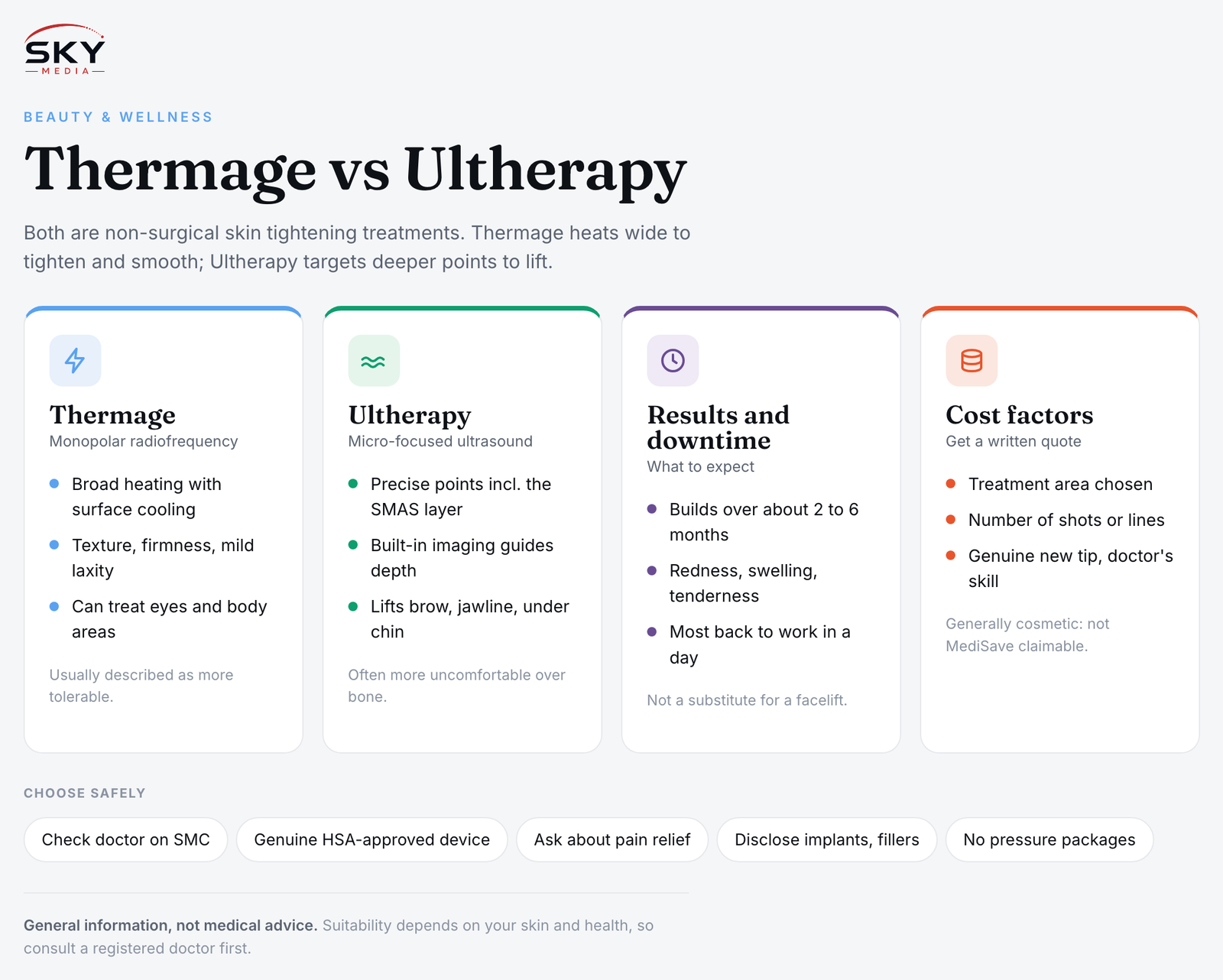
How Thermage and Ultherapy Actually Work
Both treatments rely on the same basic principle: controlled heat injures collagen in the deeper skin layers just enough to trigger the body’s repair response. Over the following months, new collagen forms and the existing collagen fibres contract, which makes skin firmer. The difference is in the type of energy and the depth it reaches.
Thermage uses monopolar radiofrequency (RF). The current version you will most often see marketed is Thermage FLX. RF energy heats a relatively broad volume of tissue in the dermis and the layer beneath it. The handpiece cools the skin surface while it heats deeper down, and many clinics pair it with a vibration feature to help with comfort. Because the heating is spread across a wide area, Thermage is often described as good for overall skin quality, texture and mild laxity, including delicate zones such as the eyelids when the appropriate tip is used.
Ultherapy uses micro-focused ultrasound. Instead of heating a broad volume, it deposits tiny points of heat at specific depths, including the SMAS (superficial muscular aponeurotic system), the same supportive layer a surgeon tightens during a facelift. A key feature is built-in ultrasound imaging, which lets the practitioner see the tissue layers on screen and place energy at the intended depth. That makes it a common choice for lifting effects, such as brows, jawline and the area under the chin.
In simple terms: Thermage heats wide and shallower to tighten and smooth, while Ultherapy targets precise points deeper down to lift.
Thermage vs Ultherapy at a Glance
| Factor | Thermage (RF) | Ultherapy (micro-focused ultrasound) |
|---|---|---|
| Energy type | Monopolar radiofrequency | Micro-focused ultrasound with imaging |
| Main strength | Skin texture, firmness, mild laxity | Lifting, especially brow, jawline, under chin |
| Depth | Broad heating of dermis and below | Precise points, including the SMAS layer |
| Comfort | Heat pulses with surface cooling; usually described as tolerable | Often described as more uncomfortable, especially over bony areas |
| Downtime | Usually minimal, some redness | Usually minimal, possible redness, swelling or tenderness |
| Results timeline | Gradual, building over a few months | Gradual, building over a few months |
Pain, Comfort and Downtime Compared
Pain is one of the biggest practical differences and one that people underestimate.
With Thermage, most people describe brief, intense heat sensations with each pulse, balanced by the cooling and vibration. The eye area and areas with thinner skin can feel sharper. Many patients manage with no numbing at all or with a topical numbing cream, depending on clinic practice and the energy settings used.
With Ultherapy, the sensation is often described as deeper and more uncomfortable, sometimes like a hot prickling or aching feeling, particularly along the jawline and over bone. Clinics may offer numbing cream, oral pain relief or other comfort measures, and the doctor can adjust energy levels. Ask exactly what pain management is offered and whether it is included.
Downtime is low for both. Typical short-term effects include:
- Redness that settles within hours
- Mild swelling, especially under the chin or around the eyes
- Tenderness to touch for a few days to a few weeks, more common after Ultherapy
- Occasional temporary numbness or small bruises
Most people return to work the same day or the next. Rarer complications such as burns, nerve irritation or uneven results are possible with any energy device, which is why the operator’s training matters so much.
Results: What Each Treatment Can and Cannot Do
Neither treatment is a substitute for a surgical facelift. Both work best for people with mild to moderate laxity and reasonable skin elasticity, often from the late thirties onwards, although age is only one factor.
Thermage tends to suit you if:
- Your main concern is texture, crepiness or overall firmness
- You want treatment around the eyes or on the body, such as the abdomen or arms
- You prefer a more comfortable session
Ultherapy tends to suit you if:
- Your main concern is sagging, such as a lower brow, jowls or loose skin under the chin
- You want a lifting effect along specific lines
- You can tolerate more discomfort for a targeted result
Results from both appear gradually. Some people notice a subtle immediate tightening, but the main change builds over roughly two to six months as collagen remodels. Clinics commonly suggest maintenance sessions, often around once a year, but the right interval depends on your skin and your doctor’s advice.
Be wary of anyone promising dramatic, guaranteed results, and ask to see before and after photos of the doctor’s own patients.
Understanding the Cost in Singapore
Both treatments sit at the higher end of non-invasive aesthetic procedures, and prices vary a lot between clinics. Rather than chasing the lowest quoted figure, understand what drives the price:
- Treatment area. Full face, face and neck, eyes only or body areas are priced differently.
- Shots or lines. Thermage is commonly priced by the number of pulses (shots), Ultherapy by the number of lines delivered. Fewer shots or lines lowers the price but may lower the effect.
- Genuine consumables. Both systems use proprietary tips or transducers. Ask the clinic to confirm the tip is new and authentic, and some clinics will show you the sealed packaging.
- Who performs it. Treatment performed or closely supervised by an experienced doctor generally costs more.
- Package add-ons. Consultation fees, numbing and follow-up reviews may or may not be included.
Get a written quote that lists the area, the number of shots or lines and what is included. Aesthetic treatments of this kind are generally considered cosmetic, so you should not expect them to be covered by insurance or claimable from MediSave, but confirm with your insurer if you are unsure.
Choosing a Clinic and Doctor Safely
In Singapore, aesthetic procedures using energy-based devices fall under medical practice, so they should be performed by, or under the supervision of, a registered doctor. You can check a doctor’s registration on the Singapore Medical Council (SMC) website. Medical devices sold here are regulated by the Health Sciences Authority (HSA), and reputable clinics will happily confirm their machine is a genuine, approved unit rather than a lookalike device.
During your consultation, ask:
- Which treatment do you recommend for my concern, and why not the other one?
- How many shots or lines will you use, and on which areas?
- Who will perform the procedure, and how many have they done?
- What pain relief is available?
- What results are realistic for my age and skin, and when should I expect them?
- What side effects should I watch for, and how do I contact you afterwards?
Tell the doctor about any medical conditions, implants, pacemakers, pregnancy, recent fillers or threads, and medicines you take, since these can affect suitability. If you feel pushed into a large package on the first visit, it is fine to take time to think or get a second opinion.
Making Your Decision
If you are weighing thermage vs ultherapy, start with your main concern rather than the brand. For smoother, firmer skin and gentler sessions, Thermage is often the starting point. For a lifting effect on sagging areas, Ultherapy is usually the more targeted option. For mixed concerns, a doctor may suggest combining them over time. Whichever you choose, expect gradual, natural-looking change, budget for maintenance, and prioritise a qualified doctor and genuine equipment over a bargain.
Explore more: if you are comparing other confidence-boosting treatments, read our guide to scalp micropigmentation in Singapore and who it suits.
Further reading: Keloid Scars: Treatment Options in Singapore · Face Laser Treatments in Singapore: Types and Differences