
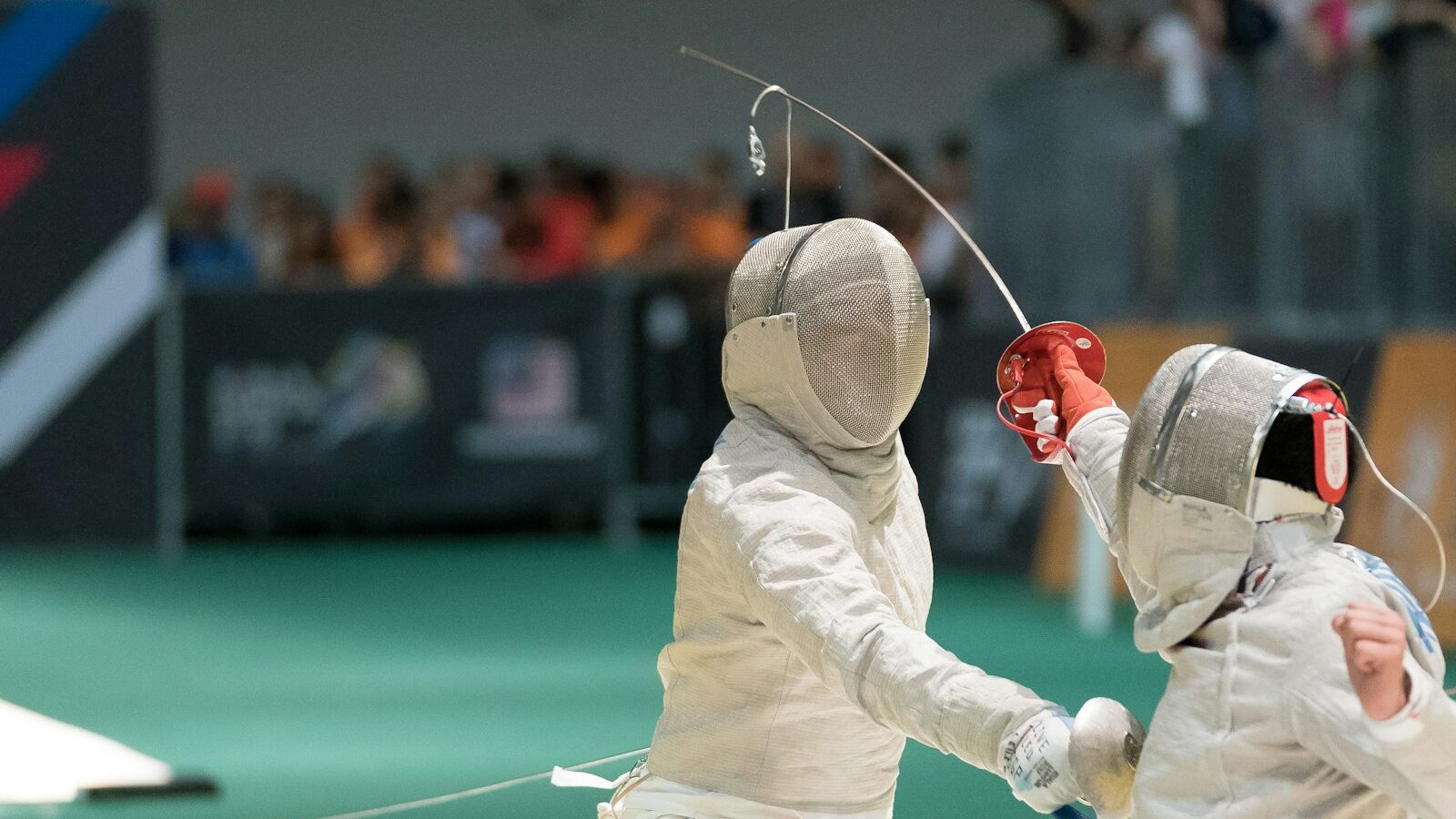
Fencing looks like something out of a period drama, but on a weekday evening in Singapore it is a sweaty, fast and surprisingly strategic sport practised by children, university students and working adults alike. If you have been curious about fencing classes in Singapore, the good news is that you do not need any experience, special fitness or your own equipment to begin.
This guide explains the three weapons, what to expect from a trial class, what kit you will eventually need and how to choose a club that suits you.

Fencing in a Nutshell
Two fencers face each other on a long, narrow strip called the piste. Each tries to score a “touch” by hitting the opponent with the weapon in the correct target area, while avoiding being hit. Modern competitive fencing uses electronic scoring: the weapon and the fencer’s clothing are wired so that a light goes on when a valid touch lands.
Bouts are short and intense. You are constantly moving forwards and backwards, judging distance, faking attacks and reacting in fractions of a second. People often describe it as physical chess, because tactics matter as much as speed.
In Singapore, the sport’s national body is Fencing Singapore, which organises competitions and national squads. Fencing is also offered as a co-curricular activity (CCA) in some schools, and there are private clubs and community programmes for adults.
Foil, Epee and Sabre: Which Weapon Suits You
Every fencer eventually specialises in one of three weapons. They differ in the target area, how you score and the rules about who gets the point. Most clubs teach one or two weapons, so it is worth knowing the difference before you sign up.
| Weapon | Target area | How you score | Feel of the game |
|---|---|---|---|
| Foil | Torso only (front and back), not arms or head | Hit with the point | Precise and technical; “right of way” rules decide who scores when both hit |
| Epee | The entire body, head to toe | Hit with the point | Patient and tactical; no right of way, so both fencers can score at once |
| Sabre | Everything above the waist, including head and arms | Hit with the point or the edge (cuts) | Explosive and very fast; right of way rules apply |
A few points that help beginners decide:
- Foil is a traditional starting weapon in many clubs because it teaches clean technique and the concept of right of way, which is the rule that gives priority to the fencer who started the attack correctly.
- Epee suits people who like simplicity and patience. Whoever hits first scores, and if both hit within a tiny window, both get a point. Taller fencers and late starters often enjoy it.
- Sabre suits those who like speed and aggression. Bouts can be over very quickly, and the cutting action feels natural to many people.
You do not need to choose before your first lesson. A good coach will often let you try what the club offers and suggest a weapon based on your style.
What Happens in a Trial Class
Many clubs offer a trial or introductory session for newcomers. Formats vary, but a typical first class looks something like this:
- Warm-up and footwork. You will learn the “en garde” stance, how to advance and retreat, and the lunge. Footwork is the foundation of fencing, so expect plenty of it.
- Basic blade work. Holding the weapon correctly, simple attacks and parries (blocks), usually practised against a partner or a target.
- Safety briefing. How to put on the mask and protective gear, and the rules that keep everyone safe, such as never pointing a weapon at someone without a mask.
- A taste of bouting. If time allows, you may try a short, light bout under supervision.
Wear comfortable sports clothing, long track pants if you have them, and clean indoor sports shoes. Bring water and a small towel, since halls can get warm. Most clubs lend all protective gear for trial classes. Check with the club beforehand about what to bring, the age range of the class and any booking or cancellation terms.
The Kit Beginners Will Need Over Time
You do not need to buy anything at the start. Most clubs have loan equipment for beginners. Once you are committed, owning your own kit is more hygienic and comfortable. Here is what a fencer’s set usually includes:
- Mask: protects the face and head, with a strong metal mesh and a padded bib.
- Jacket: a protective, puncture-resistant jacket.
- Underarm protector (plastron): an extra layer worn under the jacket on the weapon-arm side.
- Chest protector: a hard plastic protector, required for female fencers and commonly used by juniors.
- Glove: worn on the weapon hand.
- Breeches and long socks: knee-length trousers and socks that cover the legs fully.
- Shoes: indoor court shoes work at first; fencing shoes come later.
- Weapon and body cord: the body cord connects you to the electronic scoring system.
- Lamé: a conductive overjacket used in foil and sabre to mark the valid target area. Epee fencers do not need one.
Competition equipment has to meet safety standards set by the sport’s governing bodies, so ask your coach before buying anything, especially second-hand items. Many clubs can advise on what to buy and in what order, so you do not overspend early.
How to Choose a Fencing Club
Singapore has several clubs and programmes, and they differ in focus. Rather than choosing on location alone, think about these questions:
- Which weapons are taught? If you are drawn to sabre, a foil-only club will not suit you.
- Who are the classes for? Some clubs focus on children and competitive juniors, others have dedicated adult beginner classes. Adults often feel more comfortable starting with peers.
- How are coaches qualified? Ask about their coaching background and whether they are certified.
- Class size and structure: smaller groups mean more coaching attention. Ask how beginners progress to bouting.
- Safety and equipment: check that loan gear is in good condition and that bouting is supervised.
- Commitment and costs: ask about trial fees, term packages, equipment costs and cancellation or make-up class policies. Fees vary widely, so compare a few options.
If you enjoy combat sports with a strong discipline element, you may also like our guide to martial arts classes in Singapore. And if you are looking at fencing for a child, our guide on choosing enrichment classes for kids offers a useful checklist.
Is Fencing Right for You
Fencing suits people who like a mental challenge as much as a workout. It builds leg strength, quick reactions and focus, and the protective kit makes it safer than many people expect. Adults with no sporting background regularly take it up, and plenty of fencers start in their thirties or later.
The best way to find out is simply to book a trial class, try a weapon or two and see whether you enjoy the rhythm of the sport. For other active options, see our roundup of group fitness classes in Singapore.
Frequently Asked Questions
What age can children start fencing classes? It depends on the club, as some run junior programmes for young children while others start older. Ask each club about its age range, class size and how it adapts equipment and drills for smaller beginners. A trial class is a good way to see whether your child enjoys it.
What injuries are common in fencing? Bruises from hits, and strains in the legs, ankles and lunging muscles are the most common, because the sport is demanding on the lower body. Warm up properly, wear fitting protective gear, and follow the coach’s safety rules. Stop and see a doctor if pain persists.
When am I ready to compete? When your coach says your footwork, blade control and understanding of the rules are solid, usually after steady training in regular classes and bouting. Fencing Singapore organises competitions for different levels, so ask your coach about suitable local events and how to register.
Can fencing help with school admission in Singapore? Possibly, as some schools consider sporting achievements in certain admission routes, but entry criteria differ and change. Check MOE and the specific school’s admissions pages rather than assuming. Choose fencing mainly because your child enjoys it, not as a guaranteed way to get a place.
How do I clean and look after fencing kit in Singapore’s humidity? Air the gear after every session so sweat dries completely, and avoid leaving it damp in a bag. Wash jackets and breeches as their care labels allow, and ask your coach how to clean masks and gloves. Store kit somewhere dry and ventilated to prevent odour and mould.
Further reading: Kendo Classes in Singapore: A Beginner’s Guide