
Kendo, “the way of the sword”, is the Japanese martial art of fencing with bamboo swords. It is loud, disciplined and surprisingly welcoming to complete beginners. If you have been curious about kendo in Singapore, the good news is that you do not need any prior martial arts experience, and you do not need to buy armour on day one.
This guide explains where beginners usually learn, what a first lesson looks like, what gear you will need at each stage, and what affects the cost, so you can choose a class with confidence.
What Kendo Is and How It Differs From Fencing
Kendo practitioners, called kendoka, wear protective armour and strike specific target areas with a shinai, a sword made of four bamboo slats bound together. A valid point needs more than a touch: it requires correct form, a strong shout called kiai, good posture and follow-through, all at once.
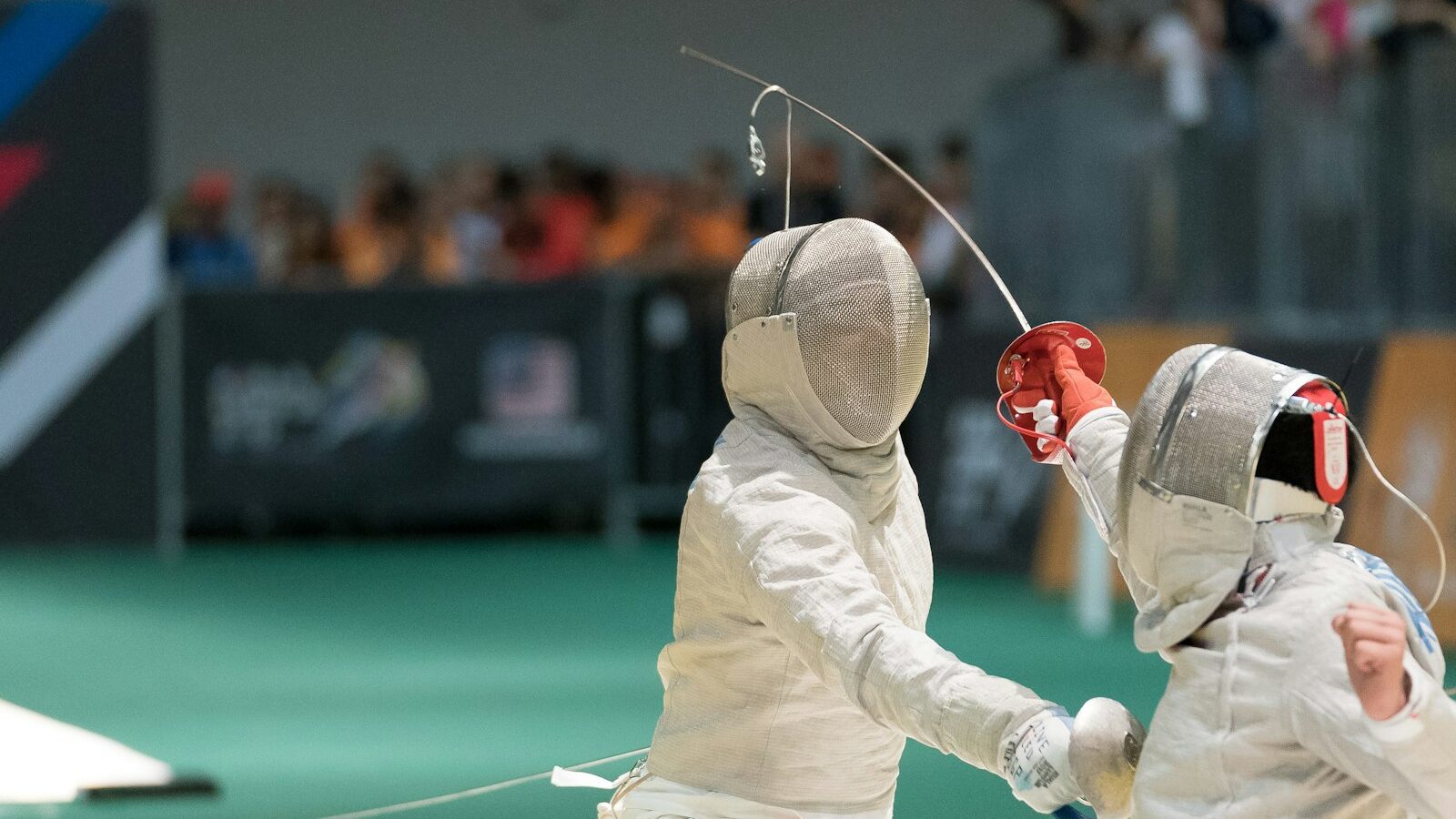
That makes kendo quite different from Western fencing. Fencing scores on electronic touch and rewards speed and precision with a light blade. Kendo values spirit, posture and timing just as much as the strike itself, and it places strong emphasis on etiquette, with bowing, kneeling and a quiet, respectful training hall. If you are comparing the two, our guide to fencing classes in Singapore covers the other discipline.
Where to Learn Kendo in Singapore
Kendo is a niche sport here, so options are fewer than for popular martial arts, but there are several types of places to train:
- Independent kendo clubs. These are the backbone of the local scene. Most train in rented school halls, community centres or sports halls, often on weekday evenings and weekends. Many run a beginners’ intake or course a few times a year.
- University and polytechnic clubs. Several tertiary institutions have student kendo clubs that accept complete beginners. These are a natural starting point if you are a student.
- Japanese community groups. Some groups linked to the Japanese community run classes that also welcome non-Japanese members.
- Community club interest groups. Occasionally, community centres host kendo or related Japanese martial arts classes through their interest group programmes.
A national kendo body oversees gradings and competitions locally, and its website or social pages are a good place to find a list of affiliated clubs. Search for the national association and contact clubs directly to ask about their next beginners’ intake.
What Your First Few Months Look Like
Kendo has a clear progression, and most clubs follow a similar path.
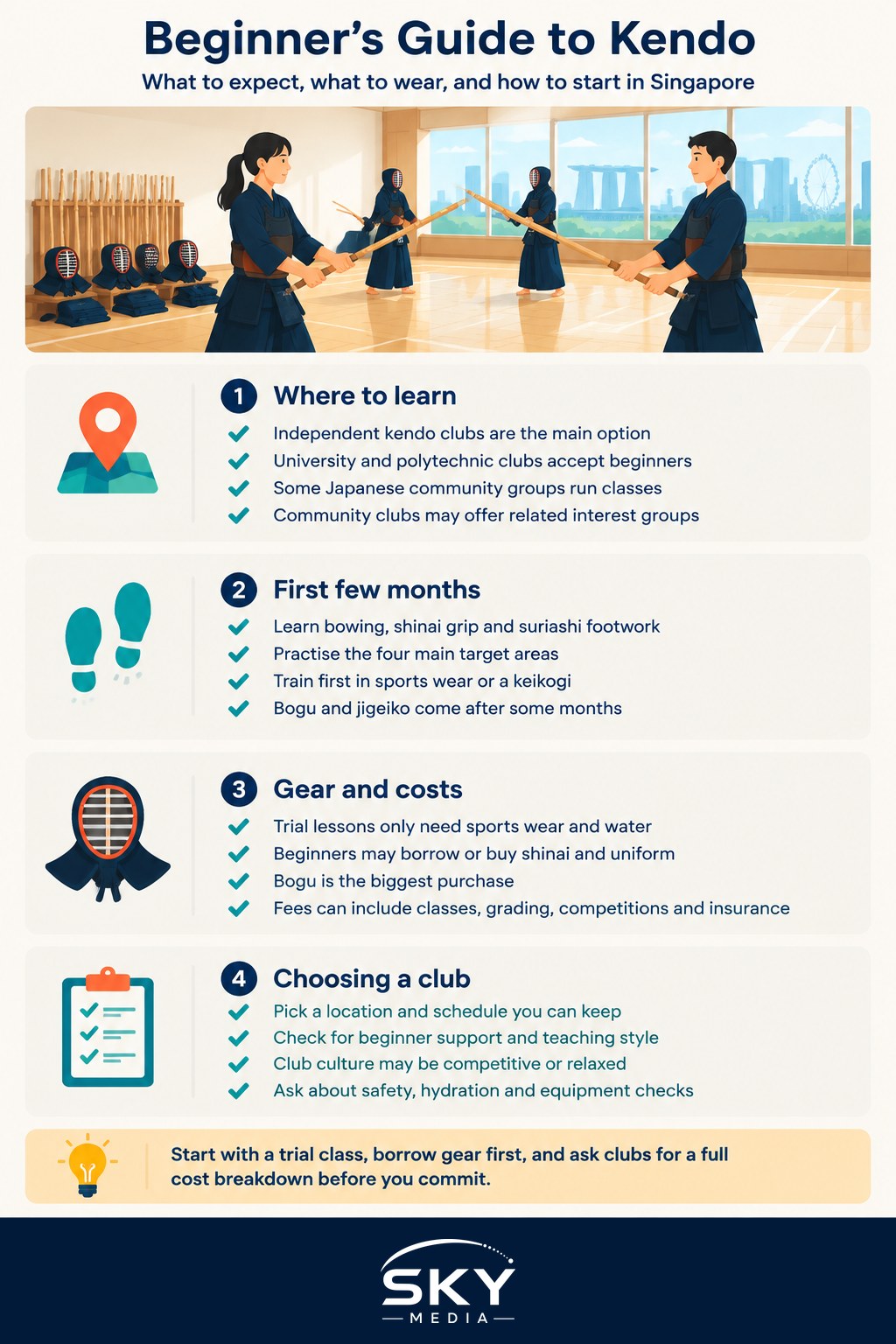
- Etiquette and footwork. Your first lessons focus on how to bow, how to hold the shinai, and footwork called suriashi, a sliding step. It looks simple but takes time to master.
- Basic strikes. You learn the four main targets: men (head), kote (wrist), do (side of the body) and tsuki (throat thrust, usually taught much later).
- Striking practice without armour. You practise strikes against a partner wearing armour, or against a target, while you train in normal sports wear or a keikogi (training jacket).
- Wearing armour. After several months, depending on the club and your progress, you begin training in bogu, the full set of armour.
- Sparring and gradings. Once in armour, you join more of the club’s practice, including free sparring called jigeiko, and can work towards kyu and later dan grades.
Expect training to be physically demanding. Sessions involve repeated drills, shouting and quick bursts of movement, usually barefoot on a wooden or sports floor. In Singapore’s heat, halls can be warm, so hydration matters.
Kendo Gear: What You Need and When
One of the most common questions from beginners is how much equipment they must buy. The answer is: not much at first.
| Stage | Gear usually needed | Buy or borrow? |
|---|---|---|
| First trial lessons | Comfortable sports wear, water bottle | Your own clothes |
| Beginners’ course | Shinai, possibly keikogi and hakama | Often borrowed or bought via the club |
| After several months | Keikogi, hakama, tenugui (head cloth) | Usually bought |
| Training in armour | Bogu set: men, kote, do and tare | Some clubs loan sets, many members buy |
A few notes on each item:
- Shinai. Bamboo swords wear down and splinter, so they need regular checking. Your instructor will show you how to inspect and maintain it safely. Carbon shinai exist but are not accepted everywhere.
- Keikogi and hakama. The jacket and the wide pleated trousers are the classic kendo uniform. Cotton versions absorb sweat well, while synthetic blends dry faster in humid weather.
- Bogu. Armour is the biggest purchase. Quality and fit vary a lot, and a well-fitted set protects better. Ask your instructor for advice before buying, and consider a second-hand set from a senior member.
- Tenugui. A cotton cloth worn under the helmet to absorb sweat.
Equipment is usually imported from Japan or bought through club contacts. Prices vary with materials and quality, so ask your club what members typically pay and whether bulk orders are arranged.
What Affects the Cost of Kendo Classes
We do not quote fees here because they vary by club and change over time, but these are the main factors:
- Beginners’ course fee. Some clubs charge a one-off fee for an introductory course, which may include a shinai or loaned uniform.
- Membership or monthly fees. Most clubs charge monthly or termly fees to cover hall rental and instructors. Student rates are common.
- Equipment. The uniform and especially the bogu armour are the largest one-off costs.
- Grading and competition fees. Taking a grading or entering a tournament usually involves a separate fee.
- Insurance. Some clubs or associations require members to have personal accident coverage.
Ask for the full breakdown before you commit, and check whether you can join a trial class first.
How to Choose the Right Kendo Club
When comparing clubs, consider:
- Location and schedule. Kendo progress comes from consistency, so choose sessions you can realistically attend every week.
- Beginner support. Ask whether there are dedicated beginner sessions or instructors.
- Instructor grades and teaching style. Watch a session to see how instructors correct technique and how they treat newcomers.
- Club culture. Some clubs are competition-focused, while others emphasise fitness, tradition or a relaxed social side.
- Safety. Check how the club manages injuries, hydration breaks and equipment checks.
If you want to compare kendo with other options before committing, our guide to martial arts classes in Singapore for beginners covers styles such as judo, karate and taekwondo.
Tips for Your First Kendo Class
- Arrive early and follow the lead of others when bowing in and out of the hall.
- Remove jewellery and keep nails trimmed for safety.
- Bring water and a small towel.
- Do not worry about the shouting. Everyone feels self-conscious at first, and kiai soon becomes natural.
- Be patient with footwork. It is the foundation of everything else.
Kendo rewards patience and steady practice. Start with a trial, borrow before you buy, and you may find a lifelong sport with a strong community behind it.
Frequently Asked Questions
Is kendo safe for beginners and what injuries are common? Kendo is considered safe when taught properly, but sore feet, bruises and muscle strain happen, particularly with barefoot footwork on hard floors. Protective armour reduces the risk once you start sparring. Check how the club manages injuries, hydration and equipment checks, and see a doctor if you have a health condition.
Am I too old to start kendo? Many people begin as adults, and kendo does not demand prior martial arts experience. Training is physically demanding, with repeated drills and quick bursts of movement, so build up gradually. If you have heart, joint or other health concerns, check with your doctor first.
Can children or teenagers learn kendo here? Some clubs welcome young learners, and student clubs in tertiary institutions take beginners, but arrangements differ. Ask each club whether it has junior classes, what supervision is provided and what gear a child needs. Watch a session first to see how instructors treat newcomers.
Do I need to speak Japanese to join a kendo class? No. Kendo uses Japanese terms such as kiai, men and kote, but you pick these up through practice, and instructors explain them. You will also learn the bowing etiquette as you go. Ask the club which language it teaches in.
How do I keep kendo gear from smelling or going mouldy in humid weather? Air your gear fully after every session, hanging armour and uniforms in a ventilated spot rather than leaving them in a bag. Wash the cotton tenugui and uniform regularly. Ask your instructor how to dry and store the bogu, and consider synthetic blends that dry faster.