

Figure skating shows in Singapore are easy to overlook. We are a tropical city with only a handful of ice rinks, and skating rarely makes the local headlines. Yet live skating performances do happen here, from large touring ice shows in indoor arenas to club showcases and competitions at local rinks. If you have only ever watched skating on television during the Winter Olympics, seeing it in person is a different experience: the speed, the sound of blades on ice and the cold air of the rink all add to the drama. This guide explains the types of shows, how to find them and what to look for as a first-time viewer.
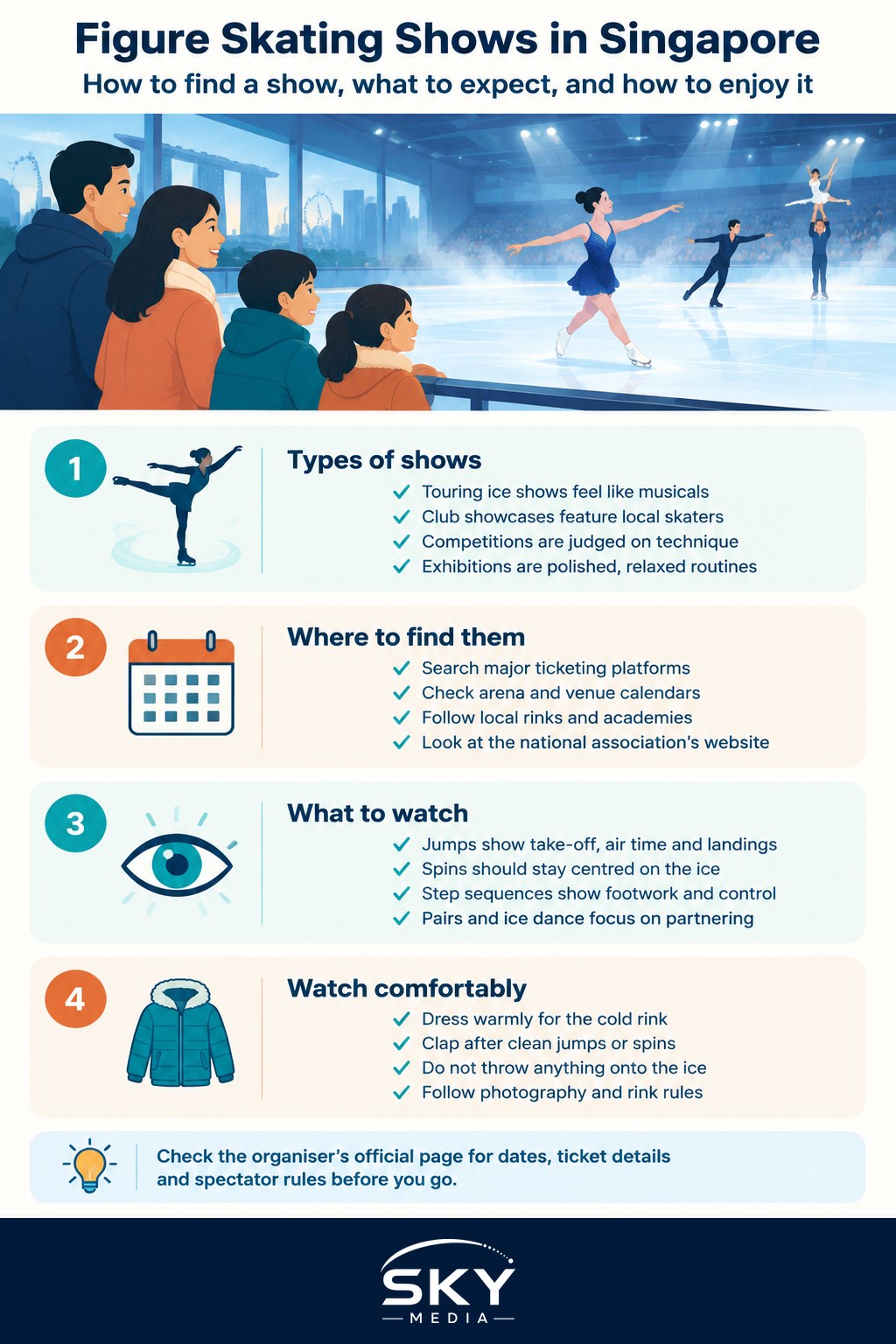
The Main Types of Figure Skating Events
Not every skating event is the same. Knowing the difference helps you pick the right one for your interests and budget.
| Type of event | What you will see | Best for | Where it usually happens |
|---|---|---|---|
| Touring ice show | Theatrical production with costumes, sets, music and a storyline, often based on well-known characters | Families, first-timers, people who enjoy musicals | Large indoor arenas and performance venues |
| Club or academy showcase | Local skaters of all ages performing solo and group pieces, often themed | Supporting friends or family, seeing local talent, low-key outing | Shopping mall and leisure centre ice rinks |
| Competition | Skaters judged on technical elements and performance, in levels from beginner to advanced | Fans who want to learn the sport, families of young skaters | Local ice rinks, organised by clubs or the national association |
| Exhibition or gala | Medal winners or invited skaters performing relaxed, crowd-pleasing routines | Fans who want polished skating without the scoring | Usually after competitions, sometimes as standalone events |
Touring ice shows are the most visible and are promoted like concerts or musicals. Club showcases and competitions are smaller and often free or low-cost to watch, but you need to look harder to find them.
How to Find Upcoming Skating Shows
Because the sport is niche here, there is no single listing of figure skating shows Singapore fans can rely on. A few places are worth checking regularly.
- Major ticketing platforms. Touring ice shows sell tickets through the same platforms used for concerts and theatre. Sign up for their newsletters or search for “ice show” every few months.
- Venue event calendars. Large indoor arenas and performance venues list upcoming productions on their official websites.
- Ice rinks. Local rinks and the skating academies based there often announce showcases, holiday performances and competitions on their websites and social media pages.
- The national skating association. The body that governs ice skating in Singapore lists sanctioned competitions and national events. Check its official website for schedules and whether spectators are welcome.
- Family and kids’ event listings. Character-based ice shows are often marketed alongside children’s theatre. Our guide to children’s theatre and family shows in Singapore shows where these kinds of productions tend to be listed.
Dates, ticket prices and spectator arrangements vary from event to event, so always check the organiser’s official page before you plan your day.
What to Watch For as a First-Time Viewer
You do not need to know the rules to enjoy skating, but a little knowledge makes it far more exciting. These are the main elements you will see in most performances and competitions.
Jumps
– Skaters take off, spin in the air and land on one foot, gliding backwards.
– Jumps are named for how the skater takes off. The axel is easy to spot because the skater takes off facing forwards, which means it needs an extra half rotation.
– Double, triple and quadruple refer to how many times the skater turns in the air. Most local showcases feature singles and doubles, while touring shows and elite skaters may attempt harder jumps.
Spins
– Skaters rotate on the spot in positions such as upright, sitting low or with one leg extended behind (the camel spin).
– Watch how centred the spin is. A good spin stays in one spot rather than travelling across the ice.
Step sequences
– Intricate footwork across the length of the rink, showing edge control and musicality.
Pairs and ice dance
– In pairs skating, partners perform lifts, throws and side-by-side jumps.
– Ice dance focuses on rhythm, close partnering and footwork rather than big jumps.
Artistry
– Expression, connection to the music and costumes all matter, especially in ice shows and exhibitions. Even simple skating can be moving when it is well performed.
Rink Etiquette and Comfort Tips
Watching skating is different from going to a regular theatre show, especially at a local ice rink.
- Dress warmly. Rinks are cold even in Singapore. Bring a jacket or sweater, long trousers and closed shoes. A light blanket or scarf helps if you will be sitting still for a long time. Large arenas staging touring shows tend to be less cold, but a light layer is still sensible.
- Applaud at the right moments. Clapping after a clean jump or spin is welcome. Avoid shouting during quiet, slow sections.
- Do not throw anything on the ice. At big international events, fans sometimes toss wrapped flowers or soft toys, but at local events this is often not allowed. Follow the organiser’s instructions.
- Check the photography rules. Flash photography can distract skaters and is often prohibited. Touring shows may ban recording entirely.
- Stay off the ice unless public skating sessions are open, and follow rink staff directions.
- Keep children seated. Running around the rink edge can be unsafe on wet or icy floors.
Bringing Children to a Skating Show
Ice shows are popular family outings, and live skating can inspire children to try the sport.
- Choose the right length. Touring shows usually have an interval, which helps young children. Competitions can last many hours, so plan to watch a portion rather than the whole day.
- Check the age guidance and whether infants need a ticket on the organiser’s website.
- Pick seats wisely. Higher seats in arenas often give a better view of formations and patterns on the ice.
- Talk about what they saw. Ask children which jump or costume they liked best, and look up the moves together afterwards.
Taking the Next Step After Watching
Many people leave a skating show wanting to try it themselves. Public skating sessions at local rinks are a good, low-commitment start, and most rinks offer group lessons for children and adults. Our guide to ice skating in Singapore covers how to get started, what to wear and how lessons usually work.
If ice is not convenient, roller skating offers a similar feel for balance and gliding. You can read more about roller skating and rollerblading as a hobby for an option that does not need a rink.
Figure skating may be a niche art form in Singapore, but it brings together athletic skill, music and theatre in a way few other performances do. Keep an eye on rink announcements and ticketing listings, dress warmly and enjoy the show.
Frequently Asked Questions
Do I need to book tickets early for a touring ice show? It is wise to, because popular touring shows can sell out for the best seats, especially for weekend and school holiday performances. Buy from the official ticketing platform or venue to avoid resale scams. Check the organiser’s page for the sale date, age rules and any refund policy.
How is figure skating scored? Judges give points for the technical elements, such as jumps, spins and step sequences, and for the overall presentation, including skating skills, performance and interpretation of the music. Harder elements that are cleanly executed earn more. Falls and under-rotated jumps cost points.
Is it too late for an adult to start learning figure skating? Not at all. Many rinks run adult beginner classes, and adults can enjoy skating and gradually learn spins and basic jumps. You may progress more slowly than children on the harder jumps, but that need not matter if your goal is fun and fitness. Start with public sessions to see if you like it.
Can I watch top international figure skating events live from Singapore? Not in person unless you travel, but major competitions are usually broadcast or streamed. Check the official governing body’s channels and local sports broadcasters for coverage. Time differences mean many events air late at night or very early in the morning.
Is a local skating competition worth watching without knowing any skaters? Yes, if you like to see the sport up close. Local competitions often have a relaxed atmosphere, and beginner levels show the basics clearly, which helps you learn what to look for. Check the organiser’s page to see if spectators are welcome and whether admission is free.