
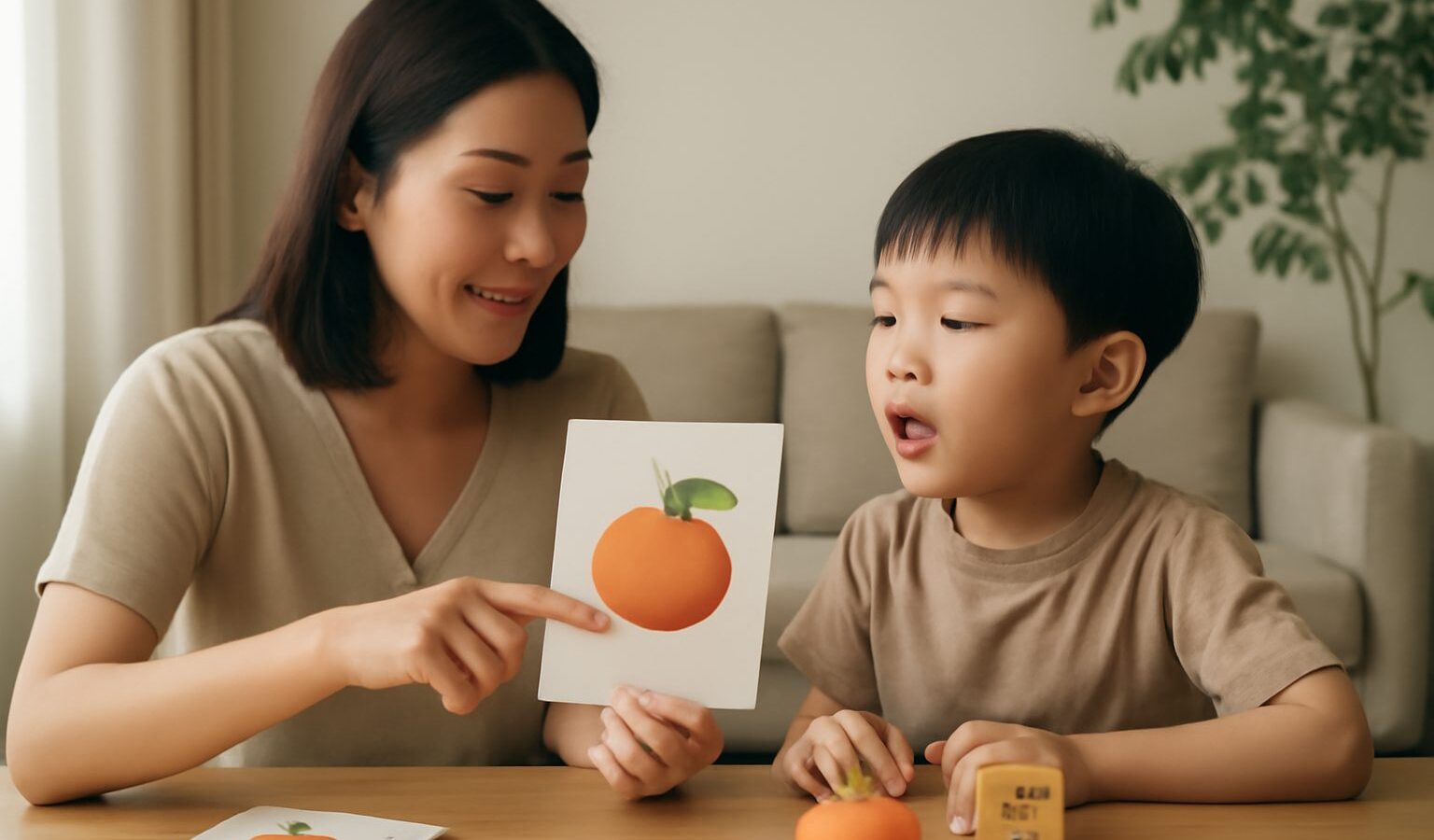
Moving to Singapore reshapes a child’s language world overnight. A little one who chattered happily in Mandarin at home in the mainland is suddenly surrounded by English at preschool, and many parents start to wonder whether their child needs support. If you are searching for Mandarin speech therapy Singapore providers, or simply strong Mandarin enrichment to keep the mother tongue alive, it helps to understand the difference between the two, how professional assessment works, and where to start. This is general information to help you navigate, not a diagnosis or medical advice.
Speech Therapy Versus Enrichment: A Crucial Difference
Parents often use “speech” loosely, but two very different needs hide behind the word, and confusing them wastes time and money.
Speech and language therapy is a clinical service delivered by trained speech therapists for children who may have a speech, language, or communication difficulty. It follows an assessment and, where appropriate, a tailored plan. Enrichment, by contrast, is educational; it strengthens vocabulary, reading, and confidence in Mandarin for a child who is developing typically but whom you want to nurture in the mother tongue. A bright child who mixes English and Mandarin, or who is quieter in a new language, is very often simply adjusting, not delayed.
The reason this matters is that a bilingual child’s path is not the same as a monolingual child’s. Growing up with two languages is a strength, and it is normal for one language to surge ahead for a while. If you are unsure which category your child falls into, that uncertainty is exactly what a professional assessment is designed to resolve.
When to Seek a Professional Assessment
You know your child best, and a calm, early conversation with a professional is always reasonable if something is nagging at you. Rather than comparing your child to a cousin or a neighbour, look at their overall communication.
- Your child seems frustrated at not being understood, in any language.
- There is very little speech compared to peers of the same age, across both Mandarin and English.
- Speech is very hard for familiar adults to understand well beyond the toddler years.
- Your child was communicating and then seemed to lose skills.
- A preschool teacher has gently raised a concern.
If any of these ring true, seek a professional opinion rather than searching online for reassurance or worry. In Singapore, a family doctor or a polyclinic can advise and refer, and hospitals with paediatric services, including KK Women’s and Children’s Hospital (KKH), offer child development and speech services. Only a qualified speech therapist or child development professional can assess your child and tell you whether therapy is needed. Nothing in this article is a substitute for that assessment.
How to Find and Choose a Provider
Once you have decided to explore support, Singapore offers both public and private routes. The public system generally works through referral, while private clinics can often be approached directly. Costs, waiting times, and eligibility differ, and subsidy schemes have their own rules, so confirm current details with each provider and the relevant agency.
| Route | How you usually access it | Good to know |
|---|---|---|
| Polyclinic or GP referral | Doctor assesses and refers onward | A common, lower-cost starting point |
| Hospital services (such as KKH) | Often via referral | Paediatric and child development expertise |
| Private speech therapy clinics | Often direct booking | Shorter waits, fees vary widely |
| Early intervention programmes | Via assessment and referral | For eligible younger children, rules apply |
| Mandarin enrichment centres | Direct enrolment | For language growth, not clinical therapy |
When you contact a therapy provider, it is fair to ask whether the therapist is qualified and experienced, whether they can work in Mandarin or with bilingual children, and how they involve parents. For enrichment, look instead at the teaching approach, class size, and whether the style suits your child. Do not assume that a longer waitlist means better care, or that the most expensive option is automatically right.
Supporting Mandarin at Home
Whether or not your child needs therapy, the home is where a language truly lives. Mainland families arrive with a real advantage here: native Mandarin, familiar songs and stories, and grandparents who often speak it beautifully. A few gentle habits go a long way.
- Keep Mandarin a warm, everyday language, used in play, meals, and bedtime stories rather than only in formal lessons.
- Read together daily, mixing mainland favourites with local bilingual titles from the National Library, which stocks plenty of Chinese children’s books.
- Let both languages coexist. You do not need to ban English; children sort out two languages naturally over time.
- Use screens sparingly and purposefully, choosing quality Mandarin content over passive viewing.
- Involve the family. Grandparents and video calls with relatives on the mainland give your child a real reason to keep speaking Mandarin.
Be patient and encouraging rather than anxious. Pressure and correction tend to make children clam up, while enjoyment keeps a language alive. If your child attends a local school later, the Ministry of Education’s mother tongue programme will reinforce Mandarin too, so home and school can work together.
Balancing Two Languages Without Worry
It is easy for a loving parent to overthink this. A child who is quiet in English for a term, or who answers you in English while you speak Mandarin, is usually navigating two systems, not falling behind. Bilingualism brings well-documented cognitive and cultural benefits, and the goal is a child who is comfortable and confident, not one who performs on cue.
Trust professionals for the clinical questions and trust your warmth for the rest. If a speech therapist assesses your child and recommends therapy, follow that guidance; if the picture is simply a bilingual child in transition, enrichment and a rich home language life may be all that is needed. Either way, you are giving your child something precious: roots in Mandarin and wings in English.
This article is general information, not medical or clinical advice. For any concern about your child’s speech, language, or development, seek a professional assessment through your doctor, a polyclinic, KKH, or a qualified speech therapist, who can diagnose and advise based on your child specifically.
Explore more
Language is one thread of settling a family in. If older relatives are helping to raise the children, see helping grandparents from China adjust to life in Singapore, whose Mandarin is a gift to your child. And if your own move is still being arranged, the practical groundwork in negotiating a relocation package and understanding your In-Principle Approval letter can smooth the way.