
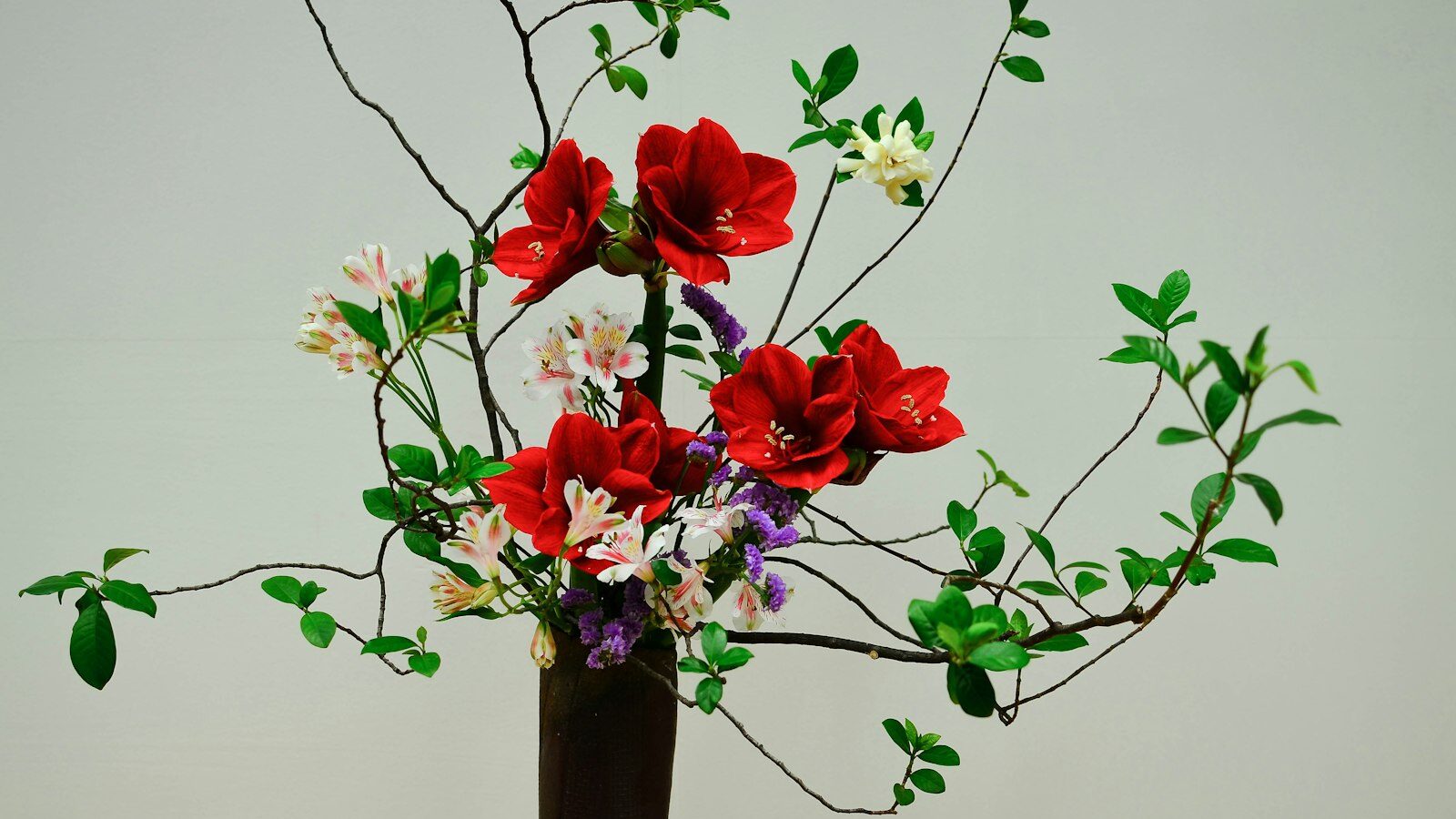
There is something quietly wonderful about turning a bunch of loose stems into an arrangement that stops you in your tracks. Flower arranging and ikebana give you exactly that, and they need far less skill, space, and money to begin than most people assume. Whether you want a lush, abundant vase for the dining table or the spare, thoughtful lines of Japanese ikebana, this is a hobby that rewards patience, slows your breathing, and leaves your home more beautiful every single week.
This guide explains what the two approaches are, what you need to start, your first simple arrangements, the mistakes beginners make, and how to keep learning here in Singapore.
Western Arranging and Ikebana Are Not the Same Thing
It helps to understand the two broad traditions, because they ask different things of you.
Western floral design is about abundance and mass. You build fullness, colour harmony, and a pleasing overall shape, often working with many stems to fill a vase generously. Think of the rounded, romantic bouquets you see at celebrations.
Ikebana, which simply means “arranging flowers” in Japanese, takes the opposite view. It is a minimalist, disciplined art built on line, space, and asymmetry. Every stem is placed with intention, and the empty space around the flowers matters as much as the flowers themselves. Major schools such as Ikenobo, Ohara, and Sogetsu each have their own philosophy, but all prize restraint and balance over sheer volume.
Neither is better. Many people enjoy both moods depending on the day. The calm, meditative focus of ikebana in particular appeals to the same temperament that enjoys Chinese brush painting or the slow observation of nature journaling and sketching.
What You Need to Start
You can begin with what is already in your kitchen, then add a few proper tools as you go.
- A sharp pair of scissors or floral shears. A clean, angled cut helps stems drink. Bypass secateurs work well too.
- A container. For Western styles, any vase does. For ikebana, a shallow, wide dish called a suiban is traditional.
- A kenzan. This is the spiky metal “pin holder” or “flower frog” that anchors stems upright in a shallow dish. It is the one ikebana-specific tool worth buying early.
- Fresh flowers and foliage. A few focal blooms plus some greenery and a branch or two is plenty.
- Clean water and flower food, and a cloth for the inevitable drips.
Do not rush to buy expensive tools. A single kenzan, one shallow dish, and a decent pair of shears will carry you a long way. A gentle safety note: a kenzan’s pins are genuinely sharp, so handle and store it carefully and keep it away from children. Some plant saps can irritate skin or eyes, so wash your hands after handling stems, and if you ever forage foliage, do not cut from national parks, nature reserves, or roadside plantings, as this is not permitted; buy or use garden trimmings instead.
Your First Simple Arrangements
Start small and structured. Constraints make the early attempts easier, not harder.
- A three-stem ikebana study. Ikebana beginners often start with three main lines representing heaven, human, and earth, set at different heights. Place the tallest stem, then a medium one, then a short one, each angled slightly apart. That single exercise teaches you line and balance faster than anything.
- A simple hand-tied posy. For Western style, gather five to seven stems in your hand, spiralling them so they fan out, then tie and trim to sit in a jar.
- A one-flower, one-branch composition. Pair a single bloom with one interesting branch in a shallow dish on a kenzan. Restraint looks sophisticated and is very forgiving.
Whatever you make, cut every stem at an angle under running water, strip any leaves that would sit below the waterline, and change the water every couple of days.
Common Beginner Mistakes
A few habits trip up almost everyone at the start.
- Cramming in too much. Beginners overfill. Remove a third of your stems and most arrangements improve instantly, especially in ikebana.
- Cutting stems flat or with blunt scissors. A crushed, straight cut stops flowers drinking and shortens their life.
- Ignoring height and proportion. A common guide is to make the arrangement around one and a half times the height or width of the container.
- Symmetry everywhere. Perfectly even arrangements look stiff. Odd numbers and gentle asymmetry feel alive.
- Leaving foliage underwater. Submerged leaves rot fast and turn the water cloudy and smelly.
Cost, Space, and Our Climate
This is an easy hobby to fit into an HDB flat. It needs no permanent setup, no noise, and only a small table to work on, then a shelf or dining table to display the result. Tools store in a drawer.
The honest ongoing cost is the flowers themselves, since fresh blooms do not last forever. You can keep this affordable by buying seasonal stems, mixing in long-lasting foliage, and using hardy tropical flowers that suit our climate. Wet markets, neighbourhood florists, and the well-known flower wholesalers are all worth exploring, and supermarket bunches are perfectly good for practice. Prices vary widely, so check current rates rather than budgeting from any fixed figure.
Our heat and humidity are the real challenge. Cut flowers wilt faster here, so keep arrangements out of direct sun and away from the draught of air-conditioning vents and fans, top up and refresh the water often, and accept that blooms will not last as long as they might in a cooler country. Choosing sturdier tropical material makes a noticeable difference.
Choosing Your Starting Style
If you are unsure which direction suits you, this comparison may help you pick.
| Approach | Vibe | Stems needed | Best if you | Learning curve |
|---|---|---|---|---|
| Western hand-tied | Full, romantic, abundant | Many | Love colour and generosity | Gentle |
| Ikebana (Sogetsu-style) | Modern, minimal, expressive | Few | Enjoy line and calm focus | Moderate |
| Ikebana (classical) | Formal, traditional, precise | Few | Like structure and rules | Steeper |
| Everyday jar posy | Casual, quick, cheerful | A handful | Want low effort and low cost | Very gentle |
Most beginners enjoy starting with everyday posies for confidence, then trying a simple three-stem ikebana study once they crave more focus and discipline.
How to Improve and Find Community
Growth comes from arranging regularly, even a small jar a week, and from studying good work with a critical eye. Notice how professional arrangers use height, negative space, and a limited palette. Photograph your arrangements so you can see your progress over the months.
For learning with others, community centres run floral and ikebana classes, and the established ikebana schools have local chapters and teachers who welcome beginners, though you should check current schedules and fees directly. Libraries carry good introductory books, botanic and community gardens are lovely for inspiration, and social media craft groups share meetups and swaps. If you find the meditative side draws you in most, you may also enjoy the mindful ritual of tea blending at home, which shares the same unhurried spirit.
Flower arranging and ikebana ask for very little to begin and give back a great deal: a calmer mind, a sharper eye, and a home that feels cared for. Buy a small bunch this week, cut the stems cleanly, and place them with a little intention. That first quiet arrangement is all it takes to start.