
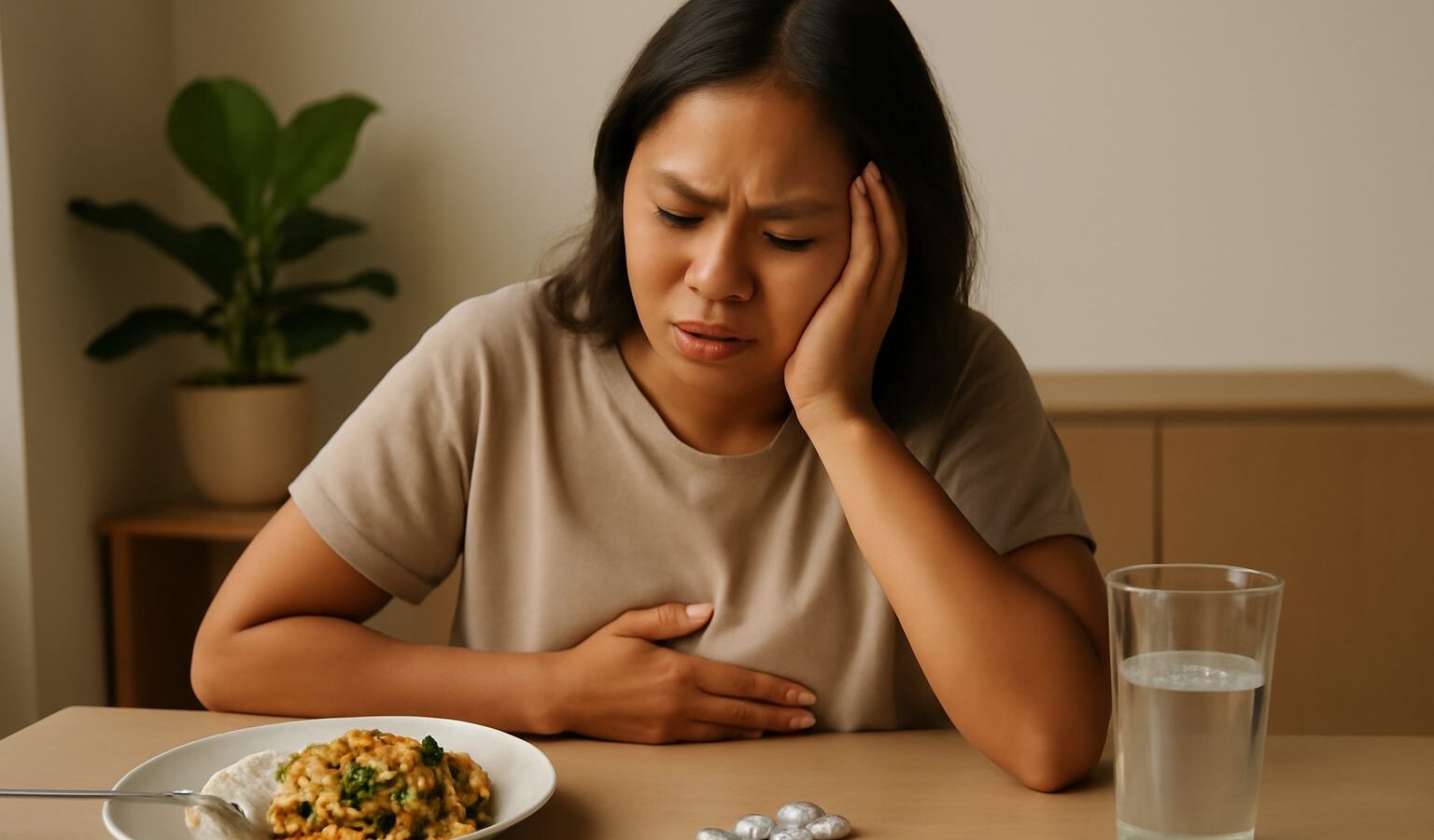
A bad meal can knock out even the healthiest adult. In Singapore’s warm, humid climate, food left out too long can spoil quickly, and a mild stomach upset after a buffet, a takeaway or a home-cooked meal is something most people experience at some point. Most cases of food poisoning in Singapore settle with rest and fluids at home, but some need a doctor quickly.
This guide is for adults caring for themselves or another adult. It covers home care, rehydration and when to see a GP or go to A&E. It is general information, not medical advice. If you are unsure, see a doctor or call a GP clinic or polyclinic for guidance.
Common Symptoms and How They Usually Progress
Food poisoning is a broad term for illness caused by eating food or drink contaminated with bacteria, viruses, parasites or toxins. Symptoms often include:
- Nausea and vomiting
- Diarrhoea, sometimes frequent and watery
- Stomach cramps
- Mild fever, chills or body aches
- Tiredness and loss of appetite
Symptoms can start within hours of eating or take a day or more to appear, depending on the cause. Many people feel the worst of it over the first day and improve gradually after that. It can be hard to tell food poisoning apart from a stomach virus, and home care is similar for both.
Rehydration Comes First
The biggest risk with vomiting and diarrhoea is losing too much fluid and salts. Replacing them is the most important part of home care.
What helps:
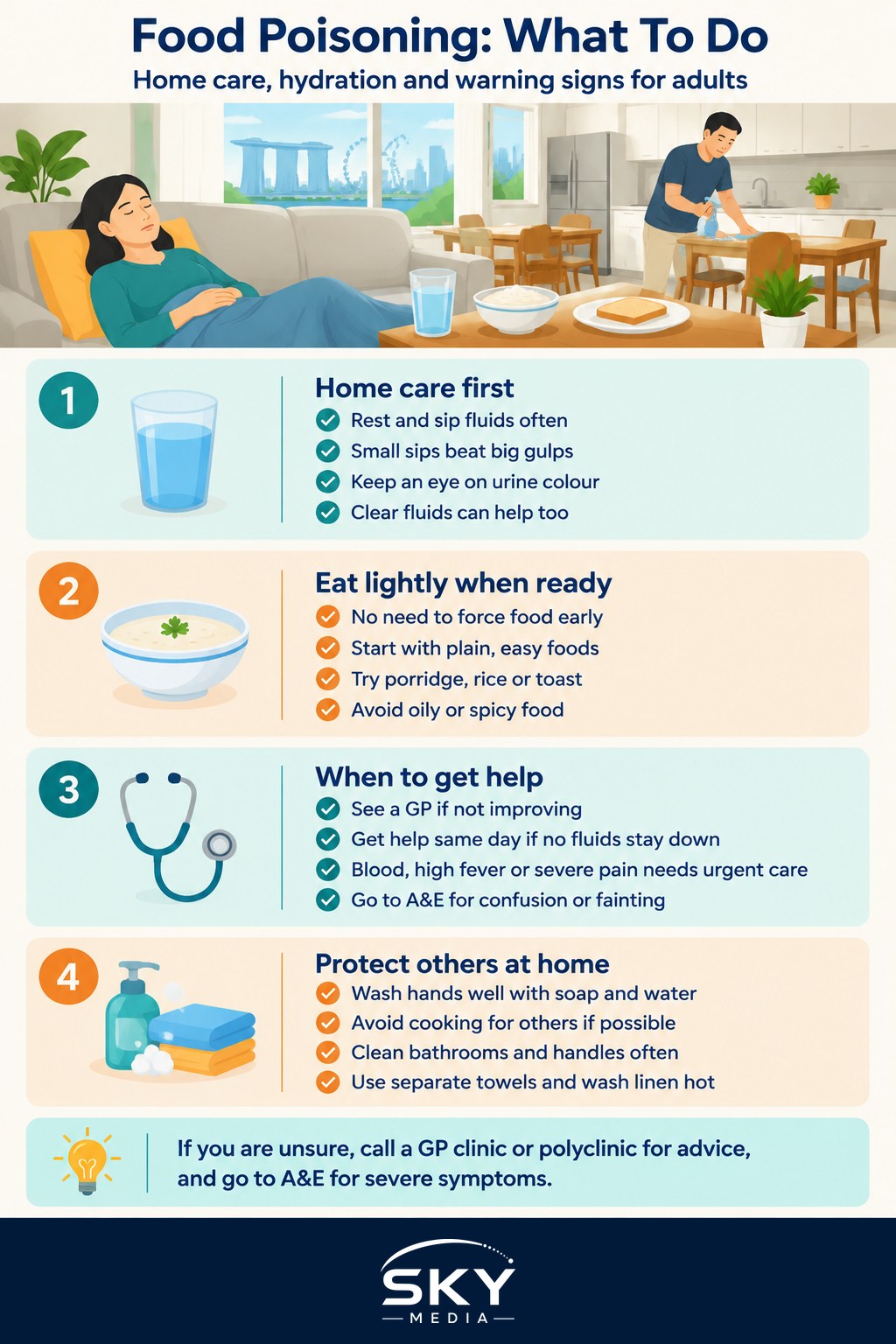
- Oral rehydration solution (ORS). These are sachets or ready-made drinks sold at pharmacies in Singapore, designed to replace water, salts and sugar in the right balance. Follow the instructions on the pack, and ask the pharmacist if you are unsure which product suits you.
- Small, frequent sips. If you are vomiting, drinking a large glass at once often comes straight back up. Take small sips every few minutes and increase slowly as your stomach settles.
- Clear fluids such as water and clear soups help too, alongside ORS.
What to limit:
- Alcohol, which adds to dehydration
- Strong coffee and energy drinks
- Very sugary drinks in large amounts, which can make diarrhoea worse for some people
Check your hydration by noticing how often you pass urine and its colour. Passing urine regularly, and pale rather than dark, is a reassuring sign.
Eating Again and Resting
There is no need to force food in the first hours if you feel sick. Once you can keep fluids down and feel hungry, start with small portions of plain, easy food:
- Plain porridge or congee, a familiar comfort food in many Singapore homes
- Plain rice, toast or crackers
- Bananas
- Clear soups and broth
Hold off on oily, spicy, very rich or heavily fried food for a day or two, and go easy on dairy if it seems to upset your stomach. Rest as much as you can. If you need time off work, a GP can assess you and issue a medical certificate if appropriate. Many clinics in Singapore also offer telemedicine consultations, which can be convenient when you do not want to be far from a toilet.
About medicines: do not take anti-diarrhoea or anti-vomiting medicine without checking with a pharmacist or doctor first. These are not suitable for everyone, particularly if you have a fever or blood in your stool. Antibiotics are only needed for some causes, and only a doctor can decide that.
When to See a GP, and When to Go to A&E
Use this table as a general guide. It does not replace professional judgment, and if you are worried at any point, get medical help.
| Situation | Suggested action |
|---|---|
| Mild diarrhoea or vomiting, keeping fluids down, improving within a day or two | Rest and rehydrate at home, watch for changes |
| Symptoms lasting more than a few days, or not improving | See a GP or polyclinic |
| Can’t keep any fluids down for many hours, or passing very little urine | See a doctor promptly, the same day |
| Blood in stool or vomit, high fever, or severe constant stomach pain | See a doctor urgently, consider A&E |
| Confusion, fainting, very fast heartbeat, difficulty breathing, blurred vision or muscle weakness | Go to A&E or call 995 |
Seek medical advice early if you are in a higher-risk group, including:
- Pregnant women, as some food-borne infections can affect pregnancy
- Older adults, who can become dehydrated quickly
- People with diabetes, kidney or heart conditions, or a weakened immune system
- Anyone on regular medication that may be affected by vomiting or dehydration
For older family members, dehydration can show up as unusual drowsiness or confusion rather than thirst. Our guide to pneumonia in older adults explains why changes in alertness in seniors deserve prompt attention.
Also seek help if symptoms started after eating shellfish or wild mushrooms and include tingling, numbness or weakness, or if you recently travelled abroad and fell ill afterwards. Tell the doctor what you ate and where.
In Singapore, 995 is the number for emergency ambulance services. For non-emergencies, go to a GP clinic, a polyclinic or call a GP for advice. The Ministry of Health and HealthHub have general information on when to use A&E. Stroke and heart attack symptoms can sometimes be mistaken for other illness, so know the signs too; see our guide to stroke warning signs in Singapore.
Protecting Others in Your Household
Some causes of food poisoning and stomach bugs spread easily between people. While you are ill and for a short time after:
- Wash hands thoroughly with soap and water after using the toilet and before handling food. Hand sanitiser alone may not work well against some stomach viruses.
- Avoid preparing food for others where possible.
- Clean bathroom surfaces and toilet handles often, and wash soiled linen promptly on a hot cycle if the fabric allows.
- Use separate towels.
If you work as a food handler, check with your employer and doctor about when you can safely return to work.
Reporting a Suspected Food Source
If you suspect a restaurant, caterer or food stall made you ill, especially if others who ate the same food also fell sick, you can give feedback to the Singapore Food Agency (SFA) through its website. Note what you ate, where and when, when symptoms started, and keep receipts if you have them. This helps the authorities look into hygiene concerns and protect other diners.
Reducing the Risk Next Time
A few habits make a real difference in a hot climate:
- Refrigerate leftovers promptly rather than leaving them on the counter for hours.
- Reheat food until it is steaming hot all the way through.
- Keep raw meat and seafood away from ready-to-eat food, with separate chopping boards.
- Be cautious with buffets and catered food that has sat out for a long time.
- When in doubt about whether food is still good, throw it out.
Most adults recover from food poisoning within a few days with good rest and steady rehydration. The key is to keep fluids going, watch for warning signs, and get medical help without delay if things are not improving.
Frequently Asked Questions
Can I take anti-diarrhoea medicine to stop the symptoms quickly? Check with a pharmacist or doctor first. These medicines are not suitable for everyone, particularly if you have a fever or blood in your stool. Antibiotics are also only needed for some causes, and only a doctor can decide that.
How can I tell if I am drinking enough while ill? Notice how often you pass urine and its colour. Passing urine regularly, and pale rather than dark, is reassuring. Take small, frequent sips and use oral rehydration solution from a pharmacy, and see a doctor if you cannot keep fluids down.
What can I eat once the vomiting settles? Start with small portions of plain, easy food such as porridge or congee, plain rice, toast, crackers, bananas and clear soups. Hold off on oily, spicy, very rich or heavily fried food for a day or two, and go easy on dairy.
How do I stop spreading it to the rest of the family? Wash hands thoroughly with soap and water after using the toilet and before handling food, since hand sanitiser alone may not work against some stomach viruses. Avoid preparing food for others, clean toilet handles often and use separate towels.
Where can I report a restaurant that I think made me ill? Give feedback to the Singapore Food Agency through its website, especially if others who ate the same food also fell sick. Note what you ate, where and when, when symptoms began, and keep receipts, as this helps the authorities look into hygiene concerns.
Official sources: HealthHub
Further reading: How to Report Food Poisoning or a Dirty Food Stall to SFA · Appendicitis in Adults: Warning Signs and What to Do