

Appendicitis is one of the most common reasons adults need emergency abdominal surgery, and it can start with symptoms that feel like ordinary indigestion. Knowing the appendicitis symptoms adults typically experience, and when stomach pain needs urgent attention, can make a real difference to how quickly you get help.
This article is general information only, not medical advice. If you are worried about abdominal pain, see a doctor promptly, and for severe or worsening pain go to the nearest emergency department or call 995.
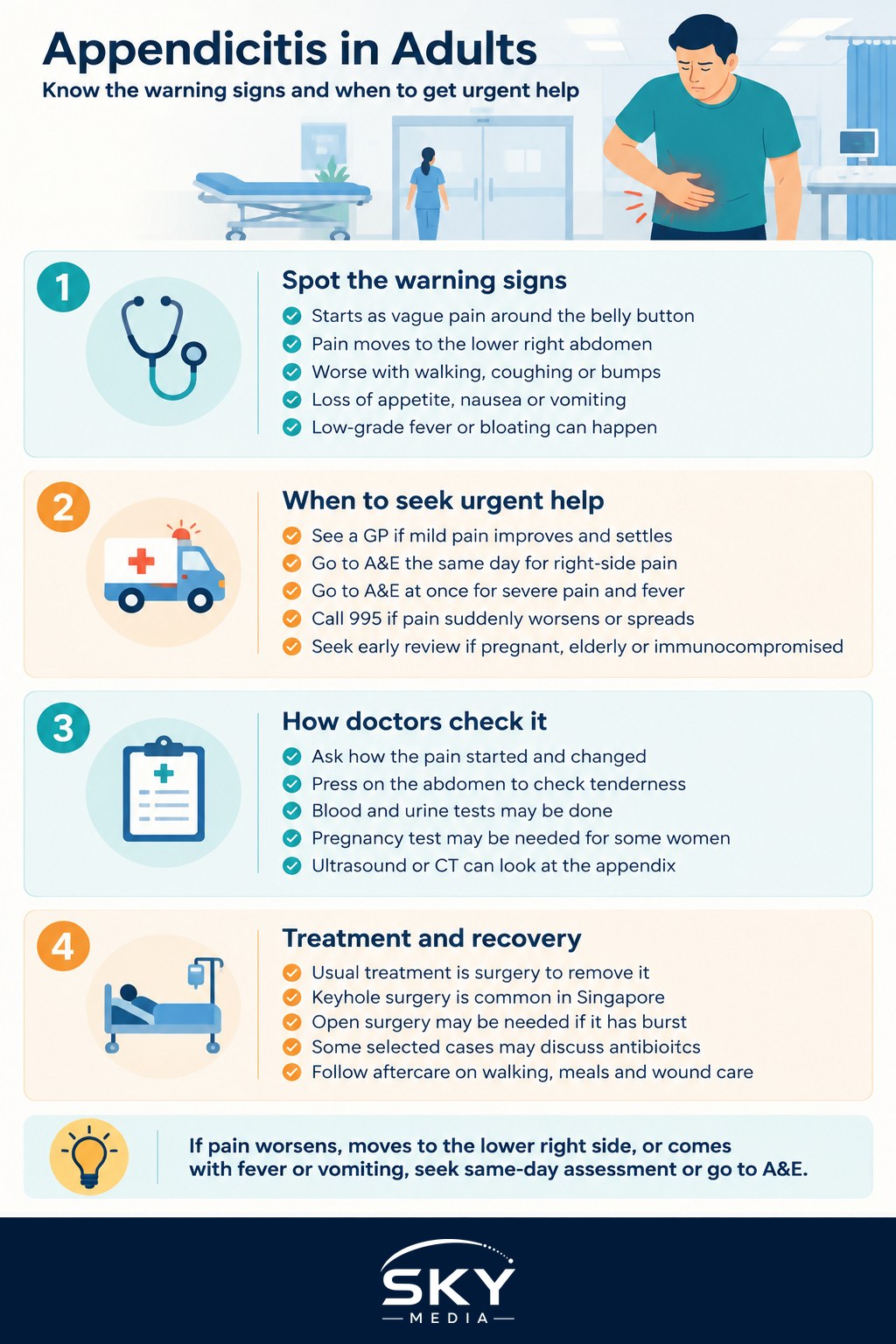
What the Appendix Is and Why It Becomes Inflamed
The appendix is a small, finger-shaped pouch attached to the large intestine, usually in the lower right part of the abdomen. Appendicitis happens when it becomes inflamed and infected, often because something blocks its opening, such as hardened stool, swollen lymph tissue or, less commonly, other causes.
Once blocked, pressure builds and bacteria multiply. If not treated, the appendix can perforate (burst), spreading infection into the abdomen. That is why doctors treat suspected appendicitis as an emergency rather than something to watch for several days.
Appendicitis can happen at any age, but it is commonly seen in teenagers and young adults. Older adults and pregnant women can get it too, and their symptoms are sometimes less typical.
Early Warning Signs to Recognise
Symptoms vary from person to person, but a classic pattern looks like this:
- Pain that starts around the belly button. It is often dull and vague at first, and may come and go.
- Pain that moves to the lower right abdomen. Over several hours, it tends to shift and become sharper and more constant.
- Pain that worsens with movement. Walking, coughing, sneezing, or going over bumps in a car can make it noticeably worse.
- Loss of appetite. Many people simply do not feel like eating.
- Nausea or vomiting, usually after the pain begins.
- Low-grade fever, which can rise if the infection progresses.
- Changes in bowel habits, such as constipation, diarrhoea or a feeling of bloating.
Not everyone has all of these. Some adults have pain in the back, the pelvis or the lower left side, depending on where their appendix sits. Older adults may have milder pain and less fever, which can delay diagnosis.
When to Go to A&E Instead of a GP
A general practitioner (GP) or polyclinic is the right place for many stomach complaints. But some situations need a hospital emergency department (A&E) directly.
| Situation | What to do |
|---|---|
| Mild, vague stomach ache with no fever, improving over hours | See a GP or polyclinic if it does not settle; monitor closely |
| Pain moving to the lower right abdomen, worse when walking or coughing | Go to A&E the same day for assessment |
| Severe pain with fever, vomiting or a rigid, very tender belly | Go to A&E immediately |
| Sudden worsening, or pain that eases then returns spreading across the abdomen | Call 995 or go to A&E without delay |
| Pregnant, elderly or immunocompromised with new abdominal pain | Seek medical review early; do not wait it out |
A sudden easing of pain followed by more widespread pain can sometimes mean the appendix has burst. This is a medical emergency.
While waiting to be seen:
- Avoid eating or drinking much, in case you need surgery.
- Avoid laxatives or enemas, which can be harmful if the appendix is inflamed.
- Avoid taking strong painkillers before a doctor examines you unless advised, as they can mask symptoms. Ask a doctor or pharmacist if unsure.
- Do not apply heat packs to the abdomen.
Similar pain can come from other conditions. Gallbladder problems usually cause upper right pain, which our guide to gallstones in Singapore explains. Food poisoning tends to bring diarrhoea and cramping across the whole abdomen; see food poisoning in adults for how that usually differs.
How Appendicitis Is Diagnosed
There is no single test that confirms appendicitis on its own, so doctors combine several pieces of information:
- History and physical examination. The doctor will ask how the pain started and moved, and press on different areas of your abdomen to check for tenderness.
- Blood tests, to look for signs of infection or inflammation.
- Urine tests, to rule out urinary tract infection or kidney stones.
- Pregnancy test for women of childbearing age, since some gynaecological conditions can mimic appendicitis.
- Imaging, such as an ultrasound or CT scan, to look at the appendix directly.
You may be observed for a few hours in hospital while doctors repeat examinations and tests. This is normal practice when the picture is not yet clear.
Treatment Options
The usual treatment is surgery to remove the appendix, called an appendectomy. In Singapore hospitals, this is commonly done by keyhole (laparoscopic) surgery, using a few small cuts and a camera. Open surgery through a larger cut may be needed in some cases, such as when the appendix has burst.
In selected uncomplicated cases, some doctors may discuss antibiotics as an alternative to surgery. Whether this is suitable depends on your scans, overall health and the surgeon’s assessment. There is a chance appendicitis can return later after antibiotic treatment, so discuss the pros and cons with your surgical team.
If the appendix has burst, treatment may involve a longer hospital stay, antibiotics, and sometimes drainage of any collection of pus.
Recovery After Surgery
Recovery depends on the type of surgery and whether there were complications. Your surgical team will give specific instructions, and those should always take priority over general advice. Common points include:
- Getting up and walking early, often on the same or next day, to help prevent complications.
- Starting with light meals and building back to a normal diet as advised.
- Wound care. Keep incisions clean and dry, and follow instructions on showering and dressing changes.
- Avoiding heavy lifting and strenuous exercise for the period your surgeon recommends.
- Returning to work. Desk-based work may resume sooner than physically demanding jobs. Your doctor can issue a medical certificate covering the expected recovery period.
- Follow-up appointment at the surgical clinic to check healing.
Contact your doctor or return to A&E if you notice:
- Fever or chills after discharge
- Increasing redness, swelling, pus or bleeding from the wounds
- Worsening abdominal pain or swelling
- Persistent vomiting or inability to eat or drink
- No bowel movement for several days, or diarrhoea that does not settle
Costs and Insurance Considerations
Emergency surgery and hospital stays can be costly, especially in private hospitals or higher ward classes. MediShield Life, Singapore’s basic health insurance for citizens and permanent residents, and MediSave can help with eligible hospital bills, subject to their rules. If you have an Integrated Shield Plan or company insurance, check your policy wording or speak to your insurer or HR about coverage and pre-authorisation. Foreigners should check what their employer’s insurance or personal plan covers.
Key Takeaways
Appendicitis often starts with vague pain around the belly button that moves to the lower right abdomen and gets worse with movement, sometimes with nausea, appetite loss and fever. Do not wait for pain to become unbearable. Same-day medical assessment is safer than waiting it out, and severe or rapidly worsening pain needs A&E straight away.
Explore more: Stroke Warning Signs in Singapore: Know Them and Act Fast
Frequently Asked Questions
Can appendicitis go away on its own without treatment? Do not count on it. Appendicitis is treated as an emergency because the inflamed appendix can burst, and pain that eases suddenly can be a warning sign rather than recovery. Any suspected case needs a doctor’s assessment the same day.
How can I tell appendicitis pain from ordinary gastric pain or gas? It is hard to tell at home. Gas or gastric pain tends to come and go and may ease after passing wind or eating, while appendicitis pain usually worsens steadily, shifts lower right and hurts with movement or coughing. If unsure, get examined rather than guess.
Can I live normally without my appendix? Yes. The appendix is not essential, and most people live normally after it is removed. Your surgical team will tell you what to expect during recovery and when you can return to usual activities.
How long will I stay in hospital after an appendectomy? It depends on the type of surgery and whether the appendix had burst. Straightforward keyhole cases often have shorter stays, while complicated cases need longer, sometimes with antibiotics. Your surgeon will advise when you are fit for discharge.
What should I tell the doctor when I go in with stomach pain? Say where the pain began, whether it moved, and when it started. Mention fever, vomiting, appetite changes, bowel habits, pregnancy possibility and any medicines taken. A clear timeline helps the doctor decide which tests to arrange.
Official sources: HealthHub
Further reading: Hernia Signs, Lifting Safety and When to See a Doctor