
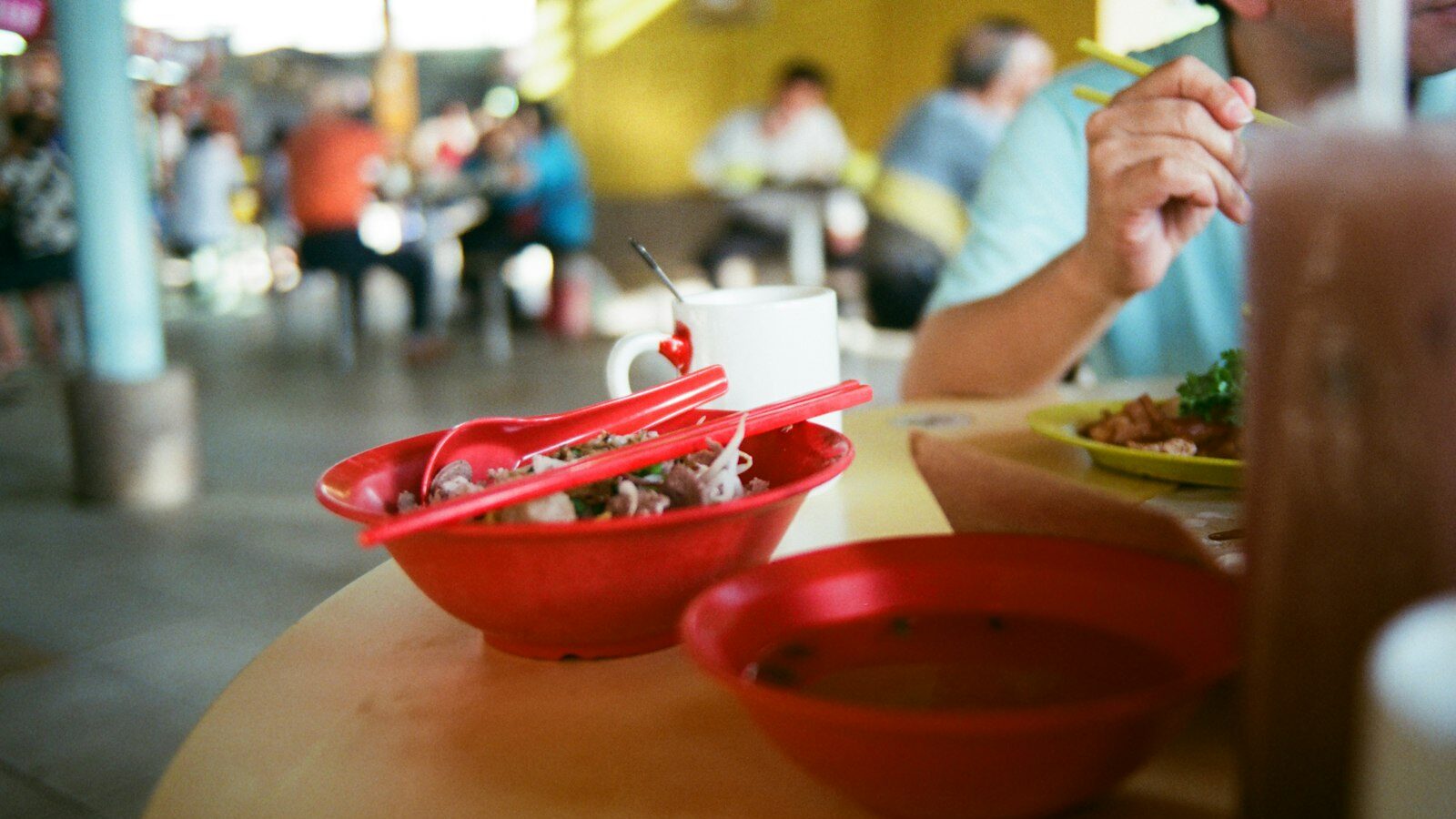
You ate at a food court, a restaurant or a hawker stall, and a few hours later you were curled up with stomach cramps. Or perhaps you noticed something at a stall that made you lose your appetite, such as cockroaches near the food or raw meat left out in the heat. Either way, you may want to report food poisoning to SFA, the Singapore Food Agency, so the premises can be checked and other diners are protected.
This guide explains who handles what, which channels to use, what evidence to keep, and what to expect afterwards. It is about reporting. If you are unwell right now, read our guide to food poisoning in adults first, and see a doctor if you have warning signs.
Your Health Comes First
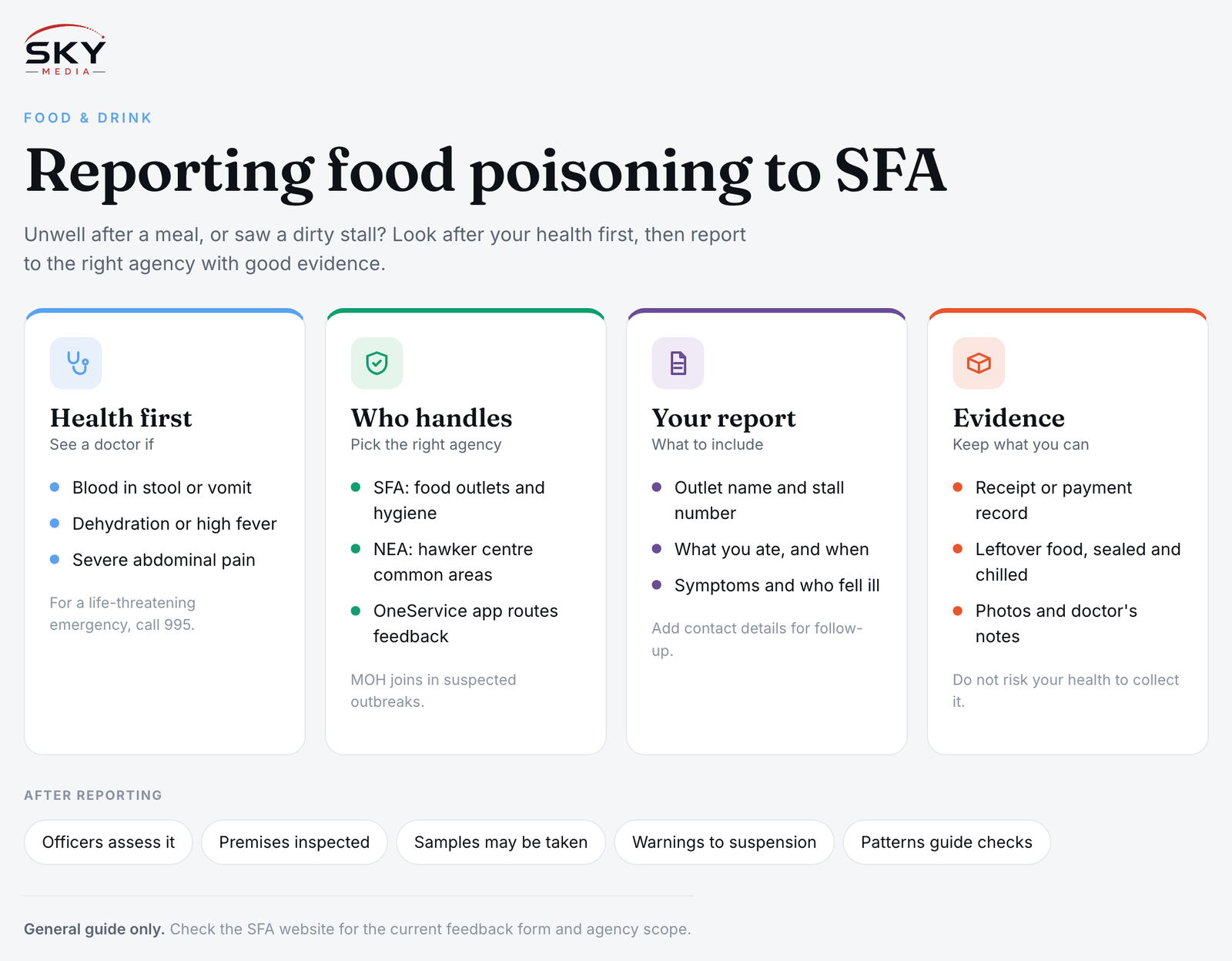
Before you think about a complaint, look after yourself. See a doctor, a polyclinic, or go to an emergency department if you have:
- Blood in your stool or vomit
- Signs of dehydration, such as very little urine, dizziness or a dry mouth
- A high fever, or symptoms that are not improving after a day or two
- Severe abdominal pain
- Symptoms in a young child, an elderly person, a pregnant woman, or someone with a weak immune system
For a life-threatening emergency, call 995. A medical consultation also helps your report later, because a doctor’s diagnosis and any test results are far stronger evidence than your own recollection. Doctors in Singapore are required to notify the authorities of certain infectious diseases, so your case may already be on record if a specific illness is confirmed.
Who Handles What: SFA, NEA and Others
Food-related complaints can involve different agencies, and sending your feedback to the right one saves time.
- Singapore Food Agency (SFA) oversees food safety, including licensed food shops, food stalls, caterers, food factories and imported food. Suspected food poisoning linked to a food outlet and poor food hygiene practices at a stall fall here.
- National Environment Agency (NEA) manages public hygiene and the hawker centres it runs, so issues like dirty common areas, toilets or pest problems in a hawker centre’s shared spaces may be handled by NEA or the centre’s managing agent.
- Ministry of Health (MOH) works with SFA when there is a suspected outbreak involving many people, for example at a large event or a school.
- Town councils or building management handle cleanliness issues in common areas they manage.
If you are unsure, the government’s OneService app lets you submit municipal feedback and routes it to the relevant agency. You will not be penalised for picking the wrong channel, but choosing the right one usually means a faster response. Agency responsibilities can change, so check each agency’s website for the current scope.
How to Submit a Report to SFA
SFA accepts public feedback through its official website, where you will find an online feedback form for food safety matters. Check the SFA site for the current form and any hotline details, as these can be updated.
When you submit, include:
- The outlet’s name and exact location, including the stall or unit number written mid-sentence, such as stall #01-23, and the name of the hawker centre, food court or mall.
- The date and time you bought and ate the food.
- What you ate and drank, item by item.
- When symptoms started and what they were.
- How many people in your group ate there and how many fell ill, and what each person ate.
- Whether you saw a doctor, and any diagnosis.
- Your contact details, so an officer can follow up with questions.
For a hygiene complaint without illness, describe exactly what you saw, where and when, and attach photos if you have them.
Evidence Worth Keeping
Good evidence makes it much easier for investigators to act. Gather what you can, but do not put your health at risk to do it.
| Evidence | Why it helps | How to keep it |
|---|---|---|
| Receipt or payment record | Proves where and when you bought the food | Keep the paper receipt or screenshot the card or e-wallet transaction |
| Leftover food | May be tested if collected in time | Seal it in a clean bag or container, label it, refrigerate it, do not eat it |
| Photos and videos | Shows hygiene issues or contamination | Take clear shots with the stall signage visible, note the time |
| Medical certificate or doctor’s notes | Confirms illness and timing | Keep a copy, note any lab test results |
| Food delivery order details | Identifies the outlet and order time | Screenshot the order confirmation in the delivery app |
| Notes on symptoms | Helps link timing to a likely source | Write down onset time and symptoms as soon as you can |
A few practical tips:
- Food poisoning symptoms can appear anywhere from a few hours to a few days after eating, depending on the cause. Think back over the past several meals, not just the most recent one.
- If several people who shared one meal all fell ill, that is a strong signal. Record what each person ate.
- When photographing a stall, be discreet and respectful. Avoid confronting staff or filming people in a way that could cause a dispute.
What Happens After You Report
Once SFA receives your feedback, officers will assess it. Depending on the case, they may contact you for more details, inspect the premises, take food or environmental samples, and review the outlet’s food handling practices. If several reports point to the same place, or there is a suspected outbreak, SFA and MOH may investigate jointly.
Outcomes depend on what investigators find. Enforcement can range from advice and warnings to fines, suspension of the licence, or other action under food safety laws. You will not necessarily be told every detail of the outcome, and investigations take time, so be patient. SFA does publish some enforcement updates and press releases on its website.
Your report matters even if nothing visible happens immediately. Complaints help authorities spot patterns and decide where to focus inspections.
Compensation and Other Steps
SFA’s role is food safety enforcement, not obtaining money for you. If you want a refund or compensation, start by contacting the outlet directly and politely with your receipt and medical evidence. Many businesses will respond to a reasonable request.
If that fails, options include approaching the Consumers Association of Singapore (CASE) for advice, or considering a claim at the Small Claims Tribunals, part of the State Courts. These routes have their own rules and limits, so check the official websites before proceeding. For a delivery order, contact the app’s customer support as well, since platforms often have their own processes.
Reporting Responsibly
Food businesses can be harmed by unfounded claims, so stick to facts. Describe what you ate, what happened and what you saw, without guessing or exaggerating. Avoid posting accusations online before you have reported to the authorities and seen a doctor, since your illness may have come from a different meal.
If you run a food business yourself, understanding how complaints are handled is also useful. Our guides on the SFA food shop licence and starting a hawker stall explain the hygiene responsibilities that licensees take on.
Frequently Asked Questions
Do I have to give my name when reporting a food stall to SFA? Giving contact details is strongly encouraged, because officers often need to ask follow-up questions about what you ate, when and where. Check the current SFA feedback form to see which fields are required. A report with clear facts and evidence is far easier to act on than a vague one.
Is it worth reporting if only I fell mildly ill after a meal? It can be. A single report may not trigger action by itself, but complaints help authorities spot patterns when several people mention the same outlet. Note your symptoms and what you ate, and see a doctor if you are unwell. You do not need a large group of sick diners to report.
How soon after getting sick should I report to SFA? As soon as you are well enough, because memories fade and leftover food or stall conditions change quickly. Look after your health first, then submit the outlet name, time of the meal and symptoms. Late reports are still useful, but early ones are easier to investigate.
What if many guests got sick after a buffet or catered event? Tell the organiser or caterer straight away and report it to SFA, since several people falling ill after the same meal is a strong signal. List what each person ate and when symptoms began. Guests who are unwell should see a doctor, and serious cases may involve MOH.
Will the stall be named or closed after I report it? Not necessarily. Officers assess each report, and outcomes range from advice and warnings to fines or licence suspension, depending on what they find. You may not be told every detail, and investigations take time. SFA publishes some enforcement updates on its website.