
In Singapore, food goes off faster than many newcomers expect. A pot of curry left on the stove after lunch, a tingkat of noodles carried to a picnic or a bag of groceries left in the car can all become a problem within hours. Good food safety in hot weather comes down to a few simple habits: know how long food can safely sit out, keep cold food cold and hot food hot, and store leftovers properly.
This guide covers practical steps for home cooks, office lunch packers and anyone planning a picnic or gathering. It is general guidance. For official food safety information, refer to the Singapore Food Agency (SFA), and if you or someone in your family feels unwell after eating, see a doctor.
Why Food Spoils Faster in Singapore
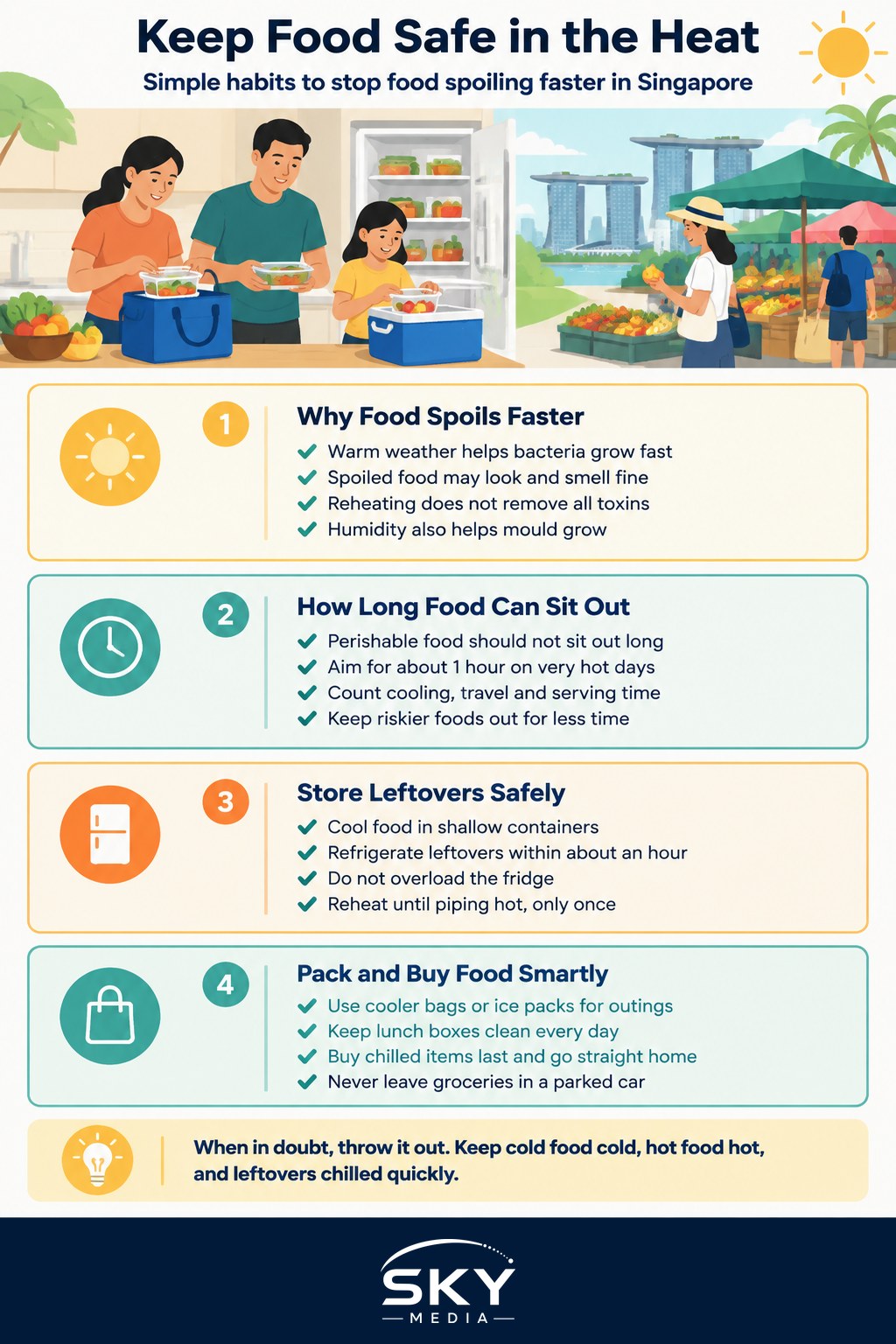
Bacteria that cause food poisoning multiply fastest at warm temperatures, roughly between fridge temperature and cooking temperature. Food safety agencies often call this range the “danger zone”. Singapore’s daytime temperatures sit right in the middle of it all year round, and the humidity helps mould grow on bread, cakes and fruit too.
Two points are worth remembering:
- Spoiled food does not always look or smell bad. Some harmful bacteria give no warning signs at all, so the sniff test is not reliable.
- Reheating does not undo all the damage. Some bacteria produce toxins that are not destroyed by heat, which is why cooked rice left out for too long can still make people ill after reheating.
How Long Can Food Safely Sit Out?
A widely used food safety rule is that perishable food should not stay at room temperature for more than about two hours in total, and for much less time when it is very hot. On a hot day outdoors, many food safety bodies suggest aiming for no more than about one hour. Count the total time the food is out, including time spent cooling after cooking, travelling and serving.
The table below gives a practical comparison. Treat the times as a cautious guide rather than a precise limit, and when in doubt, throw it out.
| Food | Higher risk if left out? | Practical approach in Singapore’s heat |
|---|---|---|
| Cooked rice, noodles and pasta | Yes | Cool quickly, refrigerate within about an hour, eat leftovers soon |
| Meat, poultry, seafood and egg dishes | Yes | Keep hot until serving or chill promptly; do not leave out during a long meal |
| Dishes with coconut milk, cream or mayonnaise | Yes | Keep chilled, serve in small portions, refill from the fridge |
| Cut fruit and salads | Yes | Keep cold and covered; prepare close to serving time |
| Whole uncut fruit, bread, biscuits, kueh without perishable fillings | Lower | Fine for longer but keep covered and out of sun; watch for mould |
Storing Leftovers the Right Way
A lot of food poisoning at home starts with leftovers that cooled slowly or sat out overnight.
- Cool food quickly. Divide large pots of soup, curry or rice into shallow containers so they cool faster, then refrigerate. Do not leave a big pot on the stove to cool for hours.
- Refrigerate promptly. Aim to get leftovers into the fridge within about an hour in Singapore’s heat.
- Do not overpack the fridge. Cold air needs to circulate. An overloaded fridge may not keep everything cold enough.
- Check your fridge temperature. A fridge thermometer is inexpensive and tells you whether your fridge is actually cold enough. Most food safety guidance recommends a fridge setting at or below about 4 degrees Celsius.
- Label and date containers. Eat refrigerated leftovers within a few days and freeze anything you will not eat soon.
- Reheat thoroughly. Reheat until piping hot all the way through, and only reheat once.
- Keep raw and cooked food apart. Store raw meat and seafood in sealed containers on the bottom shelf so juices cannot drip onto ready-to-eat food.
Packing Lunches, Picnics and Party Food
Singapore’s park connectors, beaches and void decks are lovely for a picnic, but the heat makes planning important.
For Picnics and Outings
- Use an insulated cooler bag with ice packs or frozen water bottles, which double as cold drinks later.
- Pack the cooler straight from the fridge, just before you leave, and keep it in the shade.
- Pack perishable items in small portions so you only take out what you will eat.
- Bring wet wipes or hand sanitiser for cleaning hands before eating.
- Throw away perishable leftovers that have been out in the heat rather than bringing them home.
For Office and School Lunches
- If there is no fridge at work, use an insulated lunch box with an ice pack.
- Choose foods that cope better without refrigeration if you cannot keep them cold.
- Wash lunch boxes and bottles every day; residue left in a warm bag breeds bacteria.
For Home Gatherings and Celebrations
Buffet-style meals are common at Singapore gatherings, from birthdays to festive open houses. Keep most of the food in the fridge or warming trays, put out smaller dishes, and replace them with fresh ones rather than topping up old platters. If you order catering, ask the caterer about the recommended consumption window and follow it.
Shopping and Transporting Groceries in the Heat
- Buy perishables last. Pick up chilled and frozen items at the end of your supermarket or wet market trip.
- Go straight home. Avoid running other errands with raw meat or seafood in your bag.
- Never leave groceries in a parked car. Car interiors heat up very quickly in the sun.
- Use an insulated bag for meat, seafood and dairy, especially if you walk or take public transport.
- Check delivery orders immediately. If chilled items from an online grocery order arrive warm, contact the retailer rather than using them.
Spotting Spoiled Food and When to Get Help
Throw food away if it smells sour or unusual, has a slimy texture, shows mould, or if a sealed container or can is bulging. For many foods, though, there may be no visible signs, so the time and temperature history matters more than appearance.
Food poisoning can cause stomach cramps, vomiting, diarrhoea and fever. Most mild cases settle, but young children, pregnant women, older adults and people with weakened immunity are more vulnerable. Keep up fluids and see a doctor if symptoms are severe, persistent, include blood, or if the person cannot keep fluids down. Older family members are especially at risk in the heat; our guide to keeping active and safe in hot weather as a senior covers related precautions, and our guide to creating a safe home for seniors is useful for anyone caring for elderly relatives.
If you suspect food from a restaurant or food stall made you ill, you can provide feedback to the SFA through its official website.
A few habits, such as chilling food promptly, packing with ice and being strict with leftovers, make a real difference. In a climate as warm as Singapore’s, being a little cautious with food is always worth it.
Further reading: Storing and Using Christmas Leftovers Safely in Singapore’s Heat · How to Store Bread in Singapore’s Humid Weather Properly · Finger Food Ideas for Home Parties in Singapore