
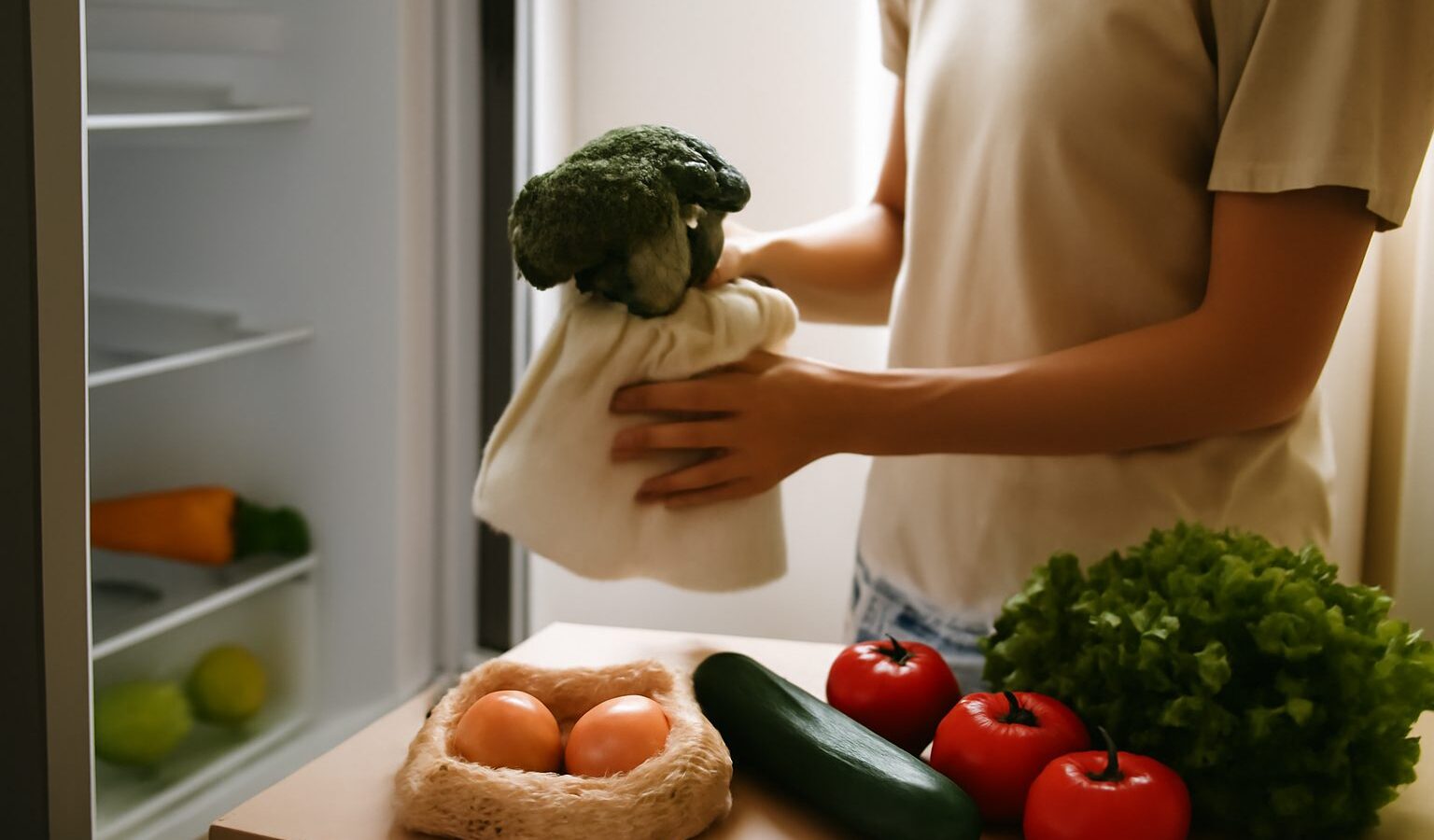
If you have ever bought a beautiful bunch of kangkong on Saturday only to find it slimy by Monday, you already know the problem. Keeping produce fresh in Singapore is genuinely harder than in cooler places, because our heat and humidity push vegetables and fruit to spoil fast. The good news is that a handful of small habits, most of them free, will stretch the life of what you buy and cut the amount you throw away. This guide walks through practical storage that works in a real HDB or condo kitchen with one modest fridge.

Why Produce Spoils So Fast Here
Two things drive spoilage: warmth and moisture. Our year-round tropical heat speeds up the natural breakdown of fruit and vegetables, and the humidity in the air keeps everything a little damp, which is exactly what mould and bacteria like. Leave a bag of vegetables on the kitchen counter for an afternoon and you can almost watch them wilt. Ants and fruit flies show up quickly too.
The practical takeaway is simple. Get produce home and into the right spot quickly, especially leafy greens and anything cut or bruised. If you shop at the wet market in the morning, do not run five more errands with the vegetables warming in your bag. On a hot day, bring a small insulated bag for the trip home. The less time your produce spends warm, the longer it lasts once it reaches the fridge.
Sort Your Produce Before You Store It
Not everything belongs in the same place, and storing items wrongly is the most common reason food goes off early. A quick sort when you unpack pays off all week.
Leafy greens, herbs, and most local vegetables like chye sim, kailan, bak choy, and beansprouts want cool, slightly humid conditions, so they go in the crisper drawer. Roots such as potatoes, onions, garlic, ginger, and shallots prefer a cool, dark, dry, and airy spot outside the fridge; a ventilated basket in a shaded corner of the kitchen works well. Tomatoes lose their flavour and turn mealy when chilled, so keep them out at room temperature until very ripe. Bananas also dislike the fridge and will blacken, though the fruit inside stays fine for a day or two.
One more sorting rule matters: some fruit gives off ethylene, a natural gas that ripens and then ages nearby produce. Bananas, apples, mangoes, and ripe papaya are strong emitters. Keep them away from your leafy greens and herbs unless you actually want to speed up ripening, which is a handy trick for a rock-hard avocado or mango.
Storage Method by Type of Produce
Here is a quick reference for the produce most Singapore home cooks buy each week. Treat the timings as rough guidance rather than fixed rules, and always use your eyes and nose.
| Produce | Where to keep it | Simple tip |
|---|---|---|
| Leafy greens (chye sim, bak choy) | Crisper drawer | Wrap loosely in a dry paper towel inside a bag |
| Fresh herbs (coriander, mint) | Fridge, stems in water | Cover leaves loosely with a bag, like a bouquet |
| Roots (potato, onion, garlic) | Cool dark airy basket | Never seal in plastic; they need to breathe |
| Ginger and galangal | Fridge or freezer | Freeze whole and grate from frozen |
| Tomatoes and bananas | Room temperature | Chilling ruins texture and flavour |
| Beansprouts | Fridge, in water | Change the water daily; use quickly |
| Chillies | Fridge in a dry bag | Wipe dry first; moisture makes them soft |
Keep Moisture in Its Place
The trick with most vegetables is managing moisture: enough to stop them drying out, not so much that they rot. Wet leaves in a sealed bag turn to slime within a day.
For leafy greens, do not wash them until you are ready to cook. If they arrived damp, roll them loosely in a dry paper towel or clean tea towel to absorb the excess, then put them in a bag left slightly open in the crisper. For soft herbs like coriander and mint, trim the stem ends and stand them in a cup with a little water, then drape a bag over the top and refrigerate; they can perk up for a week or more this way. Hardy herbs such as curry leaves and pandan keep well wrapped dry in the fridge, and both freeze beautifully for cooking later.
Mushrooms are the opposite of most things: they hate plastic and turn slimy in a sealed bag. Keep them in paper, or the paper punnet they came in, in the fridge.
Shop and Cook to Cut Waste
How you buy matters as much as how you store. Buying a little more often beats one giant weekend haul that half rots before you reach it, particularly for delicate greens. At the wet market you can ask for the amount you actually need, which helps. Supermarkets sell loose vegetables too, so you are not forced into an oversized pack.
Put a simple system in place at home. Keep older produce at the front so you use it first, and glance in the crisper before you plan meals rather than after. If greens start to flag, they are still perfect for a quick stir-fry, a soup, or an omelette; wilting is not the same as unsafe. Very soft fruit blends into a drink or cooks down into a compote. Building this habit alongside a loose weekly plan means you buy with a purpose and finish what you start.
A quick word on judgement, in the spirit of the Singapore Food Agency guidance: storage times vary with the item and your fridge, so trust your senses. Sliminess, off smells, and visible mould mean it goes in the bin. When genuinely in doubt, throw it out; it is not worth a stomach upset.
Explore more
Once your produce is lasting longer, put it to work. Turn a well-stocked crisper into a plan with our guide to planning a week of home-cooked meals, and cook ahead using batch cooking and freezing meals. For the wider picture on fridges, leftovers, and safe handling in our heat, read how to store food safely at home.
Frequently Asked Questions
How can I revive wilted vegetables before cooking? Trim the stem ends and soak limp greens in cold water for a short while, then drain and dry them. Mild wilting is a texture issue, not a safety one, so they are still fine for stir-fries, soups or omelettes. If they are slimy or smell off, bin them.
Can I cut off mould and eat the rest of the fruit or vegetable? Not with soft, wet produce, because mould can spread unseen through it, so discard it. With firm vegetables a bad spot is more of a judgement call, and food safety bodies such as the Singapore Food Agency advise caution. When in doubt, throw it out.
How do I keep fruit flies away from my fruit bowl? Do not leave overripe fruit out, since it draws them quickly. Use up or refrigerate ripe fruit, wipe the counter and empty the bin regularly. Covering the bowl loosely with a mesh cover also helps, though a quick use-up habit works best.
Can I freeze vegetables and herbs bought at the market? Many freeze well, though texture changes, so use them in cooked dishes. Curry leaves, pandan and ginger freeze nicely as they are, while most vegetables do better blanched briefly first. Portion them and label the bag so you can take out only what you need.
How should I store cut fruit and half an onion? Put them in a covered container in the fridge and use them within a day or two. Cut surfaces dry out and spoil faster in the warmth. Keep strong-smelling onion separate from other foods, and eat cut fruit soon, since it should not sit out in the heat.