

Around a child’s first birthday, many Singapore parents face the same question in the supermarket aisle: keep buying the tins of “growing-up” milk, or move to fresh cow’s milk from the chiller? Relatives often have strong opinions, the marketing is persuasive, and the price difference is significant.
This guide explains the formula to fresh milk toddler transition in practical terms: what growing-up milk is, how it compares with fresh milk, how families usually make the switch, and when to get professional advice. It is general information, not medical advice. Every child is different, so speak to your paediatrician, polyclinic doctor or nurse about your own child, and see HealthHub for official guidance on feeding young children.
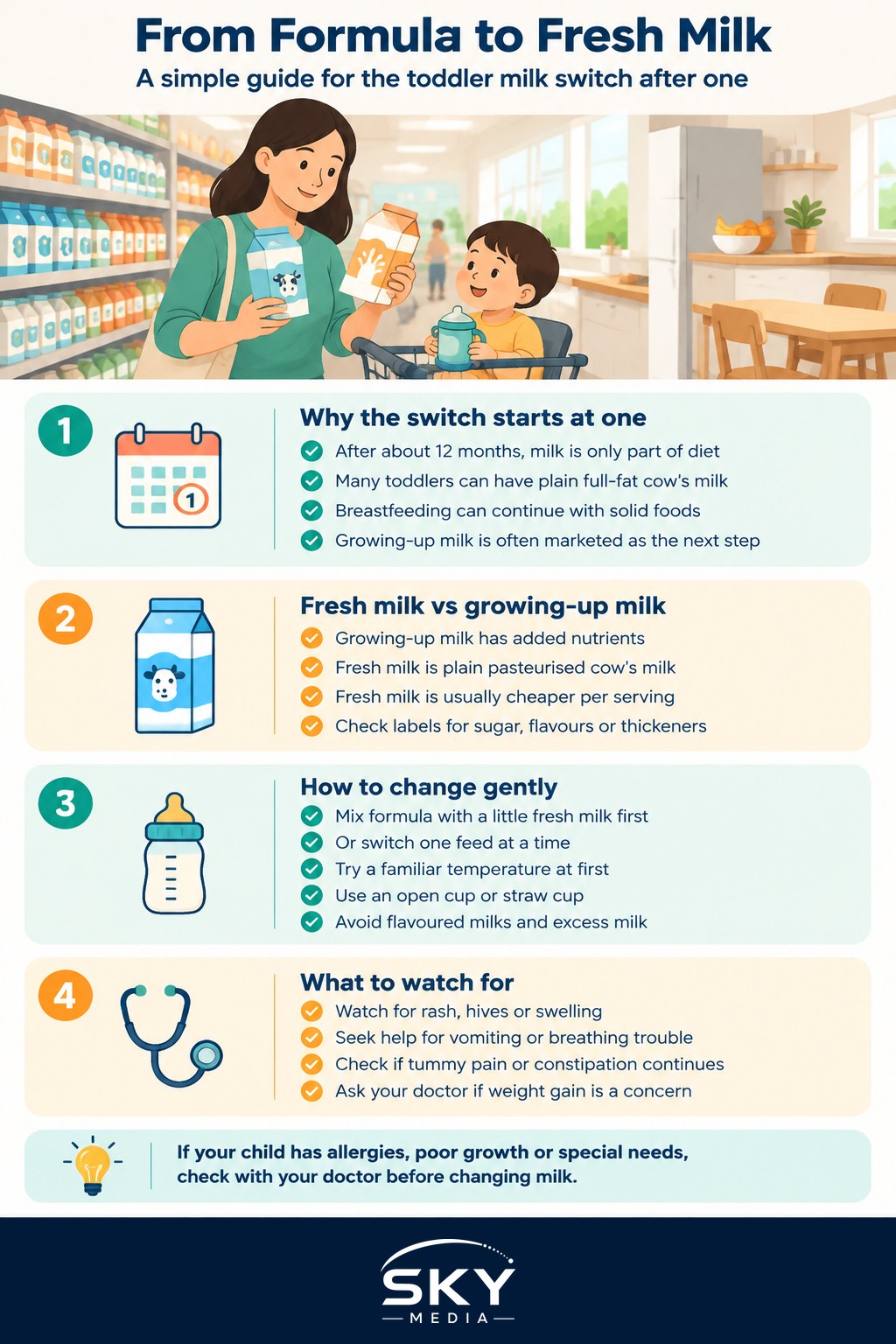
Why the Question Comes Up at One
Infant formula is designed to be a baby’s main food in the first year when they are not breastfed. After around 12 months, most toddlers are eating a range of family foods, and milk becomes one part of a balanced diet rather than the centre of it.
At this point, health authorities in many countries, including the guidance available through HealthHub, generally describe plain full-fat cow’s milk as suitable as a main milk drink for healthy toddlers from around one year. Breastfeeding can also continue alongside solid foods for as long as mother and child wish.
So why the dilemma? Because “stage 3” or growing-up milk is heavily marketed as the next step after infant formula, and many parents assume it is necessary. Grandparents may also prefer the tin they know.
Growing-Up Milk vs Fresh Milk
Growing-up milks are formulated milk drinks for toddlers, usually made from cow’s milk with added vitamins, minerals and other ingredients. Fresh milk is pasteurised cow’s milk sold chilled; UHT milk is heat-treated milk that is shelf-stable until opened.
| Factor | Growing-up milk (stage 3 or 4) | Fresh full-fat cow’s milk |
|---|---|---|
| What it is | Powdered or ready-to-drink formulated milk with added nutrients | Plain pasteurised milk |
| Necessary for a healthy toddler? | Generally not considered necessary if the diet is varied | Commonly recommended as the main milk drink from around one |
| Added sugars and flavours | Some products contain added sugars or flavourings; check the label | No added sugar in plain milk |
| Cost | Typically much higher per serving | Typically lower per serving |
| Convenience | Powder travels well and keeps unopened | Needs refrigeration once opened; UHT cartons travel well |
When a doctor may suggest something other than plain fresh milk:
- A child who is a very picky eater or has a restricted diet.
- Concerns about growth, weight gain or iron levels.
- A diagnosed cow’s milk protein allergy or other medical condition.
- A premature baby or a child with specific nutritional needs.
In these cases, follow the advice you are given rather than general guidance. Do not switch to a plant-based milk without professional input; many are low in protein or other nutrients that toddlers need. Our guide to plant-based milks explains how they differ, but for toddlers the choice should be made with your doctor.
How to Make the Switch Gently
There is no single correct method. Many families use one of these approaches:
Gradual mixing. Prepare the usual formula, then replace a small portion with fresh milk. Over one to two weeks, increase the proportion of fresh milk until it is all fresh milk. This helps toddlers who are sensitive to changes in taste.
One feed at a time. Swap one daily formula feed, often the daytime one, for fresh milk first. Once that is accepted, switch the next. The bedtime milk is usually the last to change.
Straight swap. Some toddlers simply accept fresh milk from the start, with no fuss.
Tips that help many families:
- Serve it at a familiar temperature. If your child is used to warm formula, warm the fresh milk gently first, then gradually serve it cooler.
- Use an open or straw cup. Moving away from the bottle around this age is often recommended for dental health. Ask your doctor or dentist for guidance on timing.
- Avoid flavoured milks. Chocolate or strawberry milk adds sugar your toddler does not need.
- Do not let milk crowd out food. If your toddler drinks a lot of milk, they may eat less at meals. Ask your doctor or nurse about a sensible daily amount for your child’s age.
- Keep it consistent across caregivers. Make sure grandparents, your helper and the infantcare centre know the plan.
Choosing Milk in Singapore Supermarkets
The chilled section has many options, so read labels:
- Full-fat (whole) milk is the usual recommendation for toddlers at the start. Lower-fat milks are generally introduced later, if at all, on professional advice.
- Pasteurised fresh milk vs UHT. Both are pasteurised for safety. UHT is handy for travel and storing at home before opening. Avoid raw, unpasteurised milk for young children.
- “Milk drinks” vs milk. Some products in the chiller are reconstituted or have added sugar or thickeners. Plain milk should list milk as the main or only ingredient.
- Storage. Once opened, refrigerate and use within the time stated on the pack. Do not leave milk out in Singapore’s heat.
If you are mainly feeding formula now and want to understand bottle hygiene and preparation in the meantime, our guide to formula and bottle feeding covers the basics.
Signs to Watch and When to Get Advice
Most toddlers adjust within a couple of weeks. Contact your doctor or polyclinic if you notice:
- Rashes, hives, vomiting, swelling or breathing difficulty after drinking milk. Seek urgent care for breathing problems or facial swelling.
- Persistent diarrhoea, constipation or tummy pain that does not settle.
- Refusal of all milk together with poor eating, or concerns about weight gain.
- Unusual tiredness or paleness, which may need a check-up.
Routine developmental and health checks are also a good time to raise feeding questions. Your child’s health booklet and HealthHub have information on the national schedule of checks.
Handling Family Opinions
Grandparents may worry that fresh milk is “not enough” or that the expensive tin is better. A few ways to handle this kindly:
- Share what your doctor said. Advice from a paediatrician or polyclinic nurse often carries weight.
- Explain the whole diet. Show that your toddler gets nutrients from meals, not just milk.
- Agree a trial period and review together.
- Remember the shared goal. Everyone wants a healthy, well-fed child.
Whatever you choose, the most important things after one are a varied diet, regular meals and snacks, and enjoying food together as a family.
Official sources: Health Promotion Board
Further reading: Is Growing-Up Milk Worth It for Toddlers? · Why Babies Under One Cannot Have Honey · Buying Infant Formula in Singapore as a Mainland Parent