
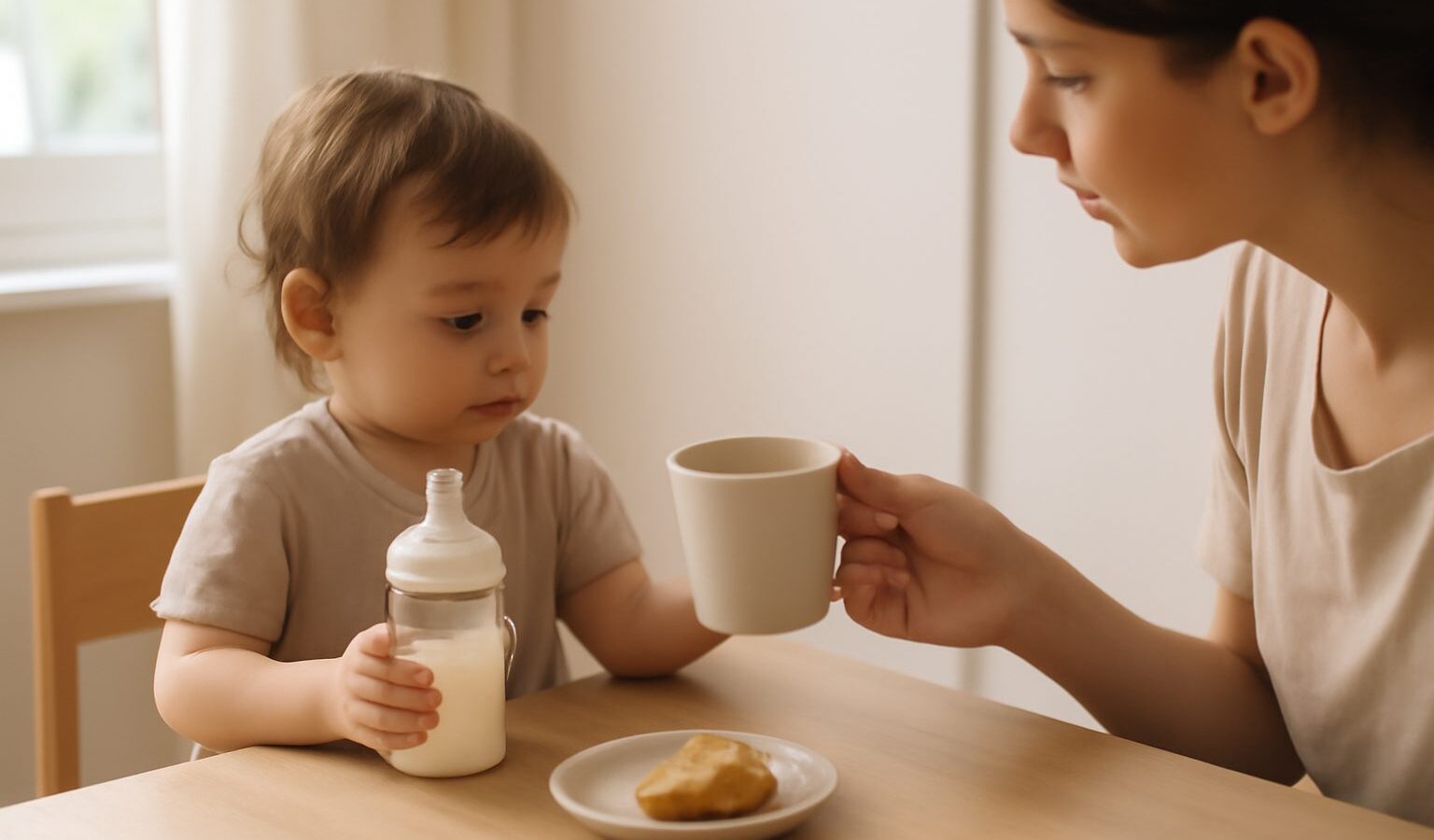
The bottle has been a trusty comfort for a long time, so it is no surprise that giving it up feels like a big step for both of you. Weaning toddler off bottle habits is usually smoother when you go slowly, offer a friendly cup, and keep the mood relaxed. This is a general, encouraging guide, not medical advice. Your paediatrician, polyclinic or family dentist is the right person to ask about your own child’s teeth, growth and feeding.
Why Move From Bottle To Cup
Learning to drink from a cup is a normal part of growing up, and there are good reasons to make the switch during the toddler years. Long-term bottle use, especially drinking milk or sweet drinks from a bottle at bedtime, is linked by dentists to a higher risk of tooth decay because the liquid pools around the teeth. A cup also helps your toddler develop their mouth and drinking skills.
That said, there is no single deadline that applies to every child, and no reason to panic if your toddler is still on the bottle. Aim for a calm, gradual move rather than a sudden battle. If you are ever unsure about timing for your child, ask at your next polyclinic or dental visit.
Introducing The Cup Gently
The friendliest approach is to make the cup appealing before you take anything away. Toddlers respond far better to choice and fun than to pressure.
- Offer a cup early in the day. Introduce it with water at a calm meal, when your toddler is not overtired or ravenous.
- Let them choose. A trip to pick a cup they like, or one with a favourite colour or character, can build excitement.
- Try different styles. Some toddlers take to an open cup, some to a straw cup, some to a free-flow spout. There is no single best type, so follow your child.
- Model it. Let your toddler see you and older siblings drinking from cups. Copying is powerful at this age.
- Praise the effort. Cheer the attempts, and stay relaxed about the spills. A splash mat and patience go a long way.
Keep milk feeds you are not yet changing in the usual bottle for now, so the cup feels like a fun addition rather than a loss.
Phasing Out The Bottles
Once the cup is familiar, start swapping bottles for cups one feed at a time. Going one step at a time is gentler than removing every bottle at once.
- Start with the easy feed. Daytime bottles, especially the ones your toddler is least attached to, are usually simplest to swap first.
- Give it several days. Let each change settle before you move to the next feed.
- Move milk to mealtimes and cups. Offering milk in a cup alongside food helps it feel normal.
- Save the comfort bottles for last. The bedtime and early-morning bottles are often the most loved, so tackle them once the others are gone.
- Keep water in a cup between meals. In Singapore’s heat, easy access to water in a cup encourages cup use naturally.
If your toddler resists, pause rather than push. A few days back on a bottle is fine. This is a marathon, not a race.
Bottle Versus Cup: What Changes
Parents often ask how the switch will actually help. This table lays out the general trade-offs so you can see why the move is worth the effort.
| Feature | Bottle habit | Cup habit |
|---|---|---|
| Dental health | Milk or sweet drinks can pool around teeth | Less pooling, kinder to teeth over time |
| Skills | Sucking, familiar comfort | Sipping builds mouth and drinking skills |
| Independence | Often needs an adult and a routine | Easier for a toddler to manage themselves |
| At bedtime | Strong sleep association to unpick later | Drink and sleep become separate |
The aim is not to rush your child, but to move gently towards habits that support their teeth and their growing independence.
Handling The Bedtime Bottle
The bedtime bottle is usually the hardest to drop because it is wrapped up with comfort and sleep. Take it slowly. You can gradually reduce what is in the bottle, bring the milk earlier so it is part of the wind-down rather than the last thing before sleep, and build a cosy new routine in its place. A bath, a cuddle, a couple of books and a song can carry the comfort the bottle used to provide.
Dentists generally advise against letting a toddler fall asleep with a bottle of milk or juice, and against sugary drinks in a bottle, because of the risk to teeth. Brushing after the last milk and before bed helps protect little teeth. For habits linked to teeth, your dentist is the best person to guide you.
When To Ask For Help
Most bottle weaning is simply a matter of patience. Speak to a doctor, paediatrician, polyclinic or dentist if:
- Your toddler is drinking very little after dropping bottles, or seems to be losing interest in food and drink.
- You notice signs of dehydration, such as far fewer wet nappies, a dry mouth or unusual tiredness.
- You have concerns about their weight, growth or teeth.
- Feeding or drinking has become very distressing for your child in a way that is not settling.
Every child lets go of the bottle in their own time. Keep the tone loving and unhurried, celebrate the small wins, and lean on your polyclinic or dentist whenever you want reassurance. You are doing a good job.
Keeping Milk And Meals On Track
During the switch, some toddlers drink a little less milk for a short while as they get used to the cup, and that is usually fine. Milk matters for growing bodies, but it is only one part of a balanced diet that also includes solid food. Offer milk in the cup at meals and snacks, keep water freely available through the day, and let your toddler’s own appetite guide how much they take. There is no need to force milk or turn drinks into a battle. If you are worried that your child is drinking or eating far too little, is losing weight, or you have questions about their growth and nutrition, your polyclinic, HealthHub resources or your paediatrician can give advice suited to your child. General guidance online is no substitute for someone who can see your toddler.
Explore More
Dropping the bottle often goes hand in hand with letting go of other comforts. See our gentle steps for dropping the dummy and the pacifier, and for another common toddler habit, our guide to helping your child stop thumb-sucking.