

For many families moving from mainland China, milk powder (奶粉) is one of the first things to sort out. Back home you may have relied on a particular brand, a trusted cross-border seller, or relatives sending tins from overseas. In Singapore the shopping experience is different, and in some ways simpler. This guide explains what to expect when buying infant formula in Singapore: which kinds of brands you will see, how to make sure a tin is genuine, where to buy, and what to check before switching.
This is general information, not medical advice. Decisions about what your baby drinks, and whether to change formula, should be made with your paediatrician or a polyclinic doctor.
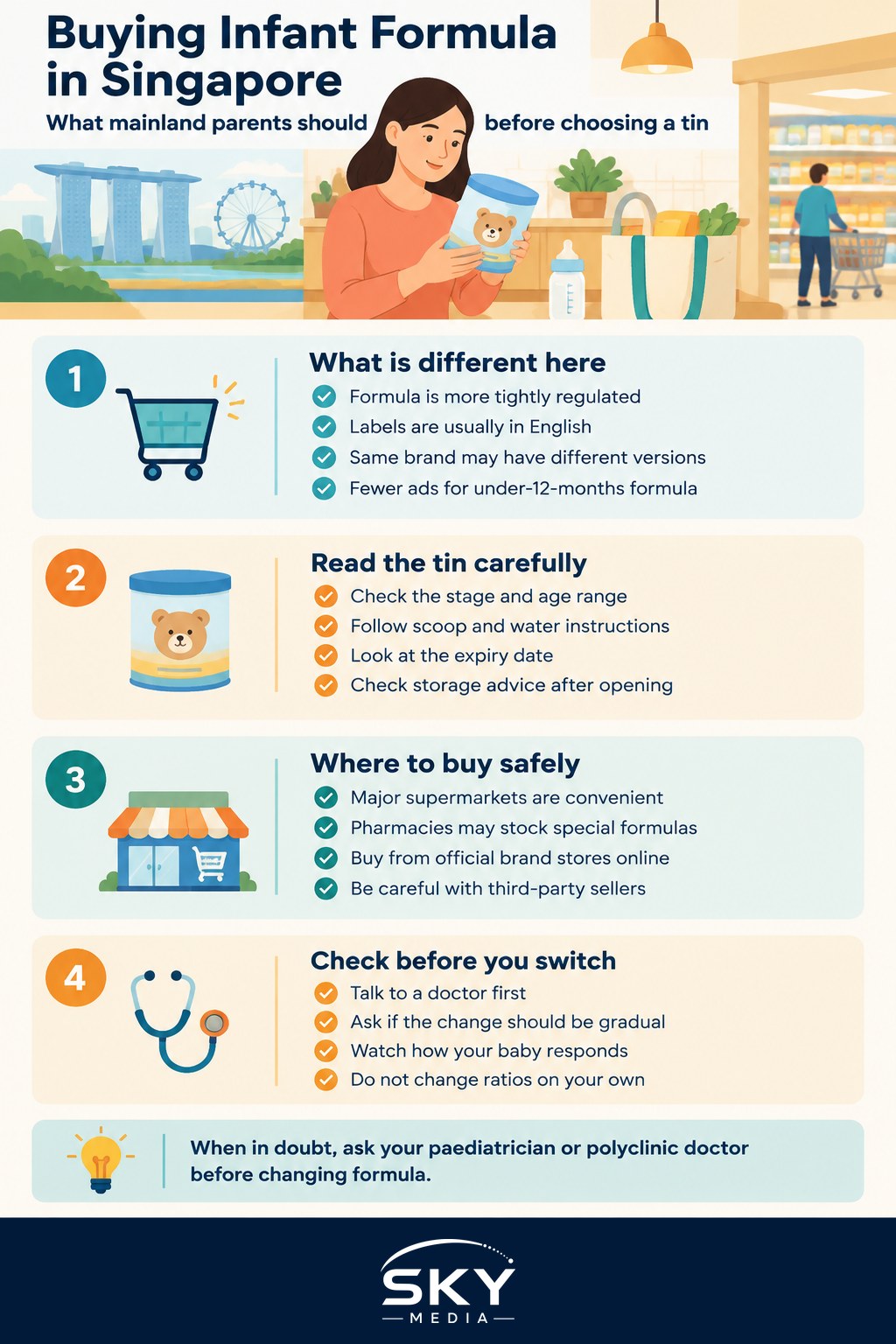
How the Singapore Market Differs From China
The first surprise for many mainland parents is that worry about fake formula is much lower here. Singapore’s food supply is regulated by the Singapore Food Agency (SFA), which sets rules for imported food, including infant formula, and checks products sold in the country. Most formula on shelves is imported from countries such as those in Europe, Oceania and elsewhere in Asia, through official distributors.
Some other differences you may notice:
- Labels are in English. Ingredient lists, preparation instructions and stage numbers are printed in English, sometimes with other languages. Chinese labelling is not guaranteed.
- Familiar names, different versions. Many large international brands you know from China are sold here, but the Singapore version may differ from the China version (国行版) in recipe, packaging, tin size or stage naming. Do not assume the tin is identical just because the brand is the same.
- Fewer promotions for young babies. Singapore has an industry code that restricts how formula for babies under 12 months is marketed, so you may see fewer advertisements and offers for first-stage products than for growing-up milk.
- Hospitals do not endorse brands. If your baby was given a particular formula in a Singapore hospital, it does not mean the hospital recommends that brand over others.
Understanding Stages and Labels
Formula is usually organised into stages, similar to what you are used to in China, though the exact naming varies by brand:
- Infant formula (often stage 1): for babies from birth, generally up to around six months or as stated on the tin
- Follow-on formula (often stage 2): for older babies, usually from around six months
- Growing-up milk (often stage 3 and above): for toddlers, usually from one year
There are also specialised formulas, for example for babies with certain allergies or digestive issues. Some of these are sold only in pharmacies, and some should only be used on a doctor’s advice. If your baby needed a special formula in China, bring the details, including the product name and ingredients, to your first doctor’s visit in Singapore so they can suggest a local equivalent.
When reading an English label, check the stage and age range, the preparation instructions (scoop size and water amount), the expiry date, and storage advice after opening. Always follow the instructions on the tin, or your doctor’s guidance, for how to prepare feeds.
Where to Buy Infant Formula in Singapore
| Where to buy | Advantages | Things to watch |
|---|---|---|
| Major supermarkets | Convenient, regular stock, sold through local distributors | Specialised formulas may not be stocked |
| Pharmacies and health and beauty chains | Wider range including some special formulas, pharmacists on hand to answer questions | Prices and range vary by outlet |
| Official brand stores on large e-commerce platforms | Delivery to your door, bulk buying | Check it is the brand’s official store, not a third-party seller |
| Third-party online sellers and overseas parallel imports | Sometimes cheaper or offer versions not sold locally | Higher risk of incorrect storage, short expiry or versions not meant for Singapore |
For most families, buying from a supermarket, pharmacy or an official brand store gives the best balance of safety and convenience. Many parents set up regular online orders once they settle on a product, so they never run out.
How to Check a Tin Is Genuine and Safe
Although counterfeit formula is not a common concern in Singapore, good habits are still worth keeping:
- Buy from a reputable seller. Official channels reduce the risk of tins that were stored badly or imported outside normal channels.
- Inspect the packaging. The tin should be undamaged, with no dents, rust or bulging. The inner seal should be intact when you open it.
- Check the expiry date. Make sure there is enough time to finish the tin before it expires, especially when buying in bulk.
- Look at the label language and version. A tin with labelling meant for another market may still be genuine, but it may not match local formulation or have clear English instructions.
- Be cautious with prices that seem too low. Unusually cheap tins from unknown sellers may be near expiry or poorly stored.
- Keep the batch number. Note it or keep the tin until it is finished. If there is ever a product recall, you can check whether yours is affected. SFA publishes food recall notices on its website.
If you want to bring formula from China or order it from abroad, check SFA’s rules on importing food for personal use before you do. Requirements can change, so confirm the current position on the SFA website.
Switching Brands or Versions Safely
Many mainland families eventually switch to a brand that is easier to buy in Singapore. This is very common, but it is best done with care:
- Talk to your doctor first, especially if your baby is young, was born early, or has any health condition, allergy or feeding difficulty.
- Ask how to change over. Your doctor or a polyclinic nurse can advise whether to switch at once or gradually.
- Watch how your baby responds in the days after a change, and contact a doctor if you have any concerns.
- Do not mix your own formulas or change preparation ratios without medical advice.
Your child’s development checks at a polyclinic or family clinic are a good chance to ask questions about feeding. Our general guide to formula and bottle feeding in Singapore covers preparation, bottles and sterilising in more detail.
Planning Ahead for Infant Care and Beyond
If your baby will join an infant care centre, ask how the centre handles formula. Many centres ask parents to supply their own tins, labelled with the child’s name, along with feeding instructions. Our guide to infant care vs childcare explains how these arrangements usually work.
Later, around your child’s first birthday, you will face the next decision: whether to continue with growing-up milk or move to fresh milk. Our guide to switching from formula to fresh milk after one covers that stage.
Buying formula in Singapore quickly becomes routine. Choose a reputable place to buy, learn to read the English label, check expiry and packaging, and lean on your doctor for any switch. That way you can feel confident that your baby is getting what they need in your new home.
Frequently Asked Questions
Is Singapore formula the same as the China-version tin I used before? Not necessarily. The same brand can come in a Singapore version that differs from the 国行版 in recipe, packaging, tin size or stage naming. Read the English label carefully and ask your doctor before assuming it is a like-for-like swap.
How do I switch my baby to a different formula without upsetting their tummy? Speak to a paediatrician or polyclinic nurse first, especially for a young, premature or sensitive baby. They can advise whether to change at once or gradually. Watch your baby in the following days and see a doctor if anything worries you.
Can I bring or order milk powder from China for personal use? Possibly, but the rules can change. Check the Singapore Food Agency website on importing food for personal use before you buy or ship anything. Tins sent from abroad may also have short expiry or labels that are not meant for Singapore.
Where can I find special formula for allergies or digestive problems? Pharmacies and health and beauty chains usually carry a wider range, including some specialised formulas. Several should only be used on a doctor’s advice, so bring the product name and ingredients from your previous formula to your first appointment.
What should I do if the formula I bought is recalled? Stop using that tin and check the batch number against the notice. The Singapore Food Agency publishes food recall notices on its website. Keeping the tin, or a note of its batch number, until it is finished makes this check easy.