
When you first furnish a rental flat in Singapore, the temptation is to buy everything in one weekend. You have just landed, the flat echoes, and every furniture shop seems to be running a sale. The smarter approach is to treat the first month as a staged setup: get the flat liveable within days, then fill the gaps slowly once you know how you actually use the space. This guide is for newcomers who want a comfortable home quickly without spending money they will regret.
Check What Your Lease Already Covers
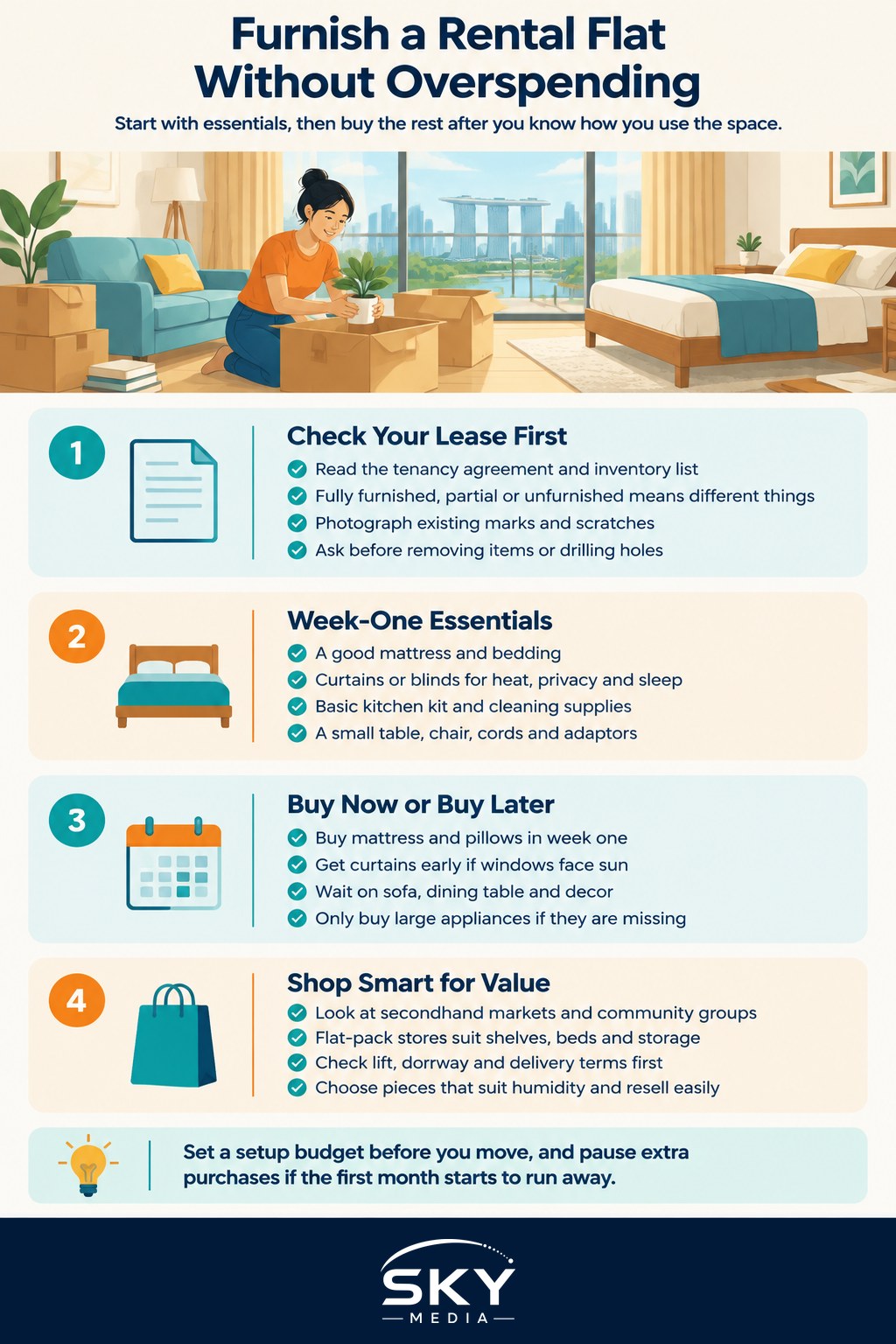
Before buying a single item, read the tenancy agreement and the inventory list carefully. Rentals in Singapore are usually advertised as fully furnished, partially furnished or unfurnished, and these labels mean different things to different landlords.
- Fully furnished often includes beds, a sofa, a dining set, wardrobes, curtains and major appliances.
- Partially furnished typically means built-in wardrobes, kitchen cabinets, a fridge, a washing machine, air-conditioners and lights, but no loose furniture.
- Unfurnished can still include fixtures such as air-conditioners and lights, but sometimes not even curtains.
Walk through the flat with the landlord or agent and photograph everything, including existing marks and scratches. Ask whether you may remove items you do not want, whether you can drill holes for shelves or curtain rods, and whether the landlord will replace a worn mattress. A polite request before you sign is far easier than a negotiation later. Keep in mind that whatever you add or change, you will need to return the flat in agreed condition, so read our guide on preparing a rental flat before moving out early rather than late.
The First-Week Essentials List
Your goal in week one is simple: sleep well, wash, cook something basic and work if you need to. Everything else can wait. Prioritise these items:
- A good mattress and bedding. This is the one item worth spending on properly. Singapore is humid, so pick breathable sheets and a mattress protector to keep moisture and dust mites out.
- Curtains or blinds. Many HDB and condo windows face direct sun or neighbouring blocks. Blackout or dim-out curtains help with heat, privacy and sleep.
- Basic kitchen kit. One pot, one pan, a rice cooker or kettle, a few plates, cutlery and a chopping board are enough to start.
- Cleaning supplies. A mop, broom, dustpan, laundry detergent, a drying rack and clothes hangers. Many flats have a laundry pole holder outside the kitchen window or a service yard for drying.
- A small table and chair. Even a folding table works as desk, dining table and unpacking station.
- Extension cords and adaptors. Singapore uses the three-pin Type G plug. Buy safety-marked adaptors and avoid overloading sockets.
That list alone makes a flat functional. Resist adding a sofa, rug, TV console and decor in the same trip.
Buy Now, Buy Later or Skip
The biggest savings come from timing. Living in the flat for three or four weeks shows you where you actually sit, where light falls, and where clutter builds up. The table below is a practical way to sort your list.
| Item | When to buy | Why |
|---|---|---|
| Mattress and pillows | Week one, new | Hygiene and sleep quality matter most; secondhand bedding is risky |
| Curtains or blinds | Week one | Heat, glare and privacy affect comfort immediately |
| Sofa | After a month | You need to know the room flow and how often you relax at home |
| Dining table | After a month | A folding table covers you until you know how many people you host |
| Wardrobe or shelving | After unpacking | Built-ins may be enough; measure what is left over first |
| Rugs and decor | Last | Pure comfort items, easy to add later and easy to overspend on |
| Large appliances | Only if missing | Most rentals include them; ask the landlord before buying |
If your lease is short, say one or two years, think about how you will dispose of large items when you leave. Bulky furniture can be hard to sell quickly, and arranging removal adds cost and effort.
Where Newcomers Find Good Value
You do not need to buy everything new. Singapore has an active secondhand market because people relocate constantly.
- Online marketplaces and community groups. Departing expats and upgrading families often sell sofas, desks and shelves at low prices, especially near the end of a school year or financial year. Arrange viewings in daylight and check for stains, wobbles and pests before paying.
- Flat-pack furniture stores. Good for bookshelves, bed frames and storage. They are affordable, and you can take smaller items home by taxi. Our guide to assembling flat-pack furniture without stress covers tools and timing.
- Neighbourhood shops in heartland malls. Useful for household basics, kitchenware and storage boxes at reasonable prices.
- Free giveaways. Many residents give away items in good condition simply to avoid disposal hassle. Always check before collecting that you can transport the item.
When shopping during big sale periods, set your list first. Discounts make it easy to buy things you would never otherwise have chosen. Our tips on shopping sales without overspending apply directly here.
Practical Checks Before You Buy Big Items
Singapore flats have quirks that catch newcomers out. Before committing to anything large:
- Measure the lift and the doorway. Some older HDB blocks have smaller lifts, and corridors can be narrow. A sofa that does not fit in the lift becomes a costly return.
- Check delivery terms. Ask whether delivery includes carrying items to your unit, assembly and removal of packaging. Confirm the delivery window, since some condos require you to book the service lift and register movers with the management office.
- Choose materials for humidity. Fabric absorbs moisture and can develop mould if the room is closed for long periods. Leather, rattan, metal and treated wood often cope better. Good airflow helps whatever you choose.
- Think about pests. Secondhand upholstered furniture and mattresses can carry bed bugs. Inspect seams and corners carefully, or simply buy these new.
- Mind the landlord’s rules. Some leases restrict wall mounting, nails or heavy items on certain floors. Freestanding pieces avoid the issue altogether.
Budget Habits That Keep Setup Costs Down
A staged approach only works if you keep track of what you spend. A few habits help:
- Set a total setup budget before you move, then split it into week-one essentials and a later comfort fund.
- Keep a running list on your phone of things you notice you are missing. If an item stays on the list for three weeks and you are coping fine, you probably do not need it.
- Buy versatile pieces. A storage ottoman, a bench that doubles as seating, or a desk that works as a dining table means fewer items overall.
- Avoid matching sets. Furniture sets look tidy in showrooms but rarely suit rental layouts, and you pay for pieces you may not need.
- Plan for the move out. Items that are easy to resell, such as quality shelving or a compact sofa, are better investments than bulky custom pieces that suit only this flat.
If you do overspend in the first month, which is common when everything feels urgent, pause new purchases for a few weeks and live with what you have. You will often find the flat already feels like home.
Making the Flat Feel Like Home Quickly
Comfort does not come only from furniture. Small, inexpensive touches make a big difference to how settled you feel:
- A couple of houseplants that tolerate indoor light.
- A floor or table lamp for warmer evening light instead of harsh ceiling tubes.
- Photos or prints you brought from home, hung with removable hooks if nails are not allowed.
- A doormat, a shoe rack by the door and a small basket for keys and mail.
These items cost little but turn an empty rental into a space that feels yours. Get the essentials right, give yourself time to observe, and buy the rest with purpose.