

Many parents first hear the term “G6PD” in the days after birth, when the hospital tells them their newborn’s screening result shows a deficiency. It can sound alarming, but most children with G6PD deficiency grow up healthy and active. The key is knowing what to avoid. This guide explains what a G6PD deficiency baby Singapore parents bring home actually needs: what the screening result means, the common triggers such as mothballs, certain herbs and some medicines, and the warning signs that need prompt medical attention.
This is general information, not medical advice. Your baby’s paediatrician, polyclinic doctor and the hospital’s discharge advice should always guide your decisions.
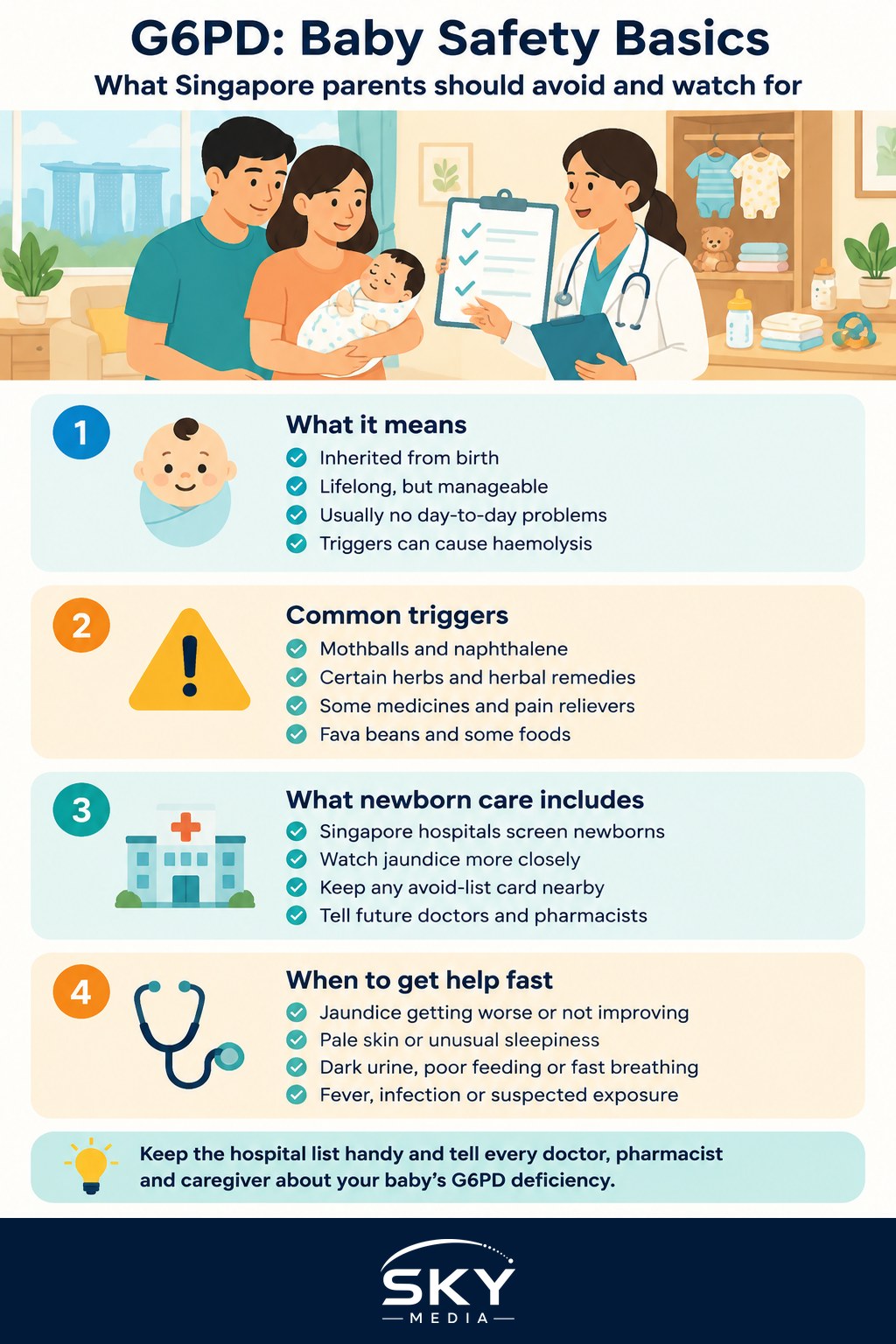
What G6PD Deficiency Is
G6PD (glucose-6-phosphate dehydrogenase) is an enzyme that helps protect red blood cells from damage. In a person with G6PD deficiency, the body has lower levels or less effective forms of this enzyme. Day to day, this usually causes no problems at all.
The issue arises when the body is exposed to certain substances or stresses, such as particular chemicals, foods, medicines or infections. These can cause red blood cells to break down faster than the body can replace them. This is called haemolysis, and it can lead to anaemia and jaundice. In newborns, it can also make jaundice more severe.
Some quick facts parents often ask about:
- It is inherited. The gene is carried on the X chromosome, so it is more common in boys, though girls can be affected too.
- It is lifelong. It is not something a child grows out of, but it is very manageable with awareness.
- It is not caused by anything you did. It is a genetic trait, and it is relatively common in many populations, including in Southeast Asia and China.
Understanding the Newborn Screening Result
Singapore hospitals routinely screen newborns for G6PD deficiency, usually using a blood sample taken around birth. If the result shows deficiency, parents are typically told before discharge and given information on what to avoid.
What usually happens next varies by hospital and by the baby’s condition, but may include:
- Closer jaundice monitoring. Babies with G6PD deficiency may be observed for longer or have their bilirubin (the substance that causes jaundice) checked more often.
- A list of substances to avoid. Many hospitals provide a printed list or card. Keep it somewhere easy to find and share it with caregivers.
- Advice for future healthcare visits. You will be told to inform every doctor, pharmacist and dentist that your child has G6PD deficiency.
If you were not given written information, or you are unsure what the result means, ask the hospital, your paediatrician or a polyclinic. HealthHub, Singapore’s national health information portal, also has resources on newborn screening and G6PD deficiency.
Common Triggers to Avoid
The table below summarises the main categories parents are usually warned about. It is not a complete list. Always use the list given by your doctor or hospital, and check with a pharmacist or doctor before giving anything new.
| Trigger type | Common examples | Where you might encounter it | What to do |
|---|---|---|---|
| Naphthalene | Mothballs, some toilet and wardrobe deodorisers | Wardrobes, storage boxes, old clothes and blankets from relatives | Remove from the home; wash stored items before use |
| Certain herbs | Chuan lian (Coptis, also called huang lian), some traditional preparations | TCM remedies, herbal baths, “cooling” drinks, confinement herbs | Do not give or use any herbal remedy without checking with a doctor |
| Certain medicines | Some antibiotics, some antimalarials, some pain relievers in particular forms | Prescriptions, over-the-counter products, medicines bought overseas | Always tell the doctor and pharmacist about G6PD deficiency |
| Certain foods | Fava beans (broad beans) and foods made with them | Some snacks and imported foods | Read labels; avoid as advised by your doctor |
| Other chemicals | Henna, some dyes and strong chemical products | Festive or cultural practices, home products | Ask your doctor before any skin or home exposure |
Mothballs and naphthalene
Mothballs are a common hidden risk. Grandparents may store baby clothes, blankets or old family items with mothballs, and some household deodorisers contain naphthalene. Even the vapours can be a concern. Clear mothballs from wardrobes and drawers, air out and wash anything that was stored with them, and ask relatives to do the same before lending items.
Chuan lian and herbal remedies
In some Chinese families, chuan lian has traditionally been given to newborns, and various herbs are used in confinement practices, herbal baths and “cooling” remedies. For a baby with G6PD deficiency, some of these can be harmful. The safest approach is simple: do not give a baby with G6PD deficiency any herbal product unless a doctor has confirmed it is safe. This includes products from TCM shops and preparations brought from overseas. Gently explaining the screening result to elders, and showing them the hospital’s list, often helps.
Medicines
Some medicines can trigger haemolysis in people with G6PD deficiency. Never give your baby any medicine, including over-the-counter products, without medical advice. When your child sees any doctor, pharmacist or dentist, mention G6PD deficiency at the start of the visit. Many parents also note it on their child’s health booklet and in any medical alert section of their phone.
Breastfeeding and Caregivers
Breastfeeding parents sometimes ask whether what they eat or take can affect their baby. Some substances can pass into breast milk, so tell your doctor that your baby has G6PD deficiency before taking new medicines or herbal supplements, including confinement tonics. Ask your doctor or a lactation consultant about any foods you are unsure of.
Make sure every caregiver knows about the condition, including grandparents, confinement nannies, domestic helpers and infant care staff. A short written note with the key items to avoid and the warning signs below is practical and easy to follow.
Warning Signs That Need Prompt Medical Attention
Seek medical attention promptly if your baby shows signs that could indicate haemolysis or worsening jaundice, such as:
- Yellowing of the skin or eyes that is spreading, deepening or not improving
- Unusually pale skin
- Dark, tea-coloured or cola-coloured urine
- Unusual sleepiness, difficulty waking or poor feeding
- Fast breathing or a fast heartbeat
- Fever or signs of infection, as illness itself can be a trigger
If you think your baby has been exposed to a trigger, such as chewing or sniffing a mothball, contact a doctor or go to the emergency department right away, and bring the product packaging if you can. In an emergency, call 995.
Living Well With G6PD Deficiency
With a few habits in place, G6PD deficiency becomes part of everyday routine rather than a worry. Keep the avoid-list handy, tell every healthcare provider, check labels and keep up with routine check-ups and vaccinations as advised. As your child grows, you can teach them about their condition in age-appropriate ways so they learn to mention it themselves.
The early weeks are a busy time, and G6PD sits alongside many other newborn concerns. If your baby was born early, see our guide on premature babies and NICU care. For other everyday questions, read about safe sleep practices for your baby and keeping babies safe in Singapore’s hot months.
Frequently Asked Questions
Is G6PD deficiency something my baby will outgrow? No. It is a lifelong inherited trait, but it is very manageable with awareness. Most children with it grow up healthy and active, so the key is knowing what to avoid and telling every doctor, pharmacist and dentist.
Why is G6PD deficiency more common in boys? The gene sits on the X chromosome, so boys are more commonly affected, though girls can be too. It is not caused by anything a parent did, and it is relatively common in many populations, including Southeast Asia and China.
Can my confinement nanny or helper give my baby herbal remedies or baths? Not without a doctor’s confirmation. Some herbs used in confinement practices, herbal baths and cooling drinks can be harmful to a baby with G6PD deficiency. Make sure every caregiver knows the condition and has a short written note of what to avoid.
Does what I eat or take while breastfeeding matter for G6PD? It can. Some substances pass into breast milk, so tell your doctor your baby has G6PD deficiency before taking new medicines or herbal supplements, including confinement tonics. Ask your doctor or a lactation consultant about any foods you are unsure of.
What should I do if my baby has sniffed or chewed a mothball? Contact a doctor or go to the emergency department right away, and bring the product packaging if you can. In an emergency, call 995. Prevention is simpler, so clear mothballs from wardrobes and wash stored items before use.
Official sources: HealthHub
Further reading: Undescended Testes in Baby Boys: What Parents Should Know · Optional Vaccines for Babies in Singapore: Rotavirus, Meningococcal and More