
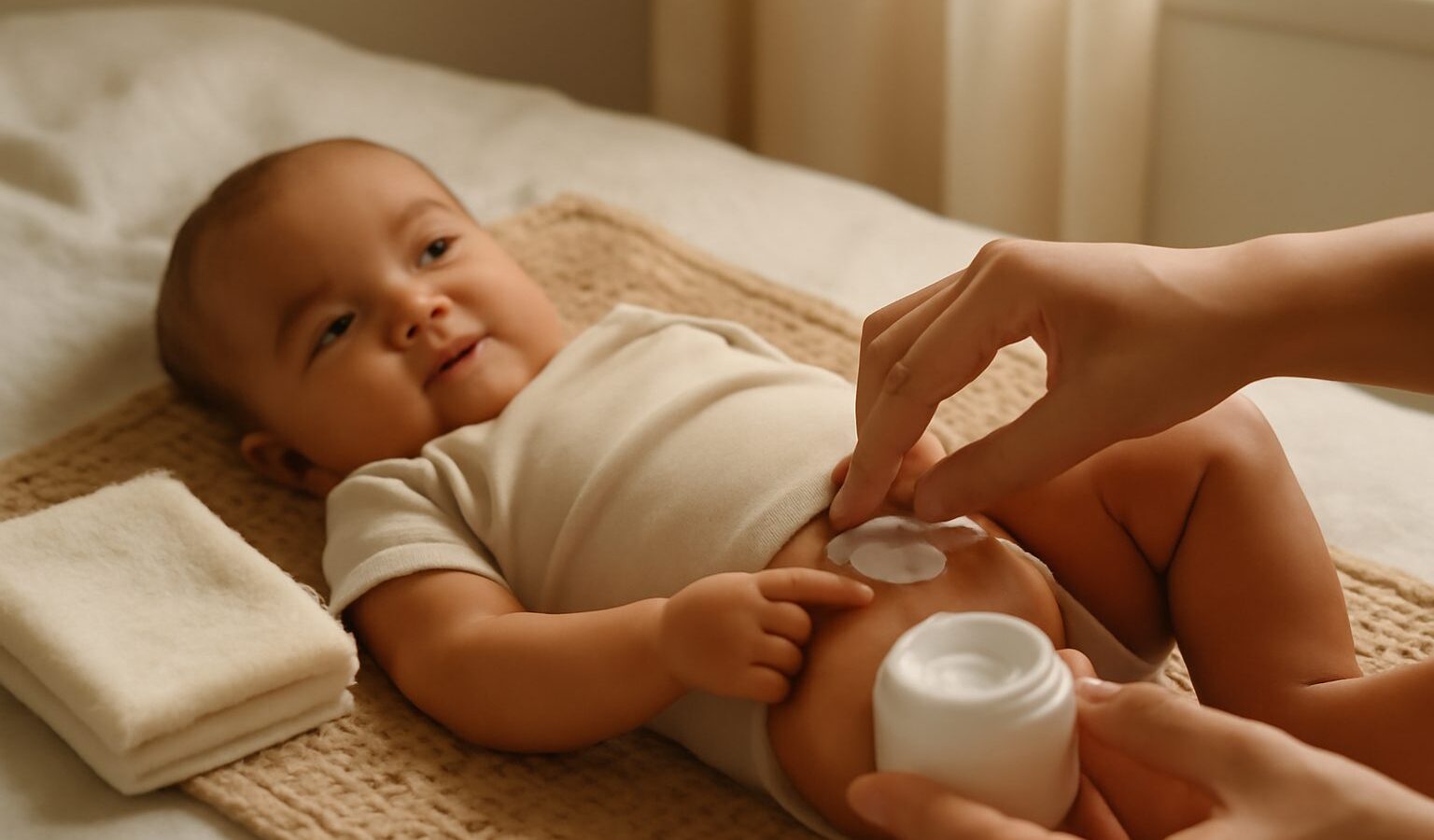
Almost every baby gets a sore, red bottom at some point, so if you are dealing with it now, you are in very good company. The good news is that soothing nappy rash in a baby is usually straightforward with a few gentle basics, and most cases settle within days. This guide explains what causes it, how to calm and prevent it, and the red flags that mean it is time to ask a doctor.
This is general information, not medical advice. If a rash is severe, spreading, blistering, or your baby seems unwell, see your doctor, a paediatrician, or your polyclinic for proper assessment.
What Causes Nappy Rash
Nappy rash is irritation of the skin in the nappy area. In Singapore’s warm, humid climate, that area is often damp and warm, which is exactly what sore skin does not need. Common triggers include:
- Wetness and prolonged contact with wee or poo against the skin.
- Friction from a nappy rubbing delicate skin.
- A new food, a bout of diarrhoea, or teething-related looser stools, which can irritate.
- Products such as certain wipes, soaps, or a detergent that does not agree with your baby.
- Sometimes a yeast infection can develop on top, especially if the rash is bright red, in the skin folds, or slow to clear.
It is rarely anyone’s fault. Skin in that area is simply working hard, and even careful parents see the odd flare.
Everyday Ways To Soothe And Prevent
The same simple habits both calm a current rash and help prevent the next one. The theme is clean, dry, and gentle.
- Change often. Fresh nappies, promptly after wees and poos, limit how long skin sits against moisture.
- Clean gently. Use warm water and cotton wool or a soft cloth, or plain, fragrance-free wipes. Pat rather than rub, and avoid scrubbing sore skin.
- Dry fully. Let the skin air-dry or pat it dry before the next nappy, paying attention to the folds.
- Give nappy-free time. A little time with the nappy off, on a towel, lets skin breathe and is one of the most soothing things you can do.
- Use a barrier. A thin layer of a plain barrier cream or ointment can protect the skin from moisture. Ask your pharmacist which plain barrier product is suitable for a baby, and apply a thin layer at changes.
- Loosen up. Make sure nappies are not too tight, so air can circulate.
- Rethink recent changes. If a new wipe, soap, or detergent went in just before the rash, try switching back.
Avoid talcum powder, which is not recommended for babies, and do not use adult creams or anti-fungal or steroid products unless a doctor has advised them for your baby. If you are unsure what to put on the skin, ask your pharmacist or doctor rather than guessing, and never use a medicine or cream meant for someone else.
Do And Do Not For A Sore Bottom
| Do | Do not |
|---|---|
| Change nappies frequently and promptly | Leave a wet or dirty nappy on longer than needed |
| Clean gently with water or plain wipes | Scrub sore skin or use scented, alcohol-based wipes |
| Let the skin air-dry and allow nappy-free time | Seal in dampness by covering wet skin |
| Apply a thin layer of a plain barrier cream | Use talcum powder or adult medicated creams |
| See a doctor if it worsens or will not clear | Ignore blistering, bleeding, or a very unwell baby |
When It Might Be More Than Simple Nappy Rash
Most nappy rash improves within a few days of gentle care. Sometimes, though, the skin needs a professional eye. A rash that is bright red and sits in the skin folds, has small spots around the edges, or is not clearing despite good care may involve a yeast infection, which needs the right treatment from a doctor rather than a barrier cream alone. Do not try to treat that yourself with random creams; get it checked so your baby gets what actually helps.
Persistent, recurring, or unusually severe rashes are also worth a doctor’s review, both to confirm what is going on and to rule out other skin conditions. For skin questions beyond the nappy area, see our guide to caring for cradle cap and delicate baby skin.
Red Flags: When To See A Doctor
Book a visit to your doctor or polyclinic if:
- The rash blisters, weeps, bleeds, or has open sores.
- It looks infected, with spreading redness, swelling, pus, or warmth.
- It is not improving after a few days of gentle care, or keeps coming back.
- Your baby is clearly in pain, very unsettled, or not feeding or sleeping well.
- The rash is bright red in the folds with spots at the edges, suggesting possible yeast.
Seek urgent care, including A&E or calling 995, if your baby also has a high fever and looks very unwell, is floppy or hard to wake, is struggling to breathe, or shows signs of dehydration such as very few wet nappies, a dry mouth, or being unusually drowsy. When your baby is unwell as well as sore, do not wait it out.
Keeping It In Perspective
A red bottom is one of the most ordinary parts of babyhood, and it very rarely means you have done anything wrong. Clean, dry, gentle care fixes the great majority of cases, and knowing the genuine warning signs takes the worry out of the rest. Be kind to your baby’s skin, and be kind to yourself; you are doing a good job.
Explore More
Gentle skincare runs through the newborn months, so pair this with our guide to caring for cradle cap and delicate baby skin and our calming walkthrough of baby massage at home. For feeding, our guide to combination feeding with breast and bottle may help too.