
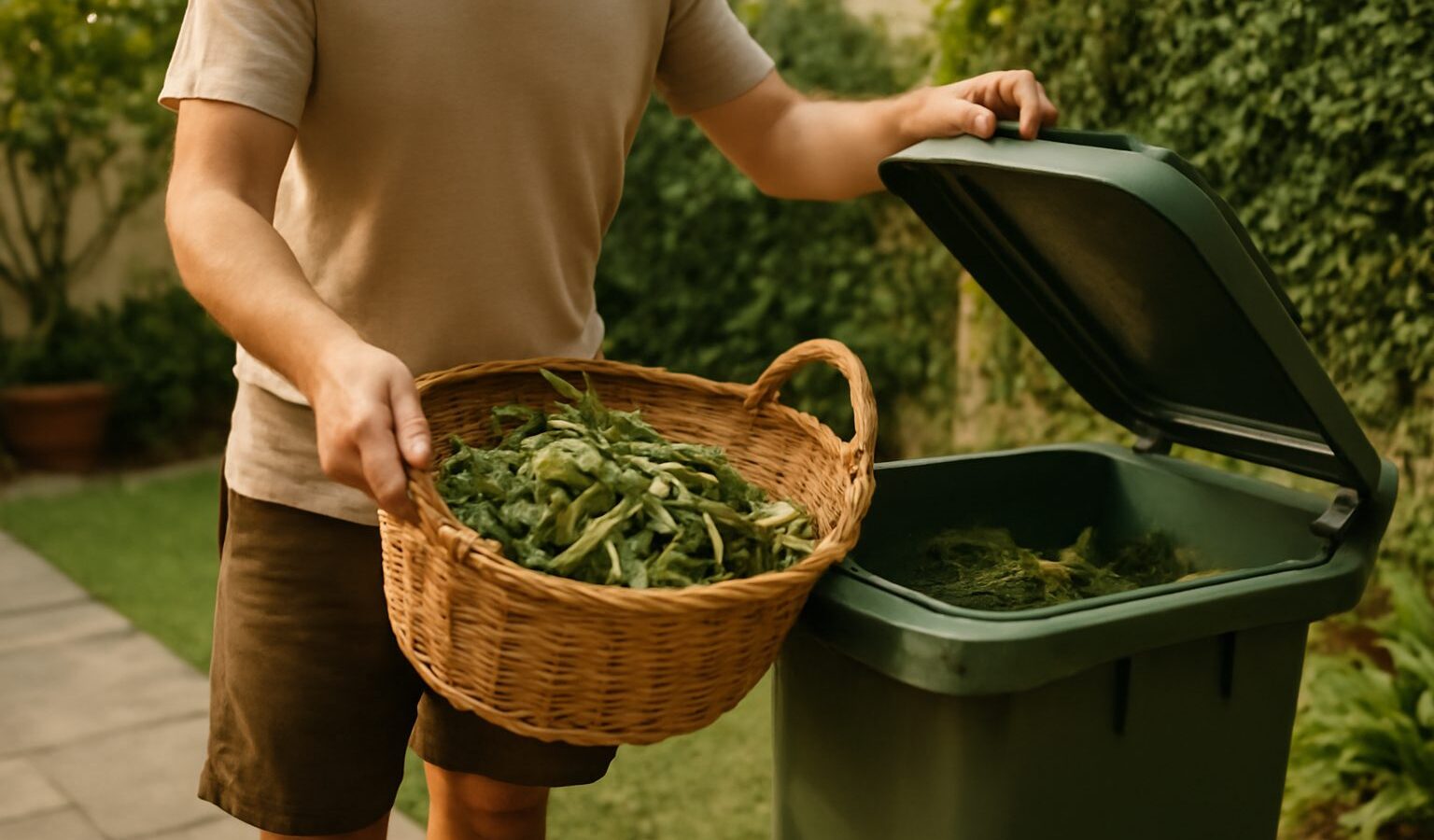
Every gardener eventually faces the same question: what do you do with the pile of dead leaves, pruned branches, tired potting soil and plants that did not make it? Garden waste disposal in Singapore depends a lot on where you live. An HDB corridor gardener with a few pots has very different options from a landed homeowner after a big hedge trim, or a condo resident whose balcony planters need a full refresh.
This guide covers practical disposal routes for each type of garden waste and each type of home. It does not repeat composting basics. Instead, it focuses on getting rid of what you cannot or do not want to reuse, safely and without upsetting neighbours or breaking rules.
Why Garden Waste Needs a Little Care
Garden waste seems harmless, but handled badly it causes real problems in a dense city:
- Blocked refuse chutes. Soil, long stems and branches can jam HDB and condo chutes, which affects everyone in the block.
- Mosquito breeding. Discarded pots, trays and containers left outside can collect rainwater and become breeding spots for Aedes mosquitoes. NEA (the National Environment Agency) runs regular dengue prevention campaigns, and stagnant water around homes is a key concern.
- Pests. Piles of rotting plant matter attract cockroaches, ants and rodents.
- Illegal dumping. Leaving garden waste in common corridors, void decks, drains or public green spaces is not allowed and can lead to complaints or enforcement.
The good news is that most garden waste can be disposed of easily if you sort it first.
Sorting Garden Waste by Type
Start by separating what you have. Each category goes a different way.
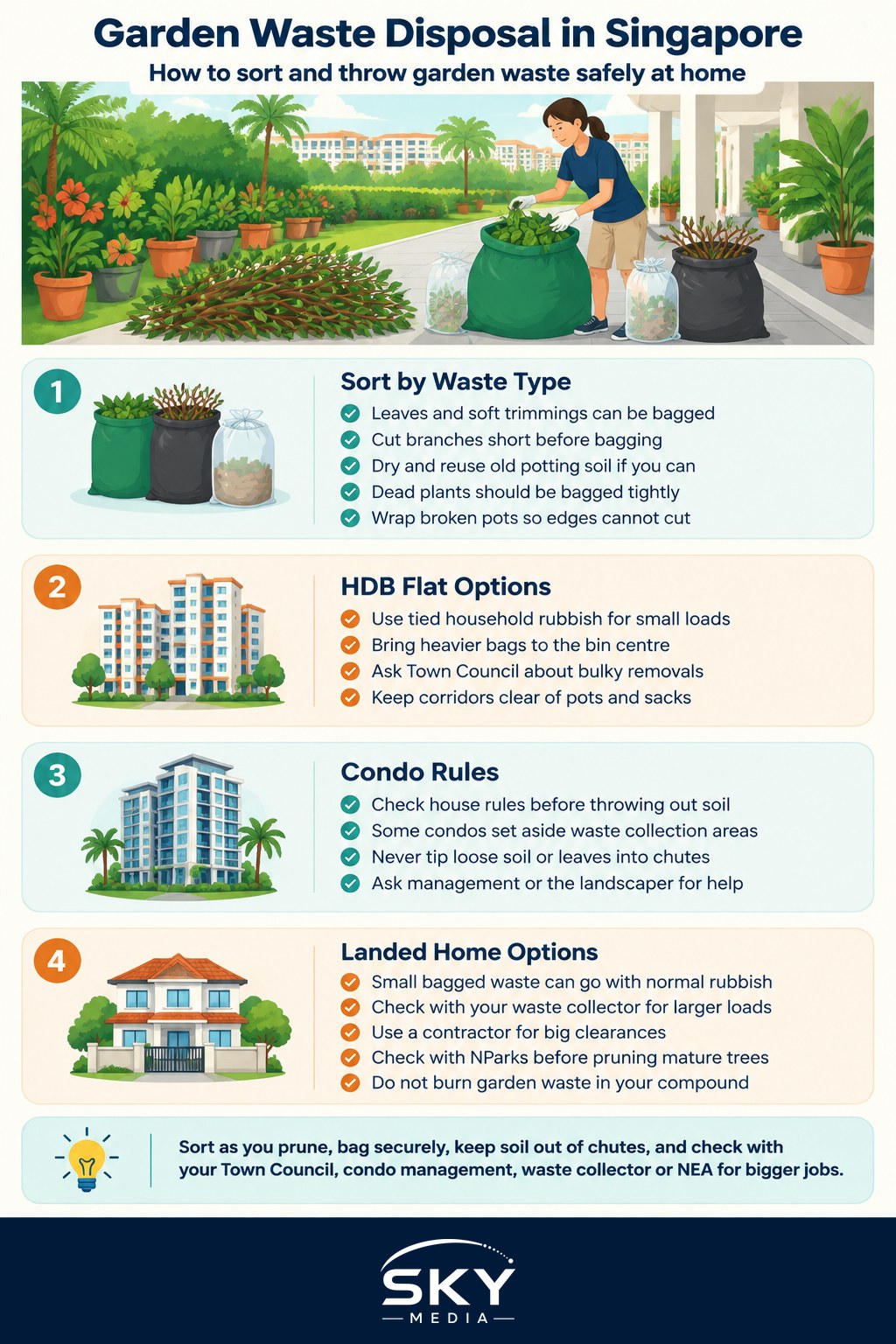
Leaves, flowers and soft trimmings. Light, soft green waste. Small amounts can go into your normal household rubbish, bagged and tied. If you garden regularly, these are also the easiest to reuse as mulch on top of pots.
Branches, stems and woody prunings. Cut them into short lengths so they fit inside a tied bag and cannot poke through. Larger quantities from landed homes need a separate arrangement (see below).
Old potting soil. Spent soil is often reusable. Remove roots and debris, let it dry out in the sun, then mix in fresh compost or potting mix before using it again. If it is diseased, full of pests, or you simply have too much, bag it securely in small, manageable quantities.
Dead plants and root balls. Shake off as much soil as you can, then bag the plant. If a plant died from a pest or fungal problem, bag it tightly and dispose of it rather than leaving it near healthy plants.
Pots, trays and garden accessories. These are not garden waste in the strict sense. Clean plastic pots can sometimes be reused or given away. Broken ceramic or terracotta pots should be wrapped so they cannot cut cleaners or bag handlers, the same approach described in our guide on how to dispose of broken glass safely.
| Waste type | Small amount (most homes) | Large amount | Avoid |
|---|---|---|---|
| Leaves and soft trimmings | Bag and tie, normal rubbish | Arrange collection or reuse as mulch | Dumping in drains or corridors |
| Branches and woody prunings | Cut short, bag securely | Bulky removal or a contractor | Pushing long stems down chutes |
| Old potting soil | Reuse, or bag in small tied bags | Ask management or a contractor | Pouring loose soil into chutes or drains |
| Dead plants and root balls | Shake off soil, bag | Contractor for big clearances | Leaving diseased plants near healthy ones |
Options for HDB Flat Gardeners
Most HDB gardeners deal with corridor plants and window or balcony pots, so volumes are small.
- Use bagged household rubbish for small loads. Bag leaves, trimmings and small amounts of soil tightly. Do not overfill, since heavy bags of soil can split in the chute.
- Take heavier bags to the bin centre. If you have more than a little soil or several dead plants, carry the tied bags down to the central refuse point instead of using the chute.
- Contact your Town Council for larger items. Town Councils manage common property and refuse arrangements in HDB estates. Many offer bulky item removal; ask what they accept and how to arrange it. Our article on bulky item and e-waste disposal explains how this generally works.
- Keep corridors clear. Do not leave waste bags, empty pots or soil sacks along the common corridor, since they can be a fire safety and hygiene issue.
Options for Condo Residents
In condominiums, the MCST (Management Corporation Strata Title, the body that manages the development) and its managing agent set the house rules for refuse.
- Check the house rules or ask the management office before throwing out soil or large plant waste. Some developments have a designated area for bulky or horticultural waste.
- Never tip loose soil or leaves into the refuse chute.
- If you are clearing many balcony planters, ask whether the condo’s landscaping contractor can take the waste, or whether you need your own.
- Clean up any soil spilled in lifts, lobbies or corridors when moving bags.
Options for Landed Homes
Landed homes tend to produce the most garden waste, from hedge trims, fallen fruit and leaves to tree pruning.
- Regular household collection. Landed properties are served by a public waste collector appointed for each sector. Small, bagged garden waste can usually go out with normal rubbish. For larger quantities, check with your waste collector on what they will accept and whether an extra arrangement is needed.
- Engage a contractor. For big clearances, tree pruning or removing large plants, a landscaping or tree-care contractor will often remove the cuttings as part of the job. Confirm this before work starts.
- Trees need care. Some trees, especially larger ones, may be protected or require approval before cutting. NParks (the National Parks Board) is the authority to check with before removing or heavily pruning mature trees.
- No open burning. Burning garden waste in your compound is not an acceptable disposal method in Singapore. It creates smoke, nuisance and fire risk. Check NEA’s guidance if unsure.
Reuse Before You Throw
Not all garden waste needs to leave your home. A few simple reuse habits cut down what you throw out:
- Spread dried leaves on top of pot soil as a light mulch to keep roots cool.
- Refresh old potting soil instead of buying all new mix every time.
- Chop soft trimmings and add them to a compost bin if you have one.
- Pass healthy cuttings and spare plants to neighbours or community gardening groups.
For other household items you may be clearing at the same time, our wider guide to recycling and waste disposal in Singapore explains what goes into the blue recycling bins and what does not.
A Simple Routine for Tidy Disposal
The easiest approach is to deal with garden waste little and often. Sort as you prune, bag securely, keep soil out of chutes, and contact your Town Council, condo management or waste collector early for anything large. Rules and services change from time to time, so check the latest guidance with NEA, your Town Council or MCST before a big clearance.
Frequently Asked Questions
Can I put garden waste in the blue recycling bin? Generally no. Blue recycling bins are meant for clean recyclables such as paper, plastic, metal and glass, not leaves, soil or plant cuttings. Bag small amounts of garden waste with normal rubbish, and check NEA’s guidance if you are unsure what the bin accepts.
Can I leave plant cuttings in a void deck or a park? No. Leaving garden waste in common corridors, void decks, drains or public green spaces counts as illegal dumping and can lead to complaints or enforcement. Bag it and use your regular rubbish route, or ask your Town Council about larger loads.
What should I do with old plastic pots and trays? Clean pots can often be reused or given to neighbours and community gardeners. Never leave empty pots or trays outside, because they collect rainwater and can breed mosquitoes. Broken ceramic or terracotta pots should be wrapped so they cannot cut anyone.
Do I need approval to cut down a tree in my landed home compound? Possibly. Some trees, especially larger mature ones, may be protected or need approval before heavy pruning or removal. Check with NParks before work begins, and ask your tree contractor to confirm what is permitted and who removes the cuttings.
Is it safe to reuse soil from a plant that died of disease? It is better not to. If a plant died from a pest or fungal problem, bag the plant and soil tightly and dispose of them instead of risking healthy plants. Soil from a plant that simply outgrew its pot can usually be dried and refreshed.