
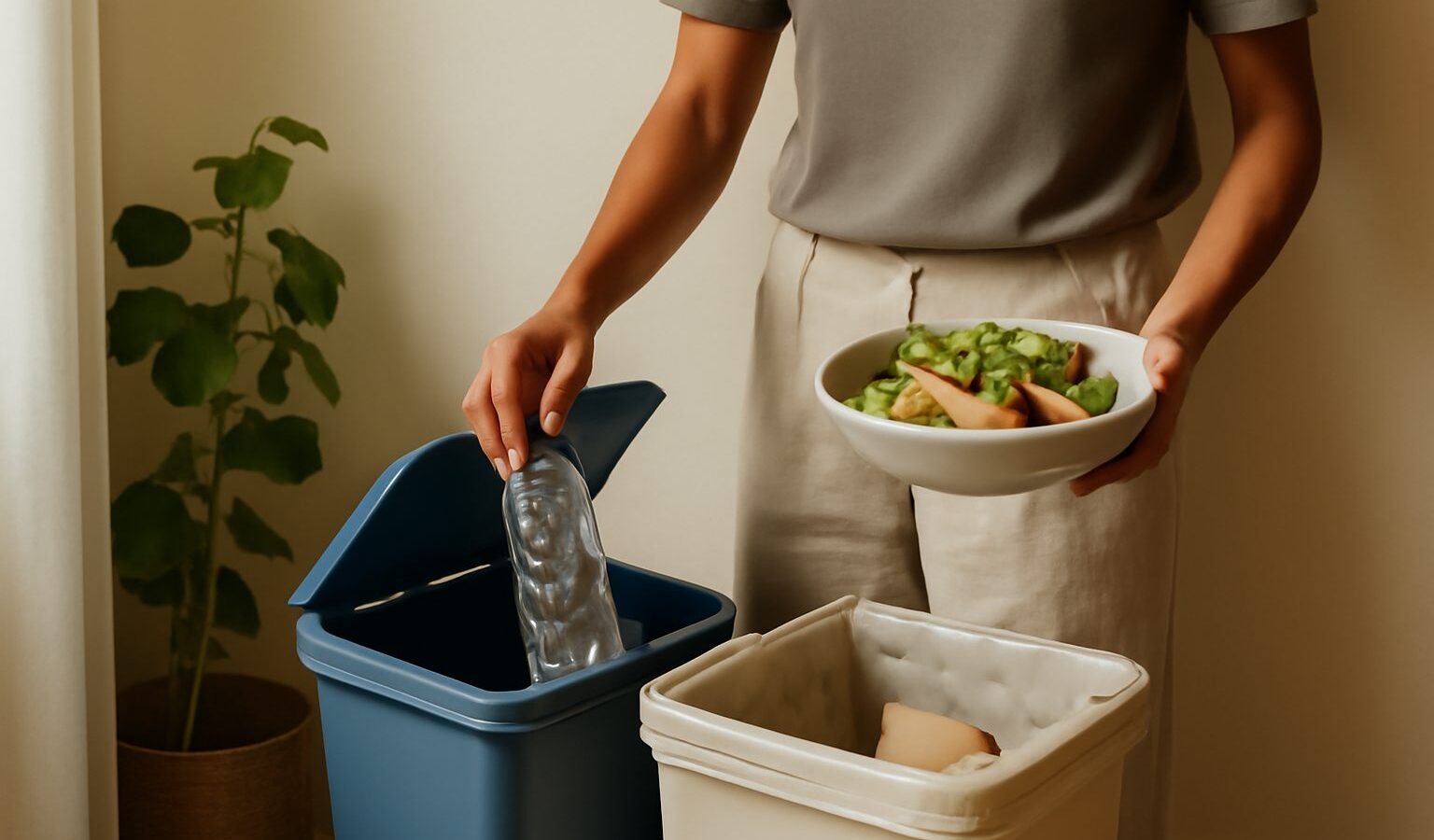
Throwing out rubbish sounds like the simplest part of settling in, until you stand in front of a chute and a blue bin and wonder which is which. Recycling in Singapore follows a national system that is easy once you know the basics, but the details differ from what many newcomers from mainland China are used to, where sorting rules vary widely by city and some estates use several colour-coded bins for wet, dry, recyclable, and hazardous waste. Here the everyday system is simpler: one stream for general rubbish and one commingled stream for recyclables.
This guide walks you through the blue recycling bins, the rubbish chute in your block, and how to deal with the trickier items like old furniture and electronics.
The Blue Recycling Bins Explained
Across Singapore, the National Recycling Programme places a blue recycling bin near HDB blocks and at many condominiums and landed neighbourhoods. This single bin takes all your recyclables mixed together, so you do not need to separate paper from plastic from metal at home. This is called commingled recycling, and it is meant to make participation as easy as possible.
The blue bins are usually managed through your town council for HDB estates, or by the managing agent for private developments. You do not need to register or pay separately to use them; the cost sits within your service and conservancy charges or condo maintenance fees.
A few habits make your recycling actually count:
- Empty and lightly rinse containers so leftover food or drink does not contaminate the batch.
- Keep items loose rather than tying them in a plastic bag, since bagged recyclables may be treated as rubbish.
- Do not wishcycle. Putting non-recyclables in “just in case” can spoil a whole load.
What Can and Cannot Be Recycled
The rule of thumb is that clean paper, cardboard, plastic, metal, and glass belong in the blue bin, while soiled, mixed-material, or hazardous items do not. The table below gives a general guide. Rules and accepted materials do change, so check the latest list from the National Environment Agency (NEA) or your town council if you are unsure.
| Category | Generally recyclable (blue bin) | Generally not recyclable |
|---|---|---|
| Paper | Newspaper, office paper, cardboard boxes, magazines | Tissue, soiled paper, waxed or laminated paper |
| Plastic | Clean bottles, containers, jugs | Styrofoam, cling film, dirty food containers |
| Metal | Drink cans, food tins, clean foil | Paint tins, aerosol cans with contents |
| Glass | Clean bottles and jars | Ceramics, mirrors, light bulbs, broken glass |
| Other | (see e-waste section) | Food waste, textiles, batteries, nappies |
When something is dirty, greasy, or made of mixed materials that cannot be separated, the safer choice is the general rubbish chute rather than the blue bin.
Rubbish Chutes and Daily Waste
Most HDB flats and many older condos have a rubbish chute, either a shared one on each floor or, in newer blocks, an individual chute inside the flat. General household waste goes here, bagged and tied so it does not leak or attract pests.
A few points of local etiquette and safety:
- Bag everything before it goes down the chute, and tie it well.
- Never put bulky, sharp, or burning items down the chute; they can jam it or cause a fire.
- Do not use the chute for recyclables; those go to the blue bin instead.
- Keep the chute area clean, as blockages affect every household on the stack.
Newer developments increasingly use a dual chute or pneumatic system that separates general waste and recyclables, so check the signage in your own block, as arrangements vary from estate to estate.
Bulky Items, E-Waste and Special Disposal
Some things clearly do not belong in either the chute or the blue bin, and each has its own route.
- Bulky items such as old sofas, mattresses, and furniture can usually be disposed of through your town council or the appointed public waste collector. Most offer a number of free bulky-item removals; you typically call or book online and leave the item at a designated spot on the agreed day. Do not simply dump it beside the bin centre, as illegal dumping can attract enforcement action.
- E-waste such as old phones, laptops, batteries, and household appliances should go to designated e-waste collection points rather than the blue bin. Singapore runs a regulated e-waste scheme, and you will find collection bins at many malls, community clubs, and electronics retailers.
- Lamps, batteries, and certain electronics contain materials that must be handled safely, so use the dedicated bins provided rather than general rubbish.
- Hazardous items like paint, chemicals, and cooking oil have their own guidance; check the NEA website for current drop-off options.
Town Council Rules and Everyday Habits
Day-to-day waste is largely overseen by your town council (for HDB estates) or your condo’s managing agent, working within national rules set by the NEA. That means the finer details, such as which contractor handles bulky removal, how many free collections you get, and where the nearest e-waste point sits, can differ slightly depending on where you live.
The practical newcomer approach is simple:
- Look for notices in your lift lobby or void deck, which often list collection schedules and contacts.
- Save your town council or managing agent’s hotline for bookings and questions.
- When unsure whether something is recyclable, check the NEA guidance rather than guessing.
Because rules, schemes, and accepted materials are updated from time to time, treat this as general information and confirm the current requirements with the NEA or your own town council. Getting into good habits early keeps your estate clean and helps the recycling that does happen actually make a difference.
Explore more
Sorting out bins and chutes is part of settling into a new home, so pair this with our guide to utilities and home setup for newcomers in Singapore for water, power, and account setup. If you are still getting your household running, our guide to renting your first home as a newcomer covers what to expect from your block and its facilities.