

You do not need a landed home or a big garden to grow plants in Singapore. The majority of us live in HDB flats, and a flat has far more gardening potential than most people realise, from a bright living-room window to a sunny service yard or a sheltered balcony. HDB gardening in Singapore is really the art of matching the right plant to the small, specific spaces you already have, then caring for them in our year-round heat and rain. This beginner-friendly guide shows you where plants can go in a typical flat, what to grow in each spot, and how to keep everything watered without breeding mosquitoes.
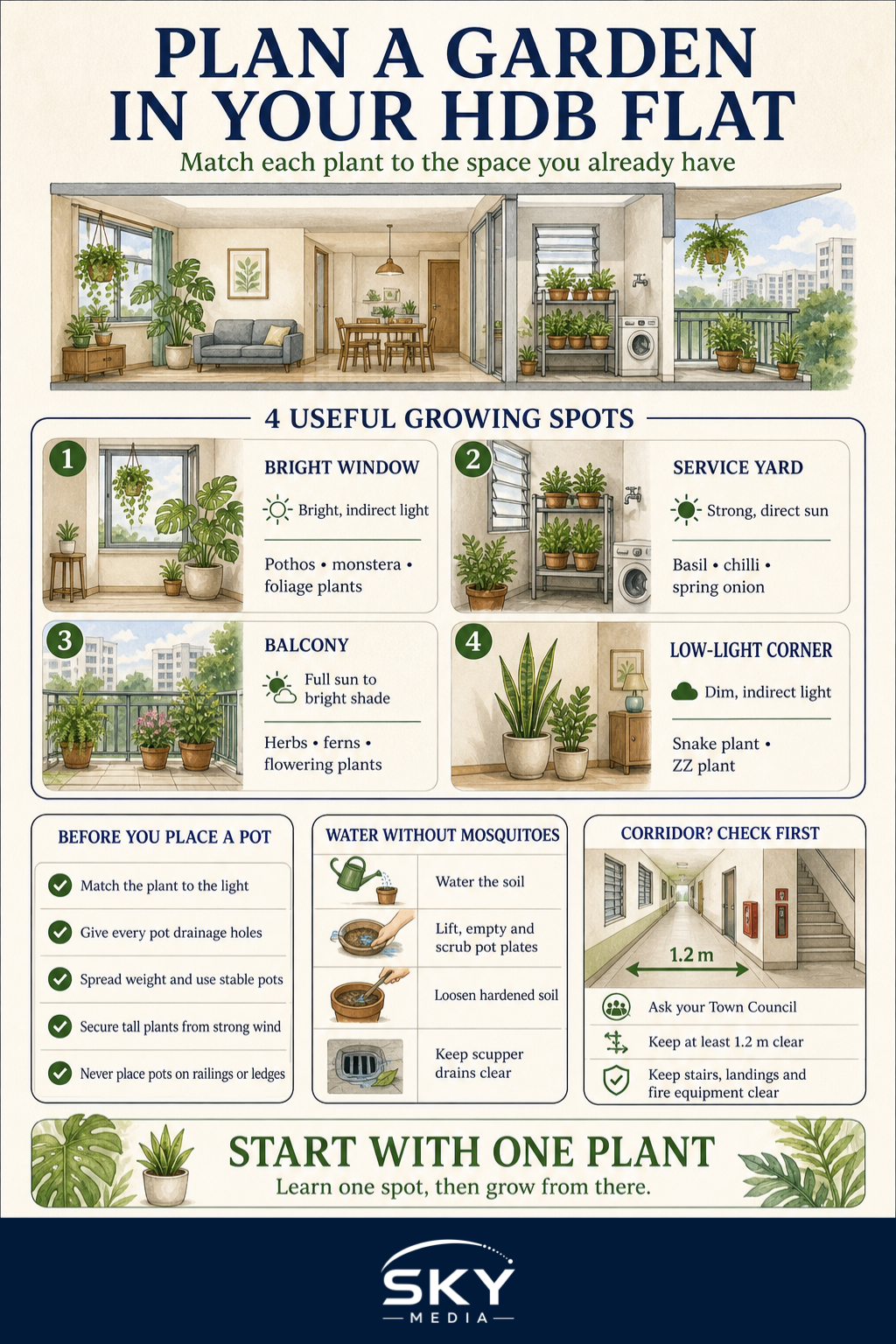
Where Gardening Fits in an HDB Flat
Look around your flat and you will spot more growing spots than you thought. The trick is knowing what kind of light each one gets, because that decides what will thrive there.
- Living-room and bedroom windows usually give bright, indirect light, perfect for foliage houseplants.
- The service yard or kitchen window often catches strong, direct sun, which suits herbs and edibles.
- A balcony, if your flat has one, is prime outdoor space for sun-loving plants.
- Corners away from windows get low light and suit only the toughest shade plants.
- The common corridor is a possibility for some households, but it comes with rules worth respecting.
You do not have to use all of them. Pick the one spot you pass most often, put a plant there, and build from that single success.
Matching Plants to Your Light
The single biggest reason a plant fails indoors is the wrong amount of light, so choose by the spot rather than by looks alone. Here is a simple comparison of common HDB gardening spots and what grows well in each.
| Spot in the flat | Light | Good plants | Watch out for |
|---|---|---|---|
| Bright window sill | Bright, indirect | Pothos, monstera, herbs | Scorching midday beams through glass |
| Service yard | Strong, direct sun | Chilli, basil, mint, spring onion | Fast-drying soil, wind |
| Balcony | Full sun to bright shade | Bougainvillea, ferns, tomatoes | Wind, weight, drainage |
| Low-light corner | Dim, indirect | Snake plant, ZZ plant | Overwatering in low light |
| Common corridor | Varies | Hardy potted foliage | HDB and fire-safety rules |
Start with plants known to be forgiving. Pothos, snake plants and ZZ plants tolerate neglect and low light, while herbs such as basil, mint and spring onion reward a sunny service yard with something you can actually cook with.
Weight, Drainage and Wind to Watch on Balconies
If your flat has a balcony, treat it as your best growing space but respect a few practical limits. Wet potting soil is heavy, so avoid crowding a balcony with many large ceramic pots; spread the load, and favour lighter plastic or fibre pots where you can. Every pot needs drainage holes, and the run-off must drain away neatly without flooding your floor or dripping onto the neighbour below, so stand pots in trays or on pot feet and see how the floor drain copes after a good watering. Wind matters too: higher floors can be gusty enough to dry out soil quickly and topple lightweight pots, so keep tall plants against a wall, use heavier bases in exposed spots, and never balance pots on the railing where they could fall. The same weight and drainage sense applies to a service yard or a window ledge.
Watering Without Breeding Mosquitoes
Plants in our climate drink a lot, especially small pots in a sunny service yard or on a hot balcony, which may need water daily. Water in the cool of the morning or evening, aim at the soil, and let the excess drain right through the pot.
Here is the rule every gardener in Singapore must follow: never let water collect and stagnate in pot saucers, trays or container bases. Standing water in these dishes is a prime breeding ground for Aedes mosquitoes, and dengue is a real, year-round risk here. Tip out any water that gathers in saucers within a day, keep saucers dry between waterings, and empty anything else on your ledge or balcony that can hold rainwater, from spare containers to pot rims. Avoid letting the soil harden into a crust that traps water on the surface, and follow NEA’s anti-mosquito advice. If you are often away, a self-watering pot keeps plants alive without leaving open water sitting around. A dry saucer is healthier for the plant and safer for your whole block.
A Note on Corridors and HDB Rules
Many HDB residents love to green their common corridor, and a few well-kept pots can brighten a whole floor. Do it thoughtfully, though. Common corridors must stay clear for fire safety and access, so never let plants, pots or shelving obstruct the walkway or block escape routes. Rules on what is allowed vary, and they are set by your town council, HDB and the SCDF, so check with them before lining up pots outside your door. Keep any corridor plants tidy, off the ground where sensible, and, of course, free of standing water. When in doubt, keep your garden inside your own flat or on your balcony.
Feeding, Buying and Growing Your Flat Garden
Once plants settle in, a balanced liquid fertiliser about once a month during active growth is plenty for most. Always follow the product label, keep fertilisers and pest sprays away from children and pets, and choose eco-friendly or organic options where you can.
For plants, pots and soil, HDB gardeners are spoilt for choice: neighbourhood nurseries, the bigger clusters along Thomson Road and at Sungei Tengah, Far East Flora, community nurseries, IKEA for pots, and plenty of online sellers. Prices vary widely with size and material, so treat any figure as rough and check with the nursery or shop. You can start cheaply by growing herbs from supermarket cuttings or regrowing kitchen scraps like spring onion, and by reusing clean containers with drainage holes added.
Start with one plant in your brightest, most convenient spot, keep the saucer dry, and let your flat slowly fill with green. HDB gardening in Singapore is less about space and more about small, steady habits, and every flat has room for that.
Explore more
For balcony-specific help, see our guide to balcony gardening in Singapore, and for tight spaces try container gardening for small spaces or vertical gardening and green walls. If you are eyeing the walkway, read corridor gardening and HDB rules, and to keep everything thriving in our heat see how to water plants in Singapore’s heat.