
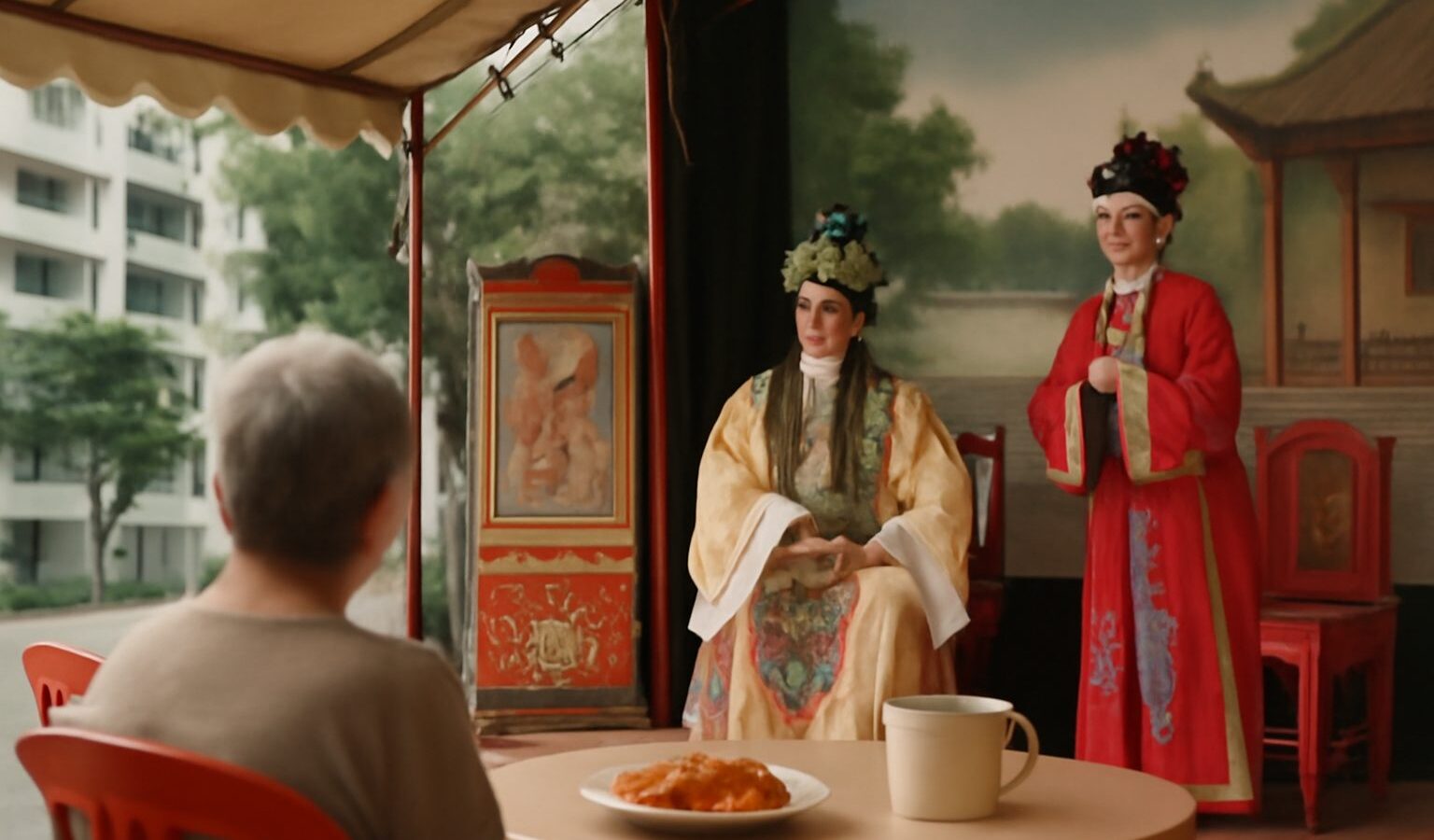
Walk through a heartland neighbourhood on a warm evening in the seventh lunar month and you may stumble on something that stops you in your tracks. A brightly lit stage has appeared in an open field or car park, loudspeakers are pumping out lively songs, and rows of red plastic chairs face the performers. This is getai Singapore at its most vivid, a form of live outdoor entertainment that a mainland newcomer may never have seen at home, yet which sits right at the heart of local Chinese tradition.
Getai, which means song stage, and the older Chinese street opera, known locally as wayang, are two threads of the same cultural cloth. Both are performed on temporary stages, both are closely tied to temple events and the Hungry Ghost Festival, and both offer a newcomer a wonderful window into how Singapore’s Chinese community keeps its folk heritage alive in a modern city.
What Getai and Street Opera Actually Are
Chinese street opera came first, carried over by early migrants from southern China. Performed in dialects such as Hokkien, Teochew, and Cantonese, it features elaborate costumes, painted faces, stylised movement, and stories drawn from legend and history. The music can sound unfamiliar to a newcomer raised on pop, with its clashing percussion and high, arching vocals, yet it rewards patient watching. Troupes set up a stage near a temple, perform over several nights, and then move on.
Getai is the livelier, more modern cousin. It grew popular in the twentieth century and blends singing, comedy, and glitzy hosting, usually in a mix of dialects and Mandarin, sometimes with a dash of English. Performers in sequinned outfits belt out old favourites and cheeky new numbers, hosts trade jokes with the crowd, and the mood is warm and boisterous. During the seventh lunar month these shows pop up across the island, and admission is typically free because the events are organised by temples, clan bodies, or neighbourhood groups.
The Link to the Hungry Ghost Festival
To understand why these performances appear, you need to know about the Hungry Ghost Festival, observed during the seventh lunar month. In popular belief, this is when the gates of the afterlife open and spirits are said to roam among the living. Families make offerings, burn incense and paper items, and hold prayers to honour ancestors and comfort wandering souls.
Getai and street opera are part of this observance. The performances are traditionally staged not only for the living audience but also as an offering to the spirits, a way to entertain and appease them during their month of freedom. That belief shapes the whole event, from where the stage faces to how the seating is arranged, and it is the key to the single most important piece of etiquette a newcomer must remember.
Seating Etiquette: Leave the Front Row Alone
If you attend a getai or street opera show, you will often notice a row of empty chairs right at the front, sometimes marked or simply left conspicuously vacant while the rest of the crowd fills in behind. Do not sit there. That front row is traditionally reserved for the spirits who are the guests of honour during the Hungry Ghost month.
Taking one of those seats is considered disrespectful and, to many, unlucky. Locals leave them empty out of custom and courtesy, and as a newcomer you show real cultural sensitivity by doing the same. Simply choose a chair further back and enjoy the show from there. If you are unsure which seats are which, watch where the regulars settle and follow their lead, or quietly ask an organiser.
A few other courtesies help. Keep a respectful distance from the offering tables and altars set up near the stage, do not touch or move the offerings, and be mindful when taking photographs, since some worshippers prefer not to be in shots near ritual items. The atmosphere is festive rather than solemn, so you are welcome to enjoy yourself, but a little awareness goes a long way.
Here is a quick comparison to help you tell the two forms apart.
| Feature | Chinese street opera (wayang) | Getai |
|---|---|---|
| Style | Traditional costumed opera | Modern song, comedy, and hosting |
| Language | Mainly dialects, classical stories | Mix of dialects, Mandarin, some English |
| Mood | Formal and stylised | Lively and casual |
| Origin | Brought by early migrants | Grew in the twentieth century |
| When you see it | Temple events, seventh month | Especially the Hungry Ghost month |
How a Newcomer Can Experience It
The easiest time to catch these performances is during the seventh lunar month, which usually falls in the second half of the year. Keep an eye on open fields, community spaces, and temple grounds in the heartlands, and listen for the music in the evening. Many shows are free to watch, so you can simply stroll up, find a seat away from the reserved front row, and soak it in.
Outside the ghost month, street opera and getai still appear at some temple festivals, deity birthdays, and cultural events throughout the year, so you need not wait if you are curious. Local community centres and clan associations sometimes host performances too, and these can be gentler introductions for a first timer.
It helps to bring a little context with you. If you can, go with a Singaporean friend or an older neighbour who can explain what is happening, translate a joke, or point out which deity the temple honours. Even without a guide, you can learn a great deal by simply observing the crowd, the offerings, and the rhythm of the evening. Wear light, comfortable clothing, bring a small fan or a bottle of water for the heat, and be ready to stand if the seats fill up, since popular getai nights draw big, cheerful crowds.
Come with an open mind rather than expectations shaped by mainland stages. The dialects may be unfamiliar and the humour local, but the warmth is universal. For many newcomers, standing in a warm night crowd, watching a sequinned singer under coloured lights while incense drifts from a nearby altar, becomes one of those moments when Singapore’s Chinese heritage suddenly feels close, generous, and alive.
Explore more
Understanding Singapore’s Chinese Dialect Groups
Mid-Autumn Festival in Singapore
Columbarium and Ancestor Worship Options in Singapore
Chinese Tea Culture in Singapore