
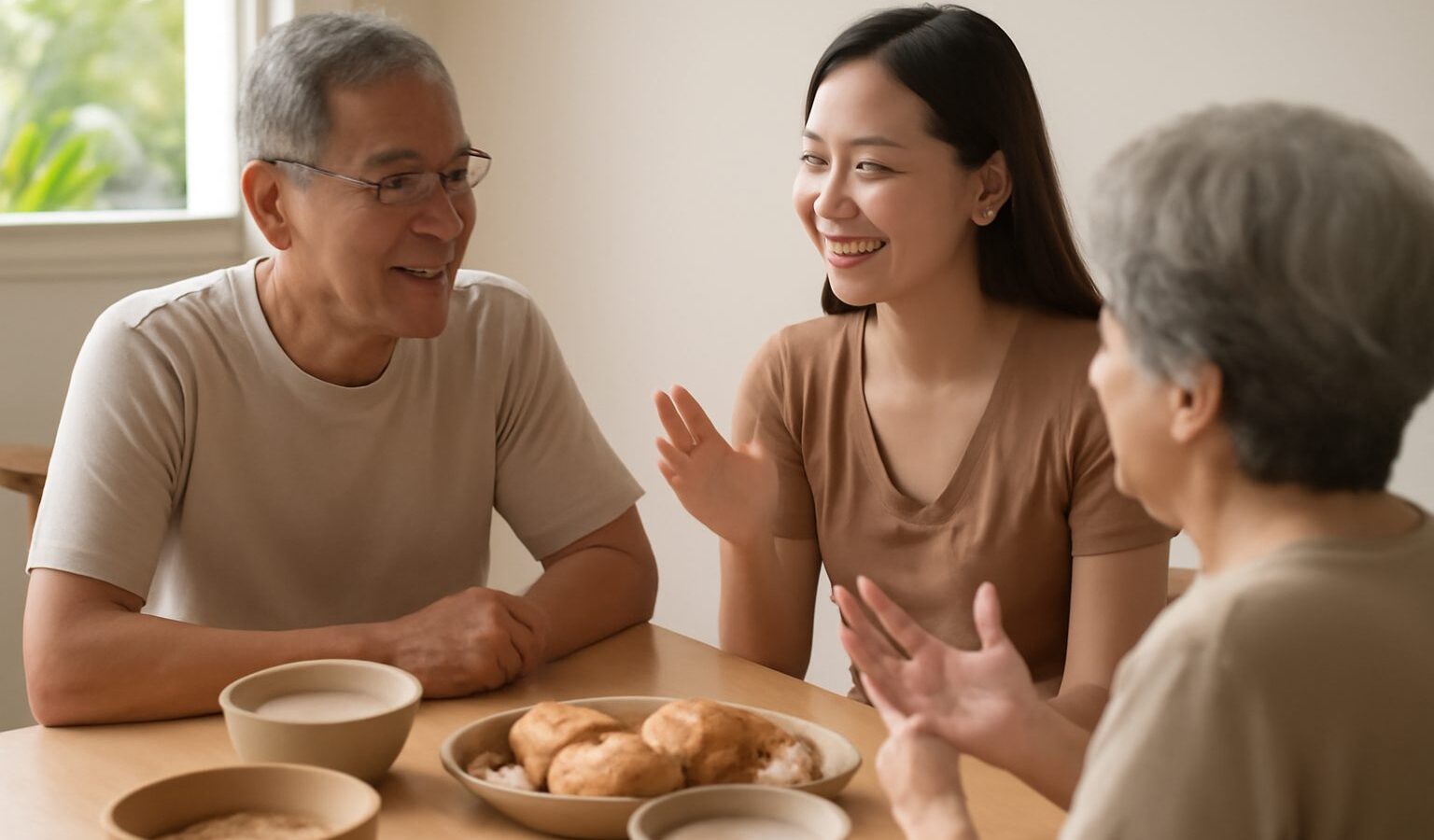
When you arrive from the mainland and start chatting with older Singaporean Chinese, you may notice something curious. Two people who both call themselves Chinese might identify first as Hokkien or Teochew, and they may share a word or a dish you have never heard at home. The Chinese dialect groups Singapore is built on are a living part of local identity, and understanding them helps a newcomer feel less like an outsider and more like a distant cousin arriving for a reunion.
These groups trace back to the great waves of migration from southern China across the nineteenth and twentieth centuries. People came mainly from the coastal provinces of Fujian, Guangdong, and Hainan, and they carried their spoken tongues, their gods, their cooking, and their loyalties with them. Over generations these roots shaped much of Singapore’s food, temples, and family life, and traces of them are everywhere once you know where to look.
The Main Groups and Where They Came From
The largest group in Singapore is the Hokkien, whose ancestors came largely from southern Fujian around Quanzhou and Zhangzhou. Hokkien influence is strong in local food and in many old family businesses, and Hokkien words have seeped into everyday Singlish. If you speak Minnan or have relatives in Fujian, you will recognise a great deal.
The Teochew came from the Chaoshan region of eastern Guangdong. They are known for a refined, delicate style of cooking, think clear broths, steamed fish, and porridge with small dishes. The Cantonese, from the Guangzhou area and the Pearl River Delta, brought the dim sum and roast meats that many associate with Chinese food worldwide, along with a strong presence in certain trades.
The Hainanese, from Hainan island, arrived later and often worked in kitchens and coffee shops, which is one reason Hainanese chicken rice and local kopi culture owe them a quiet debt. The Hakka, whose people are spread across several southern provinces, carried a distinct language and a reputation for thrift and resilience, and their cuisine features hearty, preserved, and stuffed dishes. Smaller communities, such as the Fuzhou and others, add further texture to the picture.
Dialects Are Not Mandarin
This is the point that matters most for a newcomer, and it often surprises people. These are not merely accents of Mandarin. Hokkien, Teochew, Cantonese, Hainanese, and Hakka are separate spoken languages, mutually unintelligible in many cases, each with its own sounds, vocabulary, and rhythm. A Mandarin speaker cannot simply understand Hokkien by listening harder.
In Singapore, Mandarin became the common Chinese language taught in schools and promoted in public life from the late twentieth century, partly to give the different groups a shared tongue. As a result, younger Singaporean Chinese often speak fluent Mandarin and English but only patchy dialect, while their grandparents may think and joke most naturally in Hokkien or Cantonese. If you speak clear Mandarin, you will communicate easily with most people, and your ear may slowly pick up the dialect flavour around you.
For a mainland newcomer this creates a gentle bridge. You share the written language and, with most people, a spoken Mandarin. What differs is the dialect layer beneath, which is exactly the part that makes Singapore’s Chinese culture its own rather than a copy of any one home province.
Clan Associations: The Huiguan and Kongsi
To understand these groups fully, it helps to know about the clan associations, known as huiguan or kongsi. When migrants first arrived, far from home and often without family, they banded together with people who spoke their tongue or shared a surname. These associations offered lodging, work introductions, help in hardship, burial arrangements, and a place to worship familiar gods.
Many of these bodies still exist today. They run scholarships, keep genealogies, organise festivals, and maintain temples and meeting halls. Some welcome new arrivals from the same ancestral region, so if your family hails from, say, Fujian or Chaoshan, there may be an association whose members share your roots. Visiting is a respectful way to learn local history and to meet people who understand where you come from.
Here is a simple overview to orient you.
| Group | Ancestral region | Known for |
|---|---|---|
| Hokkien | Southern Fujian | Largest group, food, business, Singlish loanwords |
| Teochew | Chaoshan, eastern Guangdong | Delicate cooking, porridge, steamed fish |
| Cantonese | Guangzhou, Pearl River Delta | Dim sum, roast meats, certain trades |
| Hainanese | Hainan island | Chicken rice, kopi and coffee shop culture |
| Hakka | Several southern provinces | Preserved and stuffed dishes, thrift, resilience |
How a Newcomer Can Relate and Take Part
You do not need dialect roots in Singapore to appreciate these groups. Start with food, since it is the easiest doorway. Try Teochew porridge, a Hakka yong tau foo stall, or a plate of Hainanese chicken rice, and notice how each carries a region of southern China in its seasoning. Ask the older stallholders about their family origins, and many will happily share.
If you have ancestral ties to one of these regions, look for the relevant clan association and see whether it holds public events. During festivals such as Chinese New Year or the Hungry Ghost period, these bodies often organise gatherings that visitors may attend. It is a graceful way to honour your own heritage while learning how it took shape on foreign soil.
You can also relate through language and festivals. If you pick up a few dialect words, a greeting in Hokkien or a thank you in Cantonese, older neighbours often light up, because it shows you have taken an interest in their roots. During Chinese New Year, the Hungry Ghost period, and temple celebrations, dialect group customs come to the surface, and simply watching and asking questions teaches you more than any book. Over time you will start to hear the difference between a Teochew and a Hokkien conversation, even if you cannot follow every word.
Above all, approach the subject with curiosity and respect. When someone tells you they are Hokkien or Cantonese, they are sharing a piece of family memory, not drawing a line against you. For a newcomer, learning these distinctions is one of the warmest ways to understand that Singapore’s Chinese community is both familiar and gently, wonderfully different from home.
Explore more
Chinese Tea Culture in Singapore
Getai and Chinese Street Opera in Singapore
Chinese Bookstores and Libraries
Mid-Autumn Festival in Singapore