
Honouring those who have passed is a tender and important part of Chinese family life, and understanding columbarium Singapore options helps a newcomer prepare for a subject many of us would rather not think about until we must. If you have moved from the mainland, you may be used to family graves in an ancestral village, or to customs your parents and grandparents kept without much explanation. In Singapore, a small and densely built island, the arrangements look somewhat different, and knowing how they work brings quiet reassurance.
This guide is written with dignity and care, not to unsettle you but to inform you. It offers a gentle overview of how remains are kept, how families continue to pay respects, and where to turn for accurate, current details. Because practices vary by family and faith, and because rules and facilities change over time, always confirm specifics with the relevant columbarium, temple, or authority rather than relying on general information alone.
Why Columbaria Are Common Here
A columbarium is a place where urns holding cremated remains are kept, each urn placed in a small compartment called a niche. In land scarce Singapore, cremation followed by placement in a columbarium has become the usual practice for many families, and rows of niches take the place that a hillside of graves might occupy elsewhere. For a newcomer used to burial in an ancestral plot, this is often the first notable difference.
Niches are typically arranged in halls or blocks, each one able to hold one or more urns, sometimes for a couple or a family together. Families can visit, place a small photograph or plaque, and come to pay respects much as they would at a graveside. The setting is usually calm, orderly, and well kept, designed to make visits peaceful rather than distressing.
There are two broad types of columbaria in Singapore, and it helps to understand the distinction before any need arises.
Government and Temple Options
Government columbaria are public facilities managed under the relevant national authority, and they offer niches to the general public. Because these are official after death facilities, matters such as availability, fees, and procedures are set and updated by the responsible government body, and the National Environment Agency, known as NEA, is the authority that oversees government cremation and columbarium services. For anything official, from booking a niche to understanding current rules, the NEA and its channels are the proper place to check.
Temple and private columbaria are run by religious organisations or private operators. Many Buddhist and Taoist temples maintain their own columbaria, and some families prefer these because the setting aligns with their faith, allows for particular rites, or sits near a temple the family already attends. Arrangements, costs, and religious observances at these places are set by the individual temple or operator, so you would speak directly to them.
Choosing between the options is a personal and family decision, shaped by faith, budget, location, and the wishes of the person who has passed or of the elders. There is no single correct choice, and many families weigh several factors together. If you are ever making such arrangements, take your time, involve the relevant family members, and ask the facility to explain everything clearly.
Here is a simple comparison to orient you, with the reminder that details should always be confirmed directly.
| Aspect | Government columbaria | Temple or private columbaria |
|---|---|---|
| Managed by | National authority, overseen by NEA | Religious bodies or private operators |
| Setting | Public, non religious | Often aligned with a faith |
| Rites allowed | General, family led | May include temple observances |
| Fees and rules | Set by the authority | Set by the temple or operator |
| Where to check | NEA and official channels | The specific temple or operator |
Ancestor Worship and Qingming Visits
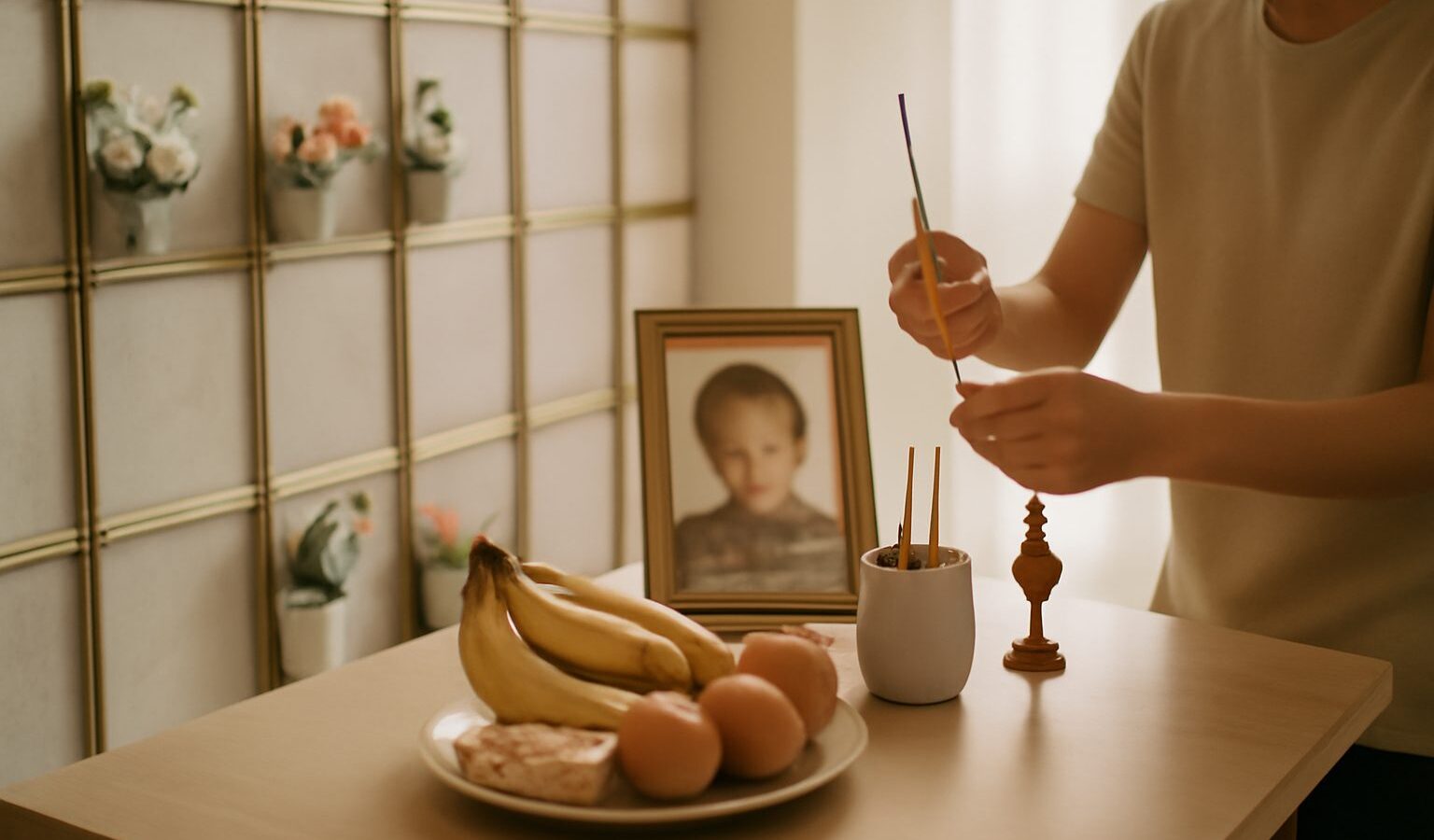
Placing a loved one in a columbarium is only part of the picture. Ancestor worship, the ongoing act of remembering and honouring those who have gone before, continues long after. For many Chinese families this is a meaningful thread that ties the generations together, and it carries on much as it might at home, adapted to local settings.
The most important time for visits is Qingming, the tomb sweeping festival, which usually falls in early April. During this period families gather to clean the niche or grave, offer flowers, fruit, and sometimes the departed’s favourite foods, light incense, and burn paper offerings where facilities permit. Columbaria in Singapore tend to be busy around Qingming, and many have designated areas and guidelines for offerings, so it is wise to check the visiting arrangements in advance and to go early if you can.
Practices vary widely by family and by faith. Buddhist, Taoist, Christian, and secular families each mark remembrance differently, and even within one tradition customs differ from household to household. Some families keep elaborate rites, others prefer a simple visit with flowers and quiet reflection. None is more correct than another, and a newcomer should feel free to honour their own family’s way while respecting that others do things differently.
Approaching the Subject with Care
Death and remembrance are sensitive, and there is no need to rush your understanding of them. For most newcomers, this knowledge only becomes practical when an elderly relative’s wishes must be discussed, or when a loss occurs. Knowing the broad shape of the options in advance simply means you will not face an unfamiliar system at a painful time.
When the moment comes, lean on the people whose job it is to help. Columbarium staff, temple representatives, and the relevant authorities are used to guiding families gently through decisions and paperwork. For official government facilities, direct your questions to the NEA and its channels, and for a temple or private columbarium, speak to that organisation directly. Ask as many questions as you need, take notes, and involve your family. Handled with patience and care, these arrangements become a way to honour love and memory rather than a burden, and that, in the end, is what ancestor worship has always been about.
Explore more
Getai and Chinese Street Opera in Singapore
Understanding Singapore’s Chinese Dialect Groups
Mid-Autumn Festival in Singapore
Chinese Tea Culture in Singapore