
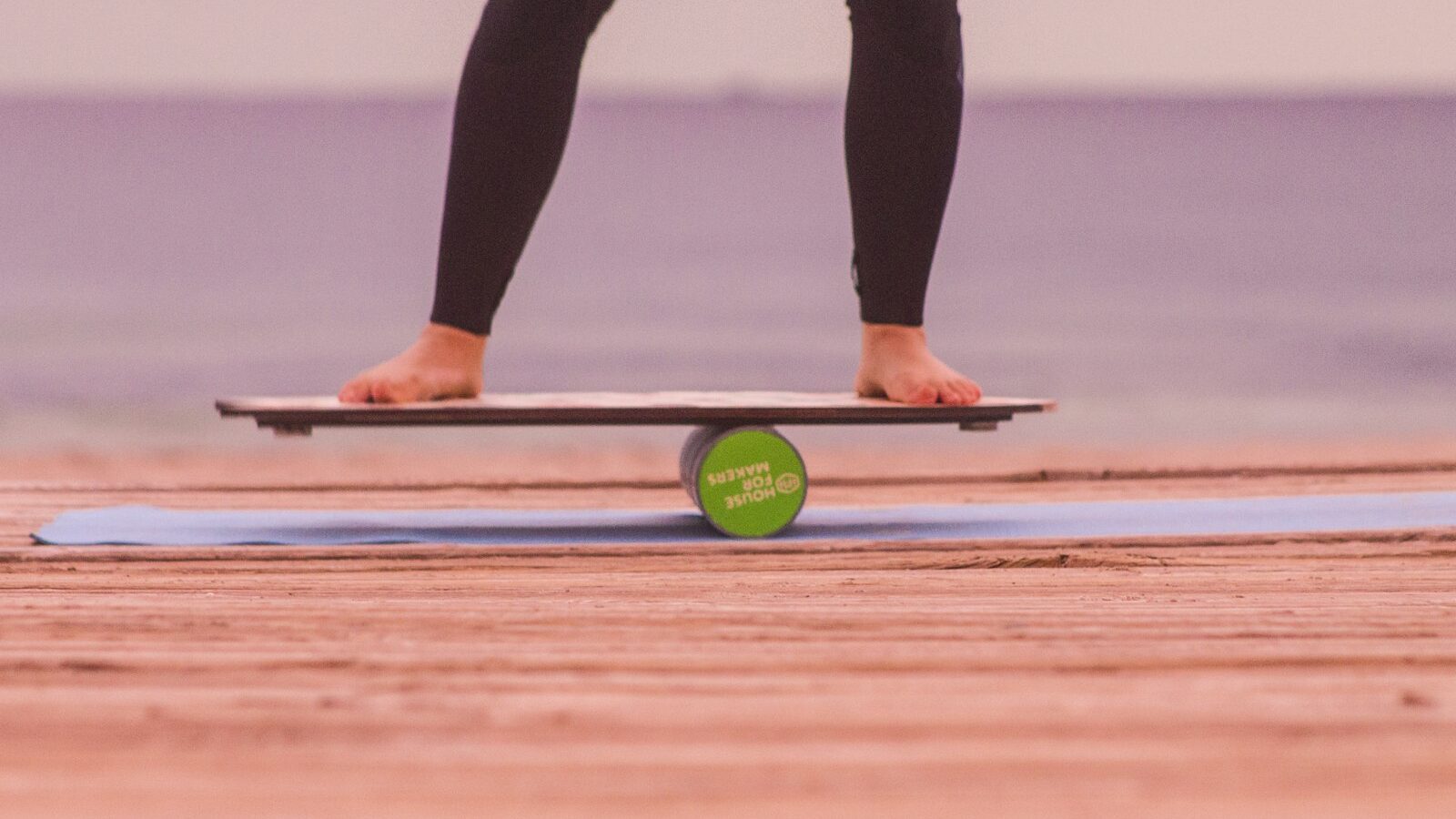
Balance is one of those abilities we take for granted until it starts to fade. Yet the ability to stay steady on your feet, catch yourself when you stumble, and move with confidence underpins almost everything you do, from carrying a tray of kopi to stepping off a bus. Balance and stability training is not just for older adults, it benefits every age, from young athletes to busy office workers to seniors who want to stay independent. This guide explains how balance works, why it matters, and how to train it safely at home.
Before you start, a note. This is general information, not medical or physiotherapy advice. If you have had a fall, dizziness, an inner-ear problem, a recent surgery, or any condition that affects your balance, check with your doctor or a physiotherapist first. Always train near a sturdy support such as a wall, rail or heavy chair, start gently, and stop if you feel dizzy, unsteady in a way you cannot control, or any pain.
What Balance Really Is and Why It Fades
Balance is not a single skill. It is your brain constantly combining information from three sources: your inner ear, which senses head position and movement, your eyes, which tell you where you are in space, and the sensors in your muscles and joints, which report where your limbs are. Your muscles then make tiny, rapid adjustments to keep you upright, often without you noticing.
Like any ability, balance responds to use. When we sit for long hours, avoid uneven ground, and rarely challenge our steadiness, the system gets less practice and gradually weakens. Muscle loss with age, certain medications, and some health conditions can all reduce it further. The encouraging news is that balance is highly trainable at any age. Practise it regularly and it improves, often surprisingly quickly.
Good balance rests on a few foundations: enough strength in the legs, hips and core, decent ankle mobility, and regular practice at staying steady while the body is challenged. Training addresses all three.
Simple Balance Exercises to Build Steadiness
Start every one of these beside a wall, kitchen counter or sturdy chair you can grab if needed. Progress only when a movement feels secure. Bare feet or grippy shoes on a non-slip floor work best.
- Feet-together stand. Stand with your feet touching, hold for twenty to thirty seconds, and breathe steadily. Simple, but a solid starting point.
- Heel-to-toe stand. Place one foot directly in front of the other, heel touching toe, and hold. This narrows your base and challenges balance more.
- Single-leg stand. Lift one foot slightly off the floor and balance on the other for as long as you comfortably can, up to thirty seconds, then switch. Keep support within reach.
- Heel-to-toe walking. Walk slowly in a straight line placing the heel of one foot right against the toe of the other, as if on a tightrope, beside a wall.
- Weight shifts and mini reaches. Shift your weight slowly from one foot to the other, or reach gently to the side and return, to train controlled movement.
Do these most days for a few minutes. To make them harder over time, hold longer, reduce how much you hold the support, or try closing your eyes briefly only when you feel very secure and have support right beside you. Warming up first helps, as covered in our guide to warming up and cooling down properly.
Strength and the Foundations Beneath Balance
You cannot balance well on weak legs. Strengthening the muscles that hold you upright makes every balance drill easier and safer, so pair balance work with gentle strength work.
- Sit-to-stands build the thigh and hip strength you use every time you rise from a chair.
- Heel raises strengthen the calves and ankles that make constant small balance adjustments.
- Mini squats with support strengthen the legs through a comfortable range.
- Side leg lifts train the hip muscles that keep your pelvis level when you stand on one leg.
- Core work such as gentle seated knee lifts and standing marches steadies your trunk.
Tai chi and qigong deserve a special mention. Their slow, flowing, weight-shifting movements are essentially balance training in disguise, which is why they are so popular in parks and void decks across Singapore. Our guide to tai chi and qigong for fitness explains how to get started, and those beginning from a seated position may prefer our chair exercises for seniors and beginners.
Matching Balance Training to Your Stage
Everyone can train balance, but the right level differs. Use this as a rough guide and progress gradually.
| Stage | Start with | Focus on |
|---|---|---|
| Older adult or recovering | Feet-together and supported stands | Fall prevention and confidence |
| Generally active adult | Single-leg stands and heel-to-toe walks | Ankle control and core strength |
| Athletic or advanced | Unstable-surface and dynamic drills | Reaction and sport-specific control |
| Limited mobility | Seated weight shifts and reaches | Safe, supported steadiness |
If your balance is already limited, do not skip straight to the hardest drills. Build the foundations first. For gentler options, our guide to staying active with limited mobility offers supported alternatives.
Training Safely and Making It Stick
Balance training carries a small inherent risk, since the whole point is to challenge your steadiness, so safety comes first. Always have something solid to grab. Clear the floor of loose mats, wires and clutter, wear supportive footwear, and never train balance to the point of exhaustion, when your reactions slow. If you feel giddy or lightheaded, sit down, and see a doctor if dizziness is new, frequent or severe.
The best part is that balance work fits easily into daily life. Practise a single-leg stand while brushing your teeth, do heel raises while waiting for the kettle, or stand on one foot while queueing. A few minutes woven through your day keeps the gains coming.
Frame this work around confidence and fall prevention rather than any cure. Balance and stability training will not fix a medical problem, but it steadily builds the steadiness, strength and self-assurance that let you move through life more safely, at any age.