
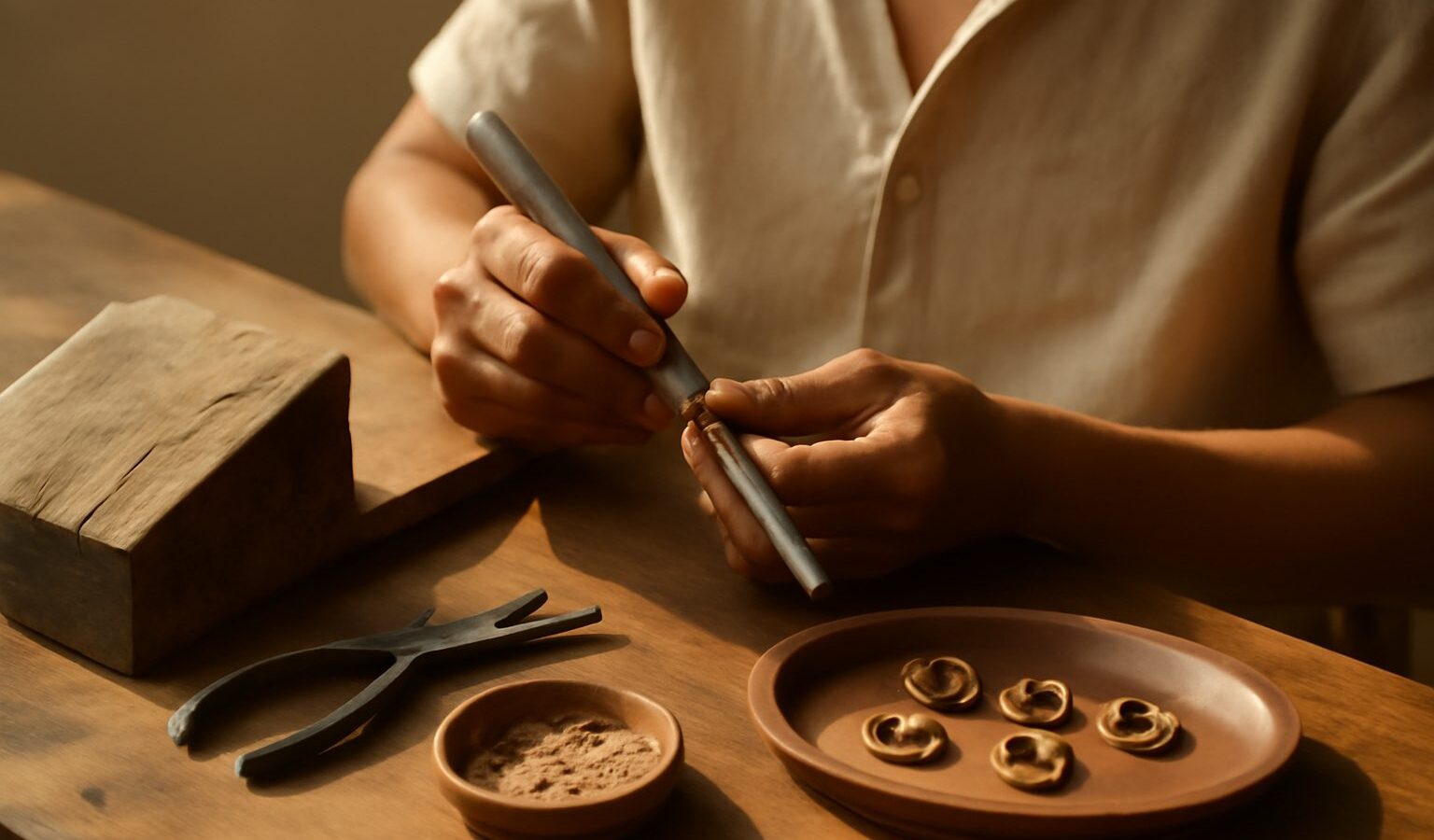
Step into a gold shop glowing with rows of ornate necklaces and bangles, and you enter a trade older than the modern city itself. The goldsmith heritage Singapore has nurtured runs through the streets of Little India and along South Bridge Road, where skilled hands have shaped precious metal into treasures of beauty, status and deep cultural meaning.
What goldsmithing is
Goldsmithing is the craft of working gold and other precious metals into jewellery and ornaments. It calls for a rare blend of artistry and technical mastery. The goldsmith must understand the behaviour of metal under heat, the geometry of settings, the balance of a piece on the body, and the fine detail that separates ordinary work from a treasured heirloom.
The trade covers many skills. Some artisans specialise in casting, pouring molten gold into moulds to form the base of a piece. Others excel at hand fabrication, cutting, bending and soldering metal into intricate designs. Stone setters secure gems with precision so they catch the light and hold fast for years. Polishers bring the final shine, and engravers add the delicate patterns that give a piece its character.
Gold has always carried meaning beyond its material worth. It signifies wealth, security and blessing, and in many communities it plays a central role in life’s most important moments. A goldsmith is therefore not only a maker of objects but a keeper of custom, translating hopes and traditions into forms that can be worn and passed down.
Its heritage in Singapore
The goldsmith trade took firm root in Singapore through communities for whom gold held profound cultural importance. In Little India, gold shops became a defining feature of the streetscape, their windows brilliant with elaborate necklaces, bangles and ornaments crafted in the styles beloved by South Indian and wider Indian communities. Here gold is woven into weddings, festivals and rites of passage, and the shops that supply it form part of the district’s living heritage.
South Bridge Road and the surrounding areas grew into another centre of the trade, serving Chinese and other communities with their own preferences and traditions. Along these streets, established jewellers and small workshops shaped gold for celebrations, savings and gifts. The clustering of shops was no accident, for buyers liked to compare craftsmanship and price, and the concentration built trust and reputation over time.
Behind the shopfronts sat the workshops where the real craft happened. Master goldsmiths trained apprentices in the long, patient way of the trade, passing on techniques that could not be learned from books alone. Many artisans came from families with generations of experience, and their skill was a form of inheritance as precious as the metal itself.
The craftsmanship of the trade
Fine goldsmithing rests on a foundation of hand skill built over years. A master can judge the readiness of metal by its colour under the flame, coax a stubborn joint into a clean seam, and set a stone so securely that it seems to float. These abilities come only through long practice and the guidance of an experienced teacher.
Skills at the bench
- Design and drawing, translating a client’s wishes into a workable form.
- Casting and forming, shaping the raw gold into the body of a piece.
- Soldering and assembly, joining components with heat and precision.
- Stone setting, securing gems so they are safe and shown to advantage.
- Finishing, including polishing and engraving that complete the work.
The tools of the trade are modest but demanding of skill. A small flame, fine files, tiny hammers, gravers and a steady bench form the goldsmith’s world. Much of the work is done by eye and feel, at a scale that leaves no room for error. A single slip can mar hours of labour, which is why the craft rewards patience and calm above haste.
| Aspect | Traditional goldsmith workshop | Modern jewellery retail |
|---|---|---|
| Main work | Hand crafting and repair | Sale of finished pieces |
| Skill base | Apprenticeship and long practice | Design, sourcing and service |
| Customisation | Made to order, highly personal | Ready ranges with some bespoke options |
| Pace | Slow, meticulous handwork | Faster turnover of stock |
| Cultural role | Keeper of custom and technique | Access to gold for celebration and saving |
The cultural role of gold
Gold in Singapore is far more than adornment. For many families it is a store of value, a portable form of savings that can be drawn upon in times of need. Parents build collections for their children, and gifts of gold mark births, birthdays and milestones. In this sense the goldsmith serves the practical business of security as much as the pleasures of beauty.
Weddings bring the trade to its fullest expression. In many communities a bride is adorned with gold as a blessing and a mark of her new status, and families invest with great care in the pieces she will wear and keep. Festivals and auspicious dates also drive demand, as buying gold at the right moment is believed to bring good fortune. The goldsmith and jeweller thus stand at the heart of some of life’s happiest occasions.
Designs carry meaning too. Motifs drawn from nature, faith and tradition are worked into the metal, so that a piece speaks of the wearer’s heritage as well as their taste. To receive such an ornament is to receive a fragment of culture, made permanent in gold and destined to pass to the next generation.
Where the heritage lives on today
The gold shops of Little India and South Bridge Road remain busy centres of the trade, still supplying communities for whom gold matters as much as ever. While much jewellery today is made with modern methods and machinery, hand craftsmanship endures, especially for bespoke pieces, repairs and the intricate work that machines cannot match. Skilled goldsmiths continue to sit at their benches, keeping alive techniques that have served the trade for generations.
The heritage faces the same pressures as many traditional crafts. Younger people are drawn to other work, and the long apprenticeship demands dedication. Yet the deep cultural attachment to gold gives the trade resilience. As long as families celebrate weddings, mark festivals and pass treasures to their children, there will be a place for the goldsmith’s art.
A respectful close
The goldsmith heritage of Singapore shines brightest not in the metal alone but in the skill and meaning behind it. Each ornament carries the labour of a craftsman and the hopes of a family. To honour this trade is to value the patient hands that shape our celebrations and the traditions they help carry forward, generation after generation.
Explore more: Traditional trades of Singapore · Little India heritage · Indian Heritage Centre guide