
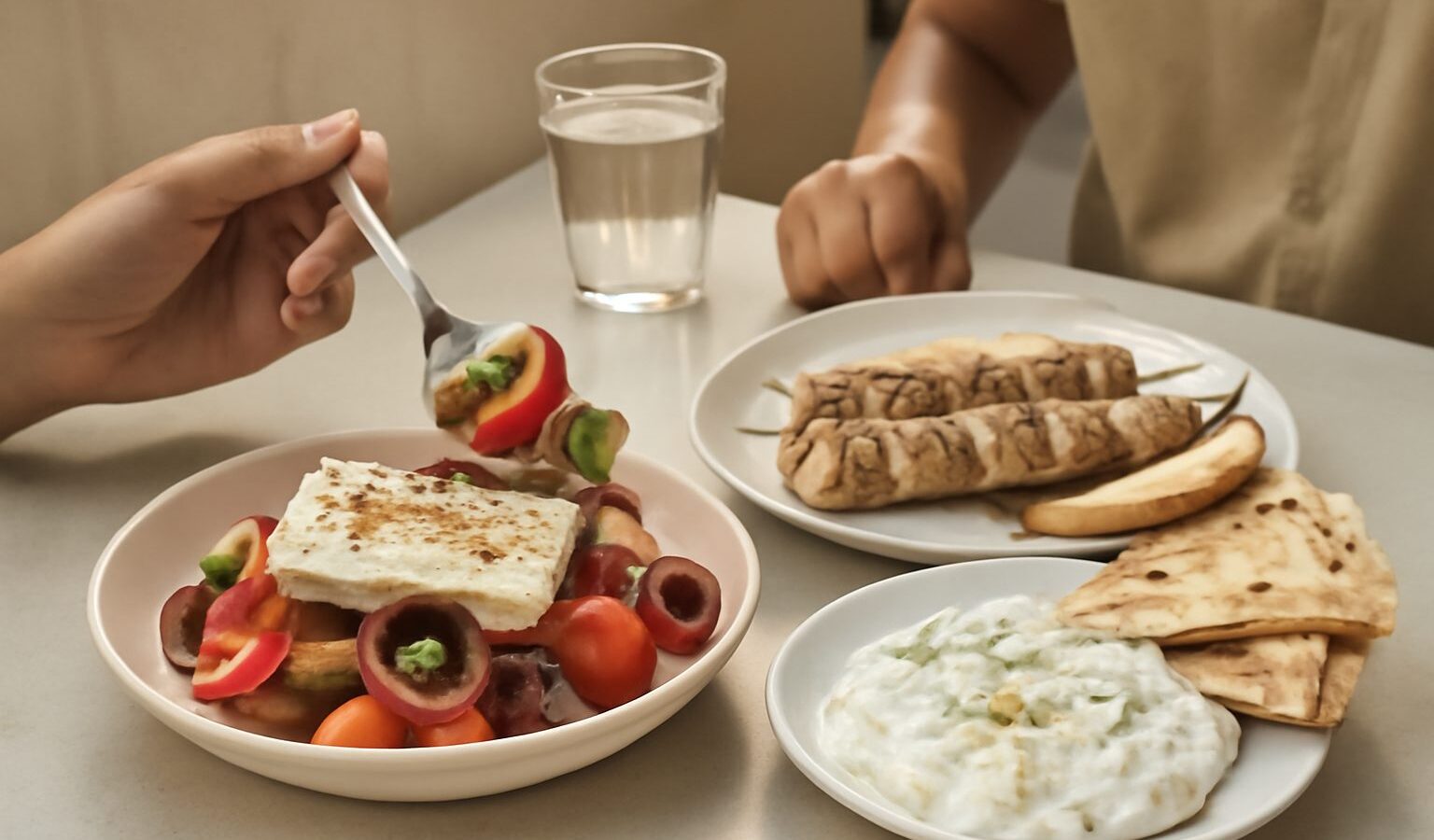
Sun, sea and olive oil: Greek cooking carries the easy warmth of the Mediterranean, and it translates beautifully to a Singapore table. If you are hunting for Greek food in Singapore, you will find charcoal-grilled meats, bright salads, creamy dips and pastries dripping with honey syrup, all built around fresh, simple ingredients treated with care. It is a cuisine that rewards sharing, and one that feels light and generous at the same time, which suits both a long dinner with friends and a relaxed weekend lunch.
This guide covers what Greek food is really about, the dishes worth ordering first, and how to build a spread that does the cuisine justice.
The Spirit of Greek Cooking
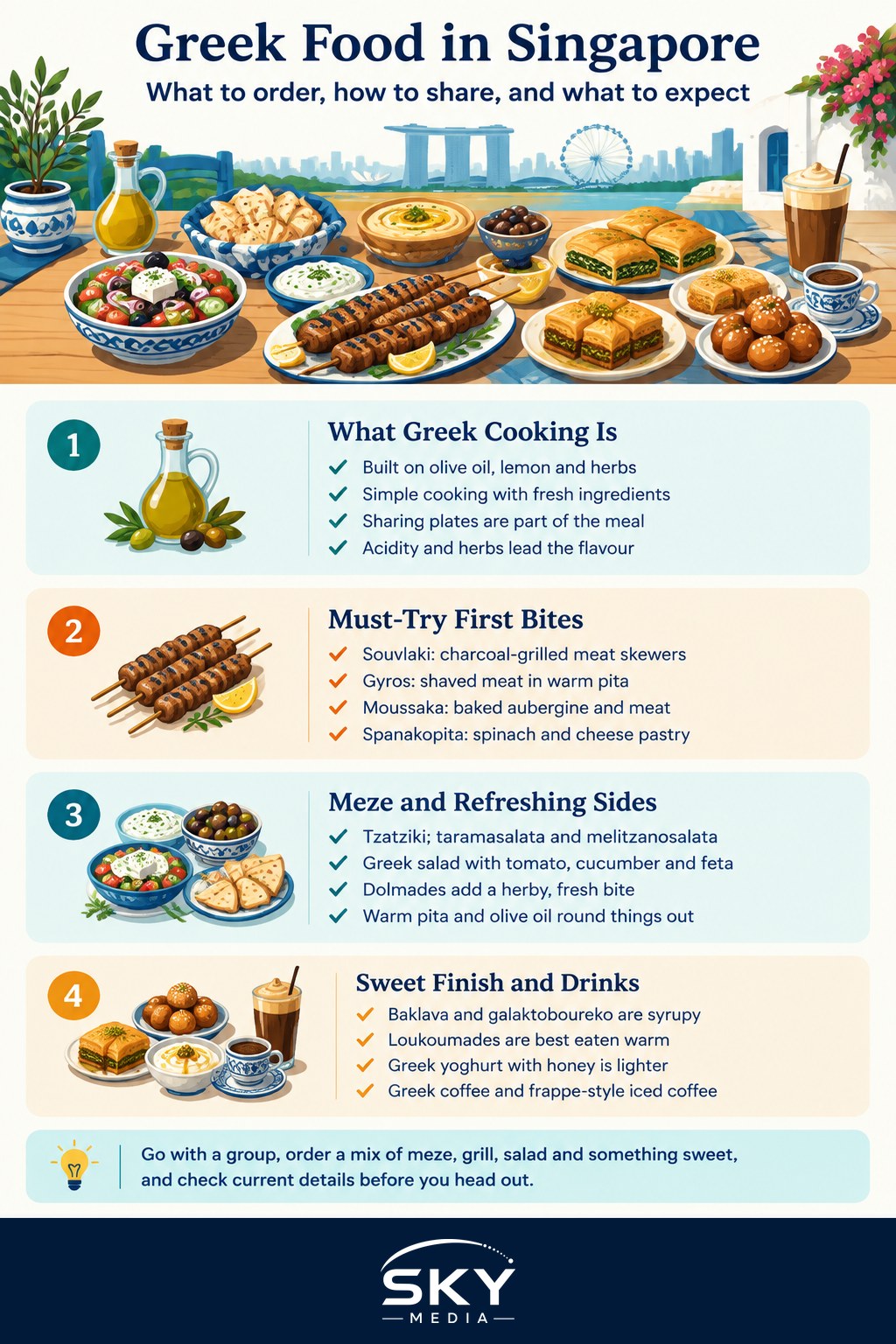
Greek food is a masterclass in doing a lot with a little. The foundations are olive oil, lemon, oregano, garlic, tomatoes and fresh herbs, layered over vegetables, grilled meats, seafood and tangy cheese. Nothing is overcomplicated. A good Greek dish lets the ingredients speak, with acidity and herbs doing the heavy lifting rather than heavy sauces.
Sharing is central to the whole experience. Meals unfold slowly across many small plates, meant to be passed around and picked at while the table talks. That communal rhythm will feel instantly familiar to anyone who loves a good zi char dinner or a long hawker session with friends. It is food designed for company, not for eating alone in a hurry.
Dishes Worth Ordering First
A few dishes give you the clearest introduction to Greek cooking, and they are the ones to reach for on a first visit.
- Souvlaki: small skewers of marinated meat grilled over charcoal, smoky and tender, often served with pita, salad and a dollop of dip.
- Gyros: seasoned meat roasted on a vertical spit and shaved thin, wrapped in warm pita with tomato, onion and sauce for a satisfying handheld meal.
- Moussaka: a rich baked dish of layered aubergine, spiced minced meat and a creamy topping, comforting and hearty.
- Souvla and grilled meats: larger cuts cooked slowly over fire, ideal for sharing across a group.
- Grilled seafood: simply prepared fish and prawns dressed with lemon and olive oil, letting freshness shine.
- Spanakopita: a flaky pastry parcel filled with spinach and cheese, great as a snack or a lighter bite.
Order a mix of grilled meat, a baked dish and something from the sea, and you cover most of what Greek cooking does best.
Meze and Small Plates
Like much of the Mediterranean, Greek meals often begin with meze, the small shared dishes that set the tone. These are where you scoop, dip and graze while the mains cook.
Look for tzatziki, the cool yoghurt, cucumber and garlic dip that pairs with almost everything; taramasalata, a creamy, savoury fish-roe dip; and melitzanosalata, a smoky aubergine dip. Golden feta, either crumbled over salad or baked until soft, brings a salty tang, while dolmades, rice-stuffed vine leaves, add a herby freshness. A basket of warm pita and a drizzle of good olive oil complete the picture.
Then there is the Greek salad, or horiatiki: chunks of tomato, cucumber, onion, olives and a generous slab of feta, dressed simply with olive oil and oregano. In Singapore’s heat, it is one of the most refreshing things you can order, and it deserves a place on the table alongside the richer dishes.
Sweets and Drinks to Finish
Greek desserts lean sweet, sticky and satisfying. Baklava brings layers of crisp pastry, nuts and honey syrup, while galaktoboureko, a custard-filled pastry soaked in syrup, is softer and creamier. Loukoumades, little fried dough balls drizzled with honey and cinnamon, are the crowd-pleaser, best eaten warm. Greek yoghurt with honey and walnuts offers a lighter, tangy finish for those who find the pastries too rich.
To drink, strong Greek coffee is served in a small cup, thick and intense, much like its Turkish cousin. A cold frappe-style iced coffee is a popular warm-weather choice that travels well to Singapore’s climate. For those who enjoy a drink, Greek cuisine has a long tradition of wines and aniseed-flavoured spirits, best enjoyed responsibly, in moderation and only by those of legal drinking age, with a safe way home planned in advance.
How to Build the Perfect Spread
The trick with Greek food is balance: something charred, something creamy, something fresh and something sweet. Use this as a starting point when you order for the table.
| Course | What to order | Why it works |
|---|---|---|
| To start | Tzatziki, dolmades, warm pita | Light, tangy, easy to share |
| Fresh element | Greek salad with feta | Cuts through the richer plates |
| Main event | Souvlaki or a mixed grill platter | Smoky, filling, made for groups |
| Comfort dish | Moussaka | Warm, hearty and satisfying |
| Sweet finish | Baklava or loukoumades | Honey-sweet, best shared |
Where to Find Greek Food in Singapore
Greek food appears across the island in a few different forms. Casual counters and grab-and-go spots, often in the city and near office crowds, do brisk business in gyros wraps and souvlaki plates for a quick, filling meal. Sit-down tavern-style restaurants, some along riverside strips and in dining enclaves, offer the full meze-and-grill experience with a relaxed, sociable feel. A handful of specialty grocers and delis stock olive oil, feta, olives and pastries for cooking or snacking at home.
As always, menus, prices and opening hours change, and places come and go, so check the current details before heading out. If dietary needs matter to your group, ask directly, as offerings vary from one eatery to the next. A good sign is a busy charcoal grill and salads that look freshly tossed rather than sitting around.
A few tips for eating well: go with a group so you can order widely, treat the meze as more than an afterthought, and do not overlook the humble Greek salad, which balances everything else on the table. Take your time, keep the pita coming, and save room for something honey-soaked at the end.
Explore more
Craving more Mediterranean flavours? Our guide to Turkish food in Singapore covers another charcoal-grilling, meze-loving cuisine, while Persian and Iranian food in Singapore explores fragrant rice and slow-grilled meats. For a heartier, comfort-driven change of pace, see our look at British food and pubs in Singapore.
Frequently Asked Questions
Is Greek food healthy compared with other Western cuisines? It can be, because the cuisine leans on olive oil, vegetables, herbs, seafood and yoghurt rather than heavy cream sauces. Grilled meats and salads are the lighter picks, while fried items, pastries and cheese-heavy dishes add up quickly. Portion sizes and what you order matter more than the cuisine label.
What is the difference between gyros, souvlaki and a Greek wrap? Souvlaki is meat grilled on small skewers, while gyros is meat roasted on a vertical spit and shaved thin. Either can be tucked into pita with tomato, onion and sauce to make a wrap. Ask how a place serves each one, as menus vary.
Is Greek food suitable for vegetarians? Quite suitable, since many meze are meat-free. Think tzatziki, melitzanosalata, Greek salad, baked feta, dolmades and spanakopita. Check whether dolmades or pies contain meat, and ask about animal-based stock or cheese if you are strict, because fillings differ from one kitchen to the next.
Can I recreate Greek dishes at home with ingredients from Singapore supermarkets? Largely yes, as the base is olive oil, lemon, oregano, garlic, tomatoes and yoghurt, which are easy to find. Feta, olives and good pita may need a visit to a larger supermarket or a specialty deli. Start with tzatziki or a Greek salad, which need no special equipment.
How many dishes should two people order at a Greek restaurant? Two people can usually manage two or three meze, one grilled main and a salad, then share a dessert. Greek meals are built for sharing, so ordering in rounds works better than everything at once. Add more if you are still hungry once the first plates arrive.