

Feeding a household in a new country starts with one simple question: where do you buy your food? Learning how the average supermarket singapore shopper actually stocks the fridge, and which chains, markets and apps save the most money, takes only a week or two once you know the landscape. If you have just arrived from mainland China, the good news is that the choices are familiar in spirit even when the brands and habits differ. This guide walks you through the main chains, the traditional wet markets, the loyalty cards worth carrying, and where to find the Chinese ingredients you miss from home. It is general information to help you settle in, not financial advice.
The Main Supermarket Chains
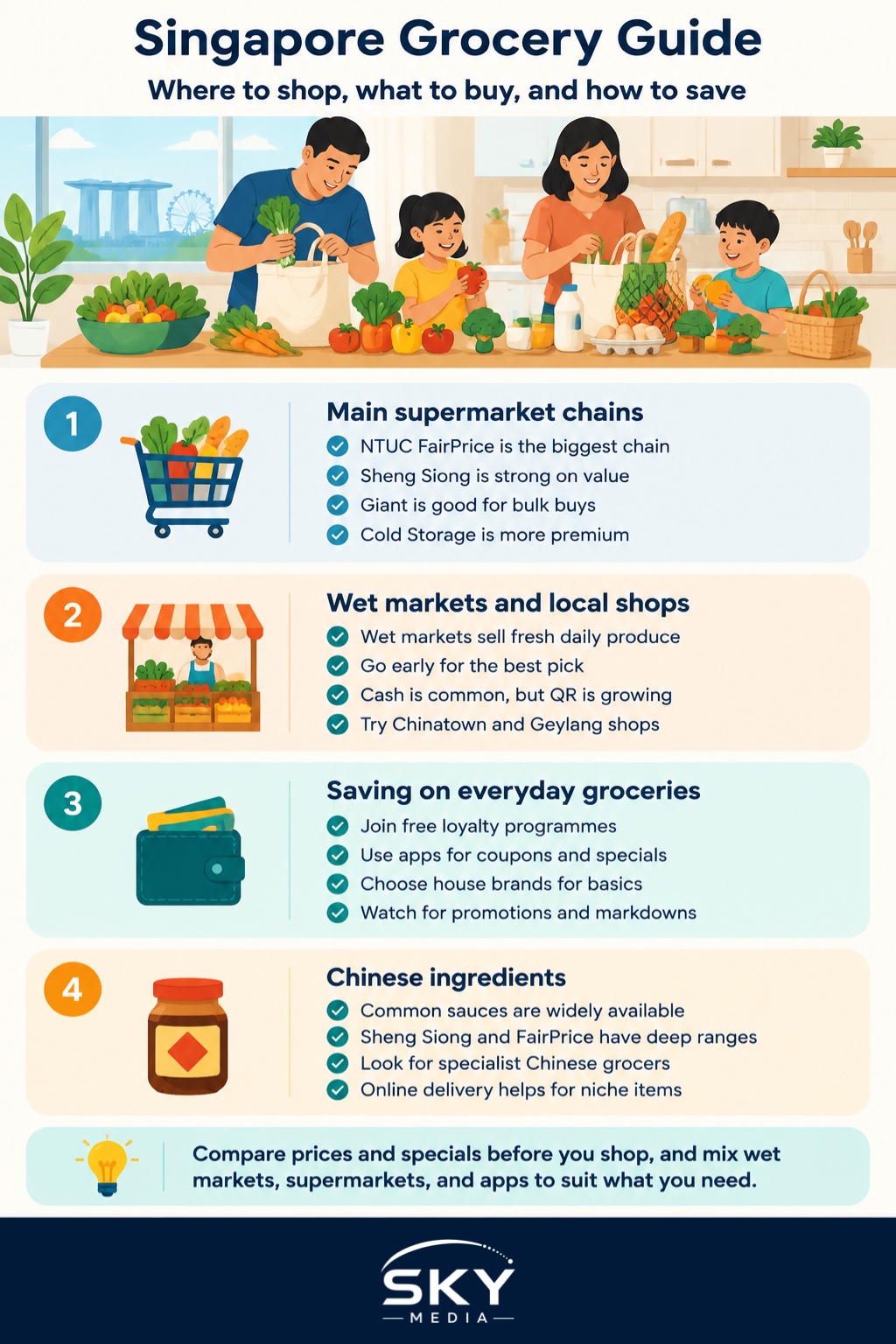
Singapore has four big names you will see again and again. NTUC FairPrice is the largest, run by a co-operative, with outlets in almost every HDB estate. It ranges from small FairPrice Express and Cheers convenience stores to full-size FairPrice and the larger FairPrice Xtra hypermarkets in malls. Because it is positioned as the everyday people’s grocer, its house brand and weekly specials are reliably affordable.
Sheng Siong is the value champion loved by many local families. It leans into fresh produce, live and chilled seafood, and heavy weekend promotions, and its prices on staples are often the lowest. If you cook Chinese food daily, Sheng Siong will feel comfortable quickly, as its range of sauces, noodles and vegetables is broad.
Giant is another budget-friendly hypermarket chain, strong on bulk buys, household goods and bigger trolley shops. Cold Storage sits at the premium end, with a wider selection of imported Western goods, cheeses, wines and organic lines, and prices to match. Its sister brands include CS Fresh and the upmarket Jasons. Alongside these you will find international players like the German discounter and warehouse-club style stores, plus online-only grocers that deliver to your door, which is handy in a hot climate.
Wet Markets and Neighbourhood Options
Beyond the aircon aisles, Singapore keeps a living tradition of wet markets, the local cousin of the mainland 菜市场. Usually attached to a hawker centre and run by the town council or a market authority, a wet market is a cluster of independent stalls selling fresh vegetables, fruit, fish, pork, chicken and tofu, often at prices below the supermarkets and with produce turned over daily. Go early in the morning for the best pick, bring your own bag, and do not be shy about pointing if your Mandarin and the auntie’s dialect do not quite meet in the middle. Cash is common here, though more stalls now accept PayNow and QR payments.
For quick top-ups there are the ubiquitous convenience stores, provision shops in older estates, and mama shops. Ethnic enclaves are worth a special trip: the shops around Geylang, Chinatown and the heartland malls carry regional Chinese goods you will not always find in a mainstream chain.
Comparing Where to Shop
The right place depends on what you are buying and how much time you have. This table sums up the trade-offs so you can plan a week of meals without overspending.
| Shopping option | Price level | Best for | Payment and notes |
|---|---|---|---|
| FairPrice / Giant hypermarket | Budget to mid | Weekly bulk shop, house brands, offers | Cards, PayNow, apps; widest reach |
| Sheng Siong | Budget | Fresh produce, seafood, Chinese staples | Frequent promos; strong heartland presence |
| Cold Storage / CS Fresh | Premium | Imported and Western goods, organics | Higher prices; good for special occasions |
| Wet market | Budget | Daily fresh vegetables, fish, meat, tofu | Cash and QR; go early, bring a bag |
| Online grocers | Mid | Heavy or bulky items delivered | Delivery fee or minimum spend applies |
Loyalty Cards, Apps and Everyday Savings
Almost every chain has a rewards programme, and joining is free. FairPrice’s Link points, Sheng Siong and Cold Storage’s own membership schemes, and the store apps all let you collect points, load digital coupons and see the week’s specials before you go. Download the app for wherever you shop most, since the in-app deals are often better than the shelf price.
A few habits keep the grocery bill sensible:
- Buy house brands. The supermarket’s own label costs noticeably less than the branded equivalent and is usually just as good for staples like rice, oil, eggs and cleaning products.
- Shop the promotions. Weekly catalogues, “buy two” deals and near-expiry discounts on chilled items reward a little planning.
- Go for fresh at wet markets, dry goods at chains. Vegetables and fish are cheaper and fresher at the market; canned, packaged and household items are cheaper in bulk at hypermarkets.
- Watch the clock. Bakeries and fresh counters often mark down late in the evening.
- Use credit or debit cards with grocery rebates where you have one, and stack that with app coupons. Prices and promotions change constantly, so compare rather than assume any one store is always cheapest.
Finding Chinese Ingredients
Missing the flavours of home is normal, and Singapore makes them easy to find. Because so much of the local Chinese community traces its roots to southern China, staples like light and dark soy sauce, oyster sauce, doubanjiang, Shaoxing wine, dried mushrooms, glass noodles, tofu and fresh leafy greens are on the shelves of any mainstream supermarket. Sheng Siong and FairPrice in particular carry a deep Chinese range.
For the more specific northern, Sichuan or regional items, hotpot bases, particular chilli oils, frozen dumplings, mala seasonings and specialty snacks, head to a dedicated Chinese grocer or the growing number of shops catering to recent mainland arrivals. Areas with a strong newcomer community stock brands you will recognise from home, and many also sell online with island-wide delivery. Between the chains, the wet markets and these specialist stores, you can recreate almost any dish from your old kitchen.
Explore More
For a deeper dive into sourcing hometown flavours, see our guide to Chinese supermarkets and groceries in Singapore. To understand how your food budget fits the bigger picture, read the cost of living in China versus Singapore, and if you are still finding your feet, our guide to settling in Singapore for newcomers from China pulls the essentials together.
Further reading: Supermarket House Brands in Singapore: Which Are Worth Buying