

There is a special kind of pride in raising a dramatic plant from nothing but a handful of seeds, and few plants deliver drama like the bird of paradise. Growing a bird of paradise seed in Singapore is a genuine test of patience, because these plants are slow to germinate and even slower to flower, but our warm, humid climate is about as close to their ideal as you will find anywhere. If you enjoy the long game and the satisfaction of watching a plant develop through every stage, this is a wonderful project. Here is how to give those stubborn seeds the best possible start.
Preparing and Sowing the Seeds
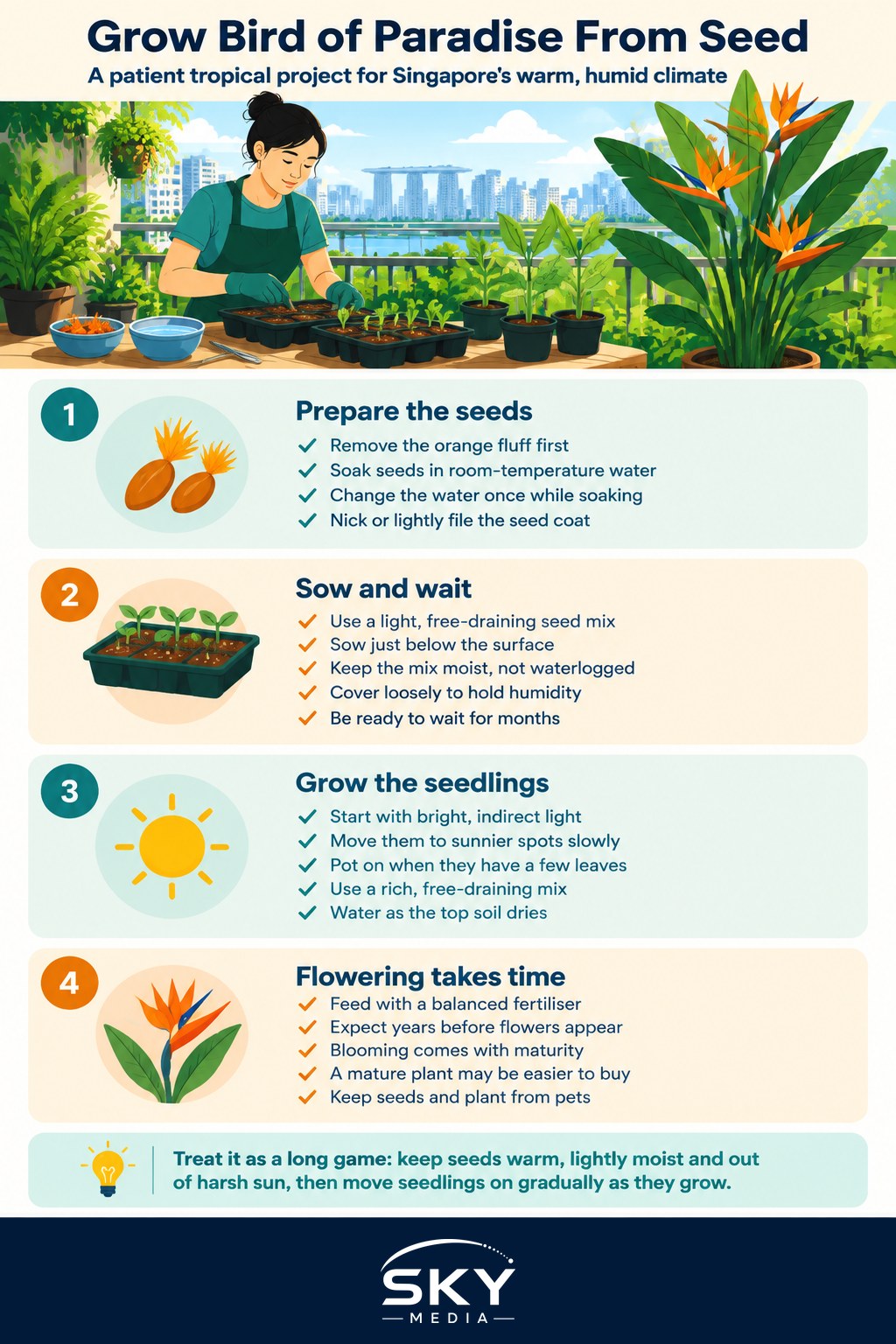
The first thing to know is that bird of paradise seeds are famously reluctant. Each shiny black seed carries a tuft of bright orange fluff, which you should gently remove before sowing. The seed coat is hard, so germination speeds up considerably if you help water get inside. Soaking the seeds in room-temperature water for a day or two, changing the water once, softens that coat. Some growers also carefully nick or lightly file a tiny spot on the seed coat to let moisture in, taking care not to damage the pale inside.
Sow into a light, free-draining seed mix, pushing each seed a centimetre or so below the surface. Warmth is the great accelerator here: these seeds germinate best in consistently warm soil, and Singapore’s year-round heat means you rarely need a heat mat, unlike growers in cooler countries. Keep the mix moist but never waterlogged, cover the tray loosely to hold humidity, and then settle in to wait. If you are new to raising plants from seed, the groundwork in seed starting for beginners covers trays, mixes and moisture in more detail.
Now for the honest part: patience is essential. Bird of paradise seeds can take anywhere from a month to several months to sprout, and they often do so unevenly, with one popping up long after you had given up on the rest. Do not throw the tray out too soon. Keep it warm, lightly moist and out of harsh direct sun while you wait. It helps to sow more seeds than you think you need, since germination rates are naturally patchy.
From Seedling to Flowering Plant
When a seedling finally appears, it sends up a single narrow leaf, and growth from here is steady rather than speedy. Give the young plants bright, indirect light at first, then gradually move them somewhere sunnier as they toughen up, following the acclimatising steps in how to acclimatise a new plant so the tender leaves do not scorch. A sheltered, brightly lit balcony suits them well as they grow.
Pot the seedlings on into a rich but free-draining mix once they have a few leaves, and keep potting up as they fill each container, because a cramped root system slows an already slow plant. Water when the top of the soil begins to dry, feed through the growing months with a balanced fertiliser, and enjoy the broad, paddle-shaped leaves that make this a handsome foliage plant long before it ever blooms.
That brings us to the biggest lesson of all: flowers take years. A bird of paradise grown from seed commonly needs several years, sometimes many, to reach flowering size, and it tends to bloom best when it is mature and its roots are fairly full in the pot. There is no shortcut, so grow it for the striking foliage in the meantime and treat the first flower as a well-earned bonus. When it does approach blooming size, the general tips in how to get your plants to flower will help you coax it along with enough light and steady feeding.
If the wait feels too long, there is no shame in buying a more mature specimen and enjoying its care straight away, and our companion guide to caring for a bird of paradise plant walks through light, watering and feeding for an established plant. Do keep in mind that the plant and its seeds are best kept away from pets and small children who might chew them, as with many ornamental plants.
Growing a bird of paradise seed in Singapore is not about instant results. It is about the quiet pleasure of nurturing something from a soaked black seed into a bold tropical statement, one slow leaf at a time. For a gardener who values the journey as much as the flower, few projects are more rewarding.
Frequently Asked Questions
Where can I get bird of paradise seeds, and are fresh ones better? Seeds from a reputable nursery or fellow grower are best, and fresher seed generally germinates more reliably than old stock. Be wary of unusually cheap listings with no information. Collecting from a mature plant you know is another route, if you have access to one.
How many bird of paradise seeds should I sow to get a few plants? Sow more than you need, since germination is patchy and uneven. Spread them in a tray or several pots, and keep the tray rather than discarding it early. Thin or pot on later, passing any extra seedlings to friends.
How big a pot does a bird of paradise seedling need? Start in a small pot and move up gradually as the roots fill it, rather than jumping to a large one. A cramped root system slows growth, but a pot that is too big can stay waterlogged. Use a rich, free-draining mix and always have drainage holes.
Is it better to buy a young bird of paradise plant than to grow from seed? If you want results sooner, yes. A nursery plant saves years of waiting, since seed-grown plants need a long time to flower. Growing from seed suits patient people who enjoy the process, and costs far less, but expect a long road to blooms.
Why are my bird of paradise seeds mouldy or rotting in the tray? The mix is probably too wet or the tray too closed. Keep it moist but not waterlogged, give the seeds air by loosening the cover, and use a free-draining seed mix. Remove any soft, rotting seeds so the problem does not spread.
Further reading: Growing an Avocado From Seed