
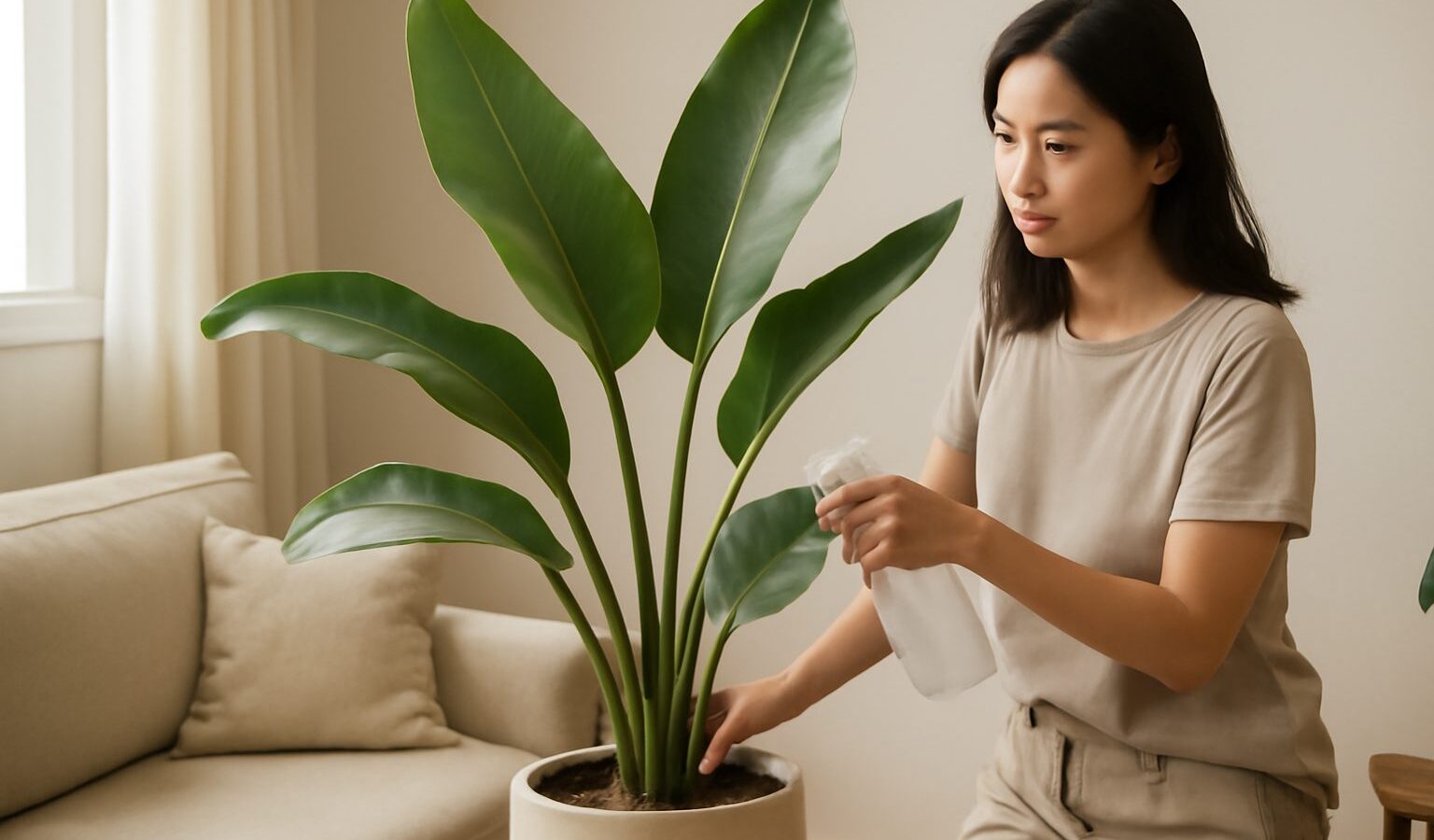
The bird of paradise plant is one of those tropical statement plants that instantly makes a corner feel like a resort. With its tall stems and broad, banana-shaped leaves, a healthy bird of paradise plant can reach the ceiling of an HDB flat and turn a plain balcony into something lush. The good news for local growers is that this plant hails from a warm climate, so our year-round heat suits it far better than it suits gardeners in colder countries. This guide walks you through light, water, humidity, feeding and the common problems, all grounded in Singapore conditions.
Knowing Your Bird of Paradise
Most plants sold here as bird of paradise are one of two types. The orange-flowering Strelitzia reginae stays more compact, while the giant white Strelitzia nicolai grows into a tall, tree-like clump with grey-white flowers. For a flat or condo, nicolai is the one you usually see, prized for its dramatic foliage rather than its flowers, which rarely appear indoors.
Flowering is worth being honest about. Indoors, and especially in a shaded corridor, a bird of paradise plant may never bloom. It needs several years of maturity and a lot of bright light before it flowers, so treat it as a foliage plant first. If a bloom eventually arrives, consider it a bonus rather than the goal.
A quick safety note: the seeds and some plant parts can cause mild stomach upset if eaten, so it is sensible to keep curious toddlers and pets from chewing the leaves. It is far less hazardous than the toxic aroids, but supervision never hurts.
Light, Position and Our Intense Sun
This is a sun-lover. The brighter the spot, the happier and more upright it grows.
- Best indoor spot: right beside a bright window, ideally east or west facing, where it gets several hours of strong, indirect light.
- Balcony and corridor: a sheltered balcony is ideal. It can even take some direct morning sun, which encourages sturdy growth.
- Too little light: in a dim corridor the plant survives but grows leggy, with smaller leaves and long gaps between them.
Our midday sun is fierce, though. A plant moved suddenly from a shaded nursery bench into full afternoon glare can scorch, leaving brown, crispy patches. Introduce direct sun gradually over a week or two. Rotate the pot a quarter turn every week so it does not lean permanently towards the window.
Watering Without Drowning It
The biggest killer of a bird of paradise plant in Singapore is not neglect but overwatering in a pot that never dries. Because our air is humid and many balconies are shaded for part of the day, soil stays wet longer than you expect.
- Water thoroughly until it runs from the drainage holes, then let the top few centimetres of soil dry before watering again.
- In a bright, breezy spot this may mean watering every four to six days; in a shaded corner, less often.
- Always tip the excess out of the saucer. Do not let the pot stand in a tray of water.
That last point matters for more than the roots. Any saucer, tray or forgotten container of standing water can breed Aedes mosquitoes and dengue, so empty saucers after watering and after heavy rain, in line with NEA and Mozzie Wipeout habits. Use a chunky, free-draining potting mix, ideally one with added perlite or bark, and always plant into a pot with drainage holes.
Humidity, Feeding and Those Split Leaves
Humidity is one area where local growers have it easy. Our naturally moist air suits the plant, so you rarely need to mist. The exception is an air-conditioned room, where the aircon dries the air considerably. In a bedroom that runs the aircon overnight, leaf edges can brown, so group it with other plants or sit it on a tray of damp pebbles to lift the local humidity.
Feed during the warmer, brighter growing stretches, which for us is most of the year. A balanced liquid fertiliser diluted to the recommended strength, applied roughly once a month, keeps the leaves large and green. Always follow the dose on the label, as too much fertiliser burns the roots and browns the leaf tips.
New growers are often alarmed when older leaves tear into ribbons along the veins. This splitting is completely normal. In the wild it lets wind pass through tall leaves without ripping them from the stem, so a split leaf is a sign of a mature, healthy plant, not a problem to fix.
Common Problems and Quick Fixes
| Symptom | Likely cause | What to do |
|---|---|---|
| Yellow lower leaves | Overwatering or soggy soil | Let soil dry more; check drainage |
| Brown, crispy edges | Aircon dryness or fertiliser build-up | Raise humidity; flush the soil with plain water |
| Pale, leggy growth | Too little light | Move to a brighter window or balcony |
| Curling leaves | Underwatering or heat stress | Water deeply; shade from harsh midday sun |
| Sticky residue or webbing | Spider mites, common in dry aircon air | Wipe leaves; rinse in the shower; improve airflow |
Wiping the broad leaves with a damp cloth every couple of weeks does two useful things. It removes the dust that dulls the plant and clogs its pores, and it lets you spot pests such as spider mites and mealybugs early, before they take hold.
Repotting and Long-Term Growth
A bird of paradise plant actually flowers and grows best when its roots are a little crowded, so resist repotting too often. Every two to three years, or when roots circle the pot and push the plant upward, move it up just one pot size in the cooler part of the day. These plants are heavy and top-heavy once mature, so a wide, sturdy pot helps prevent tipping on a windy high-floor balcony.
To multiply your plant, mature clumps can be divided at repotting time by separating a section with its own roots and fan of leaves. It is a slower way to grow your collection than with trailing plants, but it gives you a full-sized specimen quickly.
With a bright spot, careful watering and a monthly feed, a bird of paradise plant will reward you with bold, architectural leaves for years. If you have caught the tropical-foliage bug, pair it with other easy-care greenery. A trailing string of hearts softens a shelf below it, while a hardy aglaonema Chinese evergreen fills the shadier corners it leaves behind. For rooms where you want plants working a little harder, see our guide to the best air-purifying plants for your home.
Remember this is general guidance for home gardeners rather than professional horticultural advice, so watch how your own plant responds to your particular balcony, light and watering rhythm, and adjust from there.