
There is a particular frustration in growing a plant that stays stubbornly green. The leaves are lush, the plant is clearly healthy, and yet not a single bloom appears. If you have ever wondered how to get plants to flower, you are in good company, and the answer is rarely luck. Flowering is something you can encourage with the right light, feeding, pruning and a little patience. In our warm, sunny climate many plants can bloom for much of the year once you understand what they are waiting for.
This guide walks through the real reasons plants hold back their flowers and the practical steps that coax them into bloom, all grounded in Singapore conditions.
Why a Healthy Plant Refuses to Bloom
Flowering costs a plant a lot of energy, so it only happens when conditions tell the plant it is worth the investment. A plant that stays leafy is usually missing one of a handful of cues.
- Not enough light. This is the number one reason by far. Flowering plants are sun-hungry, and a spot that grows fine leaves may be far too dim to trigger blooms.
- Too much nitrogen. A feed high in nitrogen drives lush green leaves at the direct expense of flowers. Overfeeding a general fertiliser is a classic cause of an all-leaves plant.
- The plant is too young or too comfortable. Some plants must reach a certain maturity before they bloom. Others, kept in a large pot with endless food and water, simply grow leaves because they have no reason to reproduce.
- The wrong plant or the wrong moment. A few plants need a trigger we cannot easily supply, and some, like certain foliage plants, rarely flower indoors at all. Knowing what your plant naturally does saves a lot of disappointment.
Work out which of these fits your plant and you are most of the way to a solution.
Light Is the Master Switch
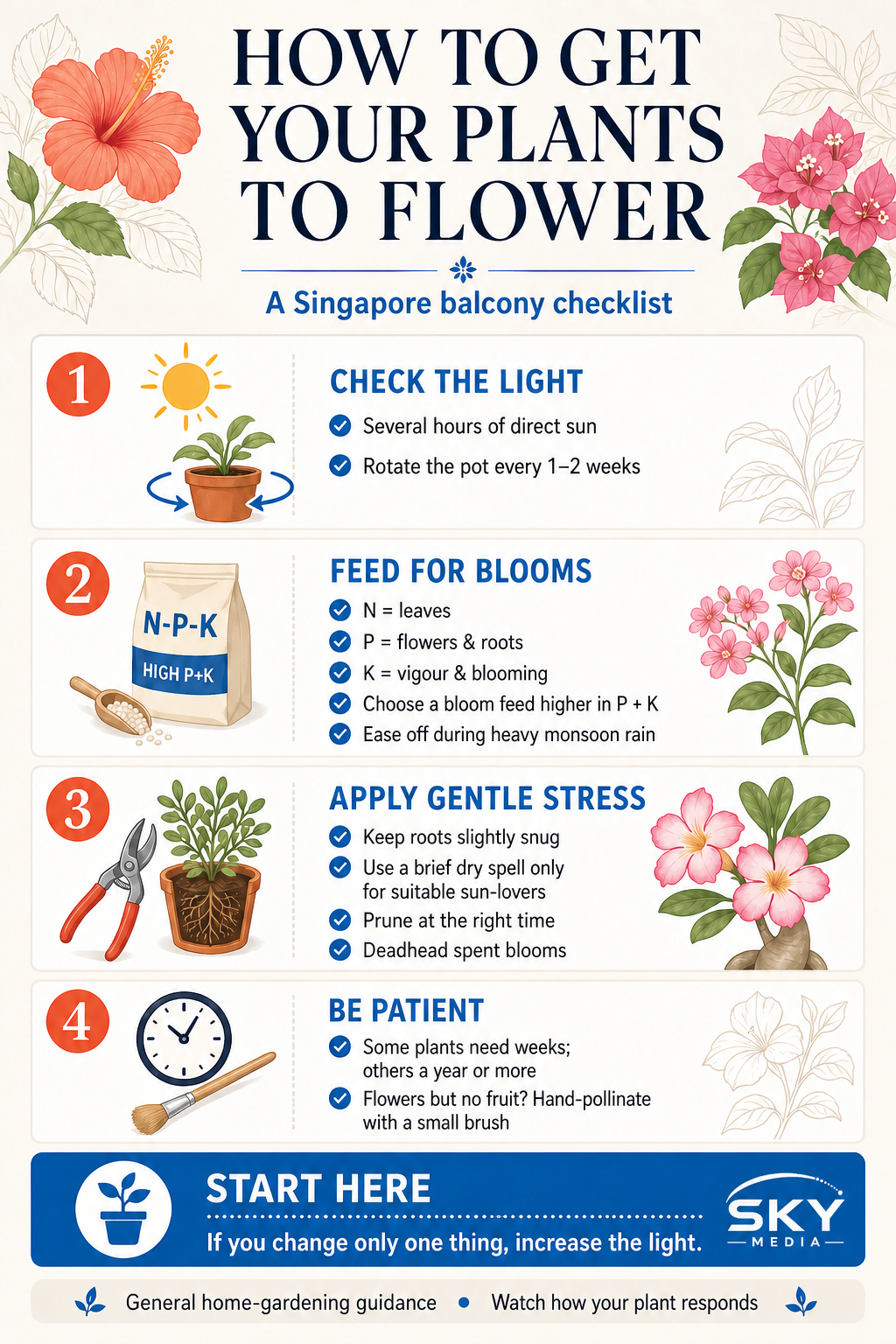
If you change only one thing, change the light. The overwhelming majority of shy bloomers are simply not getting enough of it.
Most flowering plants want several hours of direct sun a day. A balcony or ledge that catches strong morning or afternoon sun is ideal, and our intense tropical light is a real advantage here. Move a reluctant plant to your brightest available spot and give it a few weeks. Sun-lovers such as bougainvillea, hibiscus and desert rose will barely flower in shade and bloom generously in full sun.
Do not expect flowers from a plant on a dim corridor or set well back from a window. If your only bright spot is limited, reserve it for the plants you most want in bloom, and rotate the pot every week or two so all sides get their share of light and the plant flowers evenly rather than leaning to one side.
Feed for Flowers, Not Just Leaves
Once the light is sorted, feeding is the next lever, and it is where many gardeners unknowingly work against themselves.
Fertilisers carry three main nutrients, and the balance matters. Nitrogen builds leaves, phosphorus supports flowers and roots, and potassium aids overall health and blooming. A feed heavy in nitrogen gives you a big green plant and few flowers. To encourage blooms, switch to a fertiliser higher in phosphorus and potassium, often sold as a bloom or flowering feed, and follow the dose on the label rather than overdoing it.
- Use a balanced feed while the plant is establishing and growing.
- Switch to a bloom-type feed, higher in phosphorus and potassium, as flowering season approaches.
- Feed at the recommended strength and frequency. More is not better, and excess fertiliser can burn roots and brown leaf tips.
- Ease off feeding during the heaviest monsoon weeks, when rain washes nutrients straight through the pot.
The table below shows what each nutrient does, so you can read a fertiliser label with confidence.
| Nutrient | Main job | If there is too much |
|---|---|---|
| Nitrogen | Leafy green growth | Lots of leaves, few or no flowers |
| Phosphorus | Flowers and roots | Rarely a home-garden problem in balance |
| Potassium | Overall vigour and blooming | Can block uptake of other nutrients |
| Balanced feed | Steady all-round growth | Good for growth, less of a bloom push |
A Little Stress and a Well-Timed Prune
Counter-intuitively, gentle stress often triggers flowering. A plant that senses a slight challenge may bloom in a bid to set seed, and you can use this carefully.
Slightly snug roots. Many plants flower better when a touch pot-bound, so resist moving them into a much larger container. A plant swimming in a huge pot spends its energy on roots and leaves.
A controlled dry spell. Some sun-lovers, bougainvillea and desert rose among them, flower more freely after a short, deliberate dry period. Let the plant approach wilting, then water well. Do this only with plants known to respond to it, and never to the point of real damage.
Prune at the right time. Pruning shapes the plant and, on many species, spurs the fresh growth that carries flowers. Learn whether your plant flowers on new or old growth before you cut, so you are not removing this season’s buds. Deadheading, which means removing spent blooms, often pushes a plant to produce more, as it keeps trying to set seed. Our growing hibiscus in Singapore guide shows this in practice on a classic local bloomer.
Patience, Pollination and Realistic Hopes
Finally, manage your expectations. Some plants flower within weeks of the right care, while others need a year or more of maturity before they bloom for the first time. Keep the plant healthy and it will get there in its own time.
If you grow fruiting plants and see flowers but no fruit, the missing piece is often pollination. Our balconies can be short of pollinating insects, so you may need to hand pollinate by transferring pollen between flowers with a small brush, as gardeners do with the crops in our growing cucumber and gourds guide. And keep pests in check, since sap-suckers drain the energy a plant needs to bloom. If flower buds are being ruined, check our dealing with aphids and whiteflies guide.
Get the light right, feed for flowers rather than leaves, apply a little gentle stress and stay patient, and even a stubborn green plant will usually reward you. Remember this is general guidance for home gardeners rather than professional horticultural advice, so watch how your own plant responds to your particular balcony and adjust from there.