
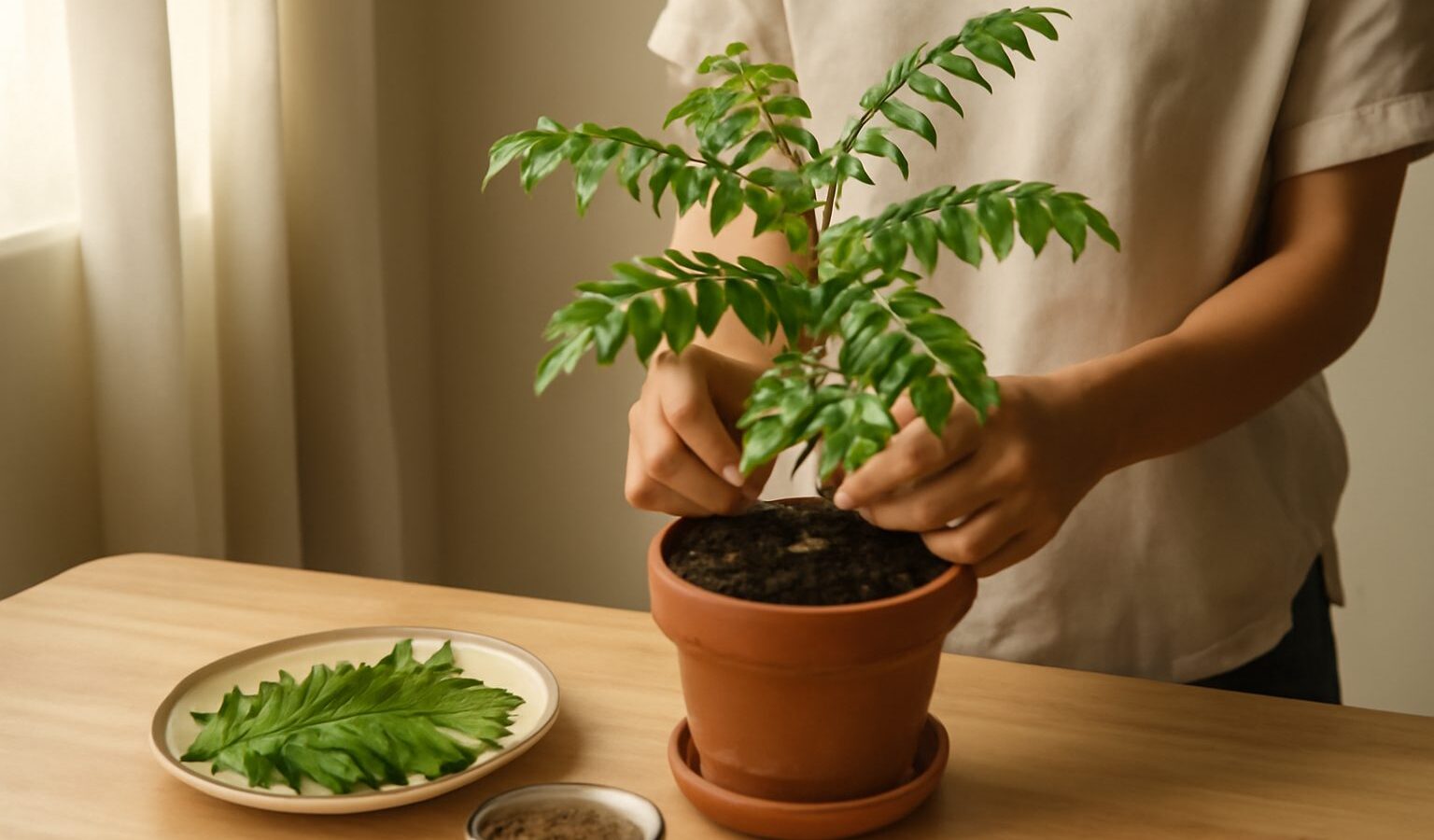
Few plants earn their place on a small balcony quite like a curry leaf plant. Snap off a sprig, drop the aromatic leaves into hot oil, and your kitchen fills with the warm, nutty scent that lifts a dhal or a fish curry. Better still, this is a plant that genuinely enjoys Singapore’s weather. The curry leaf tree, known botanically as Murraya koenigii, comes from the same tropical belt we live in, so the year-round heat and humidity that stress many herbs are exactly what it wants. With a decent pot and a sunny spot, a keen beginner can keep a steady supply of fresh leaves going for years.
This guide walks you through choosing a plant, potting it, and keeping it bushy and productive in a limited space.
Why It Suits a Singapore Balcony
A curry leaf plant is built for our climate. It grows quickly in warmth, tolerates high humidity without fuss, and shrugs off the strong midday sun that scorches softer leaves. Unlike coriander or mint, which bolt or wilt in the heat, this small tree treats a hot corridor or a west-facing balcony as ideal.
It is also happy in a container, which matters when you have no ground to dig. A curry leaf plant kept in a pot stays a manageable size, usually a knee-high to waist-high shrub rather than the tall tree it becomes in the open ground. That makes it a realistic choice for an HDB balcony, a condo planter box, or a bright kitchen window with a few hours of direct sun. Grow it from a known nursery plant or a cutting off a plant you can identify, so you are certain you have the true culinary curry leaf and not an unrelated look-alike.
Choosing a Plant and the Right Pot
The easiest start is a young plant from a plant nursery or garden centre. You can also grow one from a cutting taken from a friend’s healthy plant, or from fresh seed, though seed is slow and patchy to germinate. For most people, buying a small established plant saves months.
Choose a pot at least 25 to 30 centimetres wide with good drainage holes. The roots dislike sitting in water, so drainage matters more than pot size at the start. Use a free-draining mix: a general potting mix loosened with some coarse sand or perlite works well, as our frequent downpours can otherwise leave the mix soggy. Here is a quick comparison of the three ways to start.
| Starting method | Speed to usable leaves | Best for |
|---|---|---|
| Nursery plant | A few weeks | Beginners who want leaves soon |
| Stem cutting | Two to four months | Anyone with access to a healthy plant |
| Fresh seed | Six months or more | Patient growers who enjoy the process |
Whichever route you take, pot the plant up into fresh mix, water it in, and give it a week or two in bright shade to settle before moving it into full sun.
Light, Water and Feeding
Sun is the single biggest factor. A curry leaf plant wants at least four to six hours of direct sunlight a day, and it will reward more. In a shady corner it survives but grows leggy, with sparse, pale leaves that carry less flavour. If your only bright spot is a hot afternoon balcony, that is perfect.
Water when the top few centimetres of mix feel dry to your finger, then water thoroughly until it runs from the base. In our heat a potted plant may need water daily during dry spells, but back off during the monsoon, as constantly wet roots cause yellowing and rot. Never leave the pot standing in a filled saucer. Tip any saucer out after watering, because standing water in saucers and trays breeds Aedes mosquitoes. Change or empty any collected water at least weekly and follow current NParks and NEA guidance to prevent mosquito breeding.
Feed lightly but regularly through the warm months, which for us is all year. A balanced general fertiliser or a diluted organic feed every few weeks keeps the leaves green and plentiful. Curry leaf plants are known to appreciate a nitrogen-rich feed, since you are growing them for foliage. Yellowing older leaves often signal hunger or waterlogging, so check both before adding more feed.
Harvesting and Keeping It Bushy
The trick to a productive curry leaf plant is to pick often and prune with intent. Harvest whole sprigs rather than stripping individual leaves, cutting just above a set of leaves. This prompts the plant to branch from that point, so every harvest makes it bushier. A plant you never cut grows tall and bare; a plant you pick from weekly stays dense and full of fresh growth.
Wash the leaves before you cook with them, as with any home-grown produce, and use only the leaves, which are the edible part. Fresh sprigs keep for a week or so in the fridge, and surplus leaves freeze well in a bag for months, ready to drop straight into a pan. If your plant sends up flower clusters and small berries, you can pinch the flowers off to push energy back into leaf growth. Do not eat the seeds inside the berries.
Common Problems and Pests
Most trouble comes down to light, water, or feeding, and is easily fixed once you spot it.
- Yellowing leaves. Usually overwatering or a hungry plant. Let the mix dry a little more between waterings and add a light feed.
- Leggy, sparse growth. Not enough sun, or not enough pruning. Move it brighter and harvest more often to force branching.
- Leaf drop after repotting or a move. Often just stress. Keep it in stable, bright conditions and it usually recovers.
- Pests such as scale, aphids or the citrus-related psyllid. Start with the least-toxic approach: wipe them off, blast with a jet of water, or use insecticidal soap or neem. If you ever use a pesticide, follow the product label exactly, keep it away from children and pets, and note it is a food crop.
Because you grow the plant on a balcony or corridor, keep the pot secured against wind and falls, mind runoff onto neighbours below, and follow your HDB, town council or MCST rules for shared spaces. Look after the basics and a single curry leaf plant will keep your curries fragrant for years.
Explore more
If you enjoy growing your own aromatics, try growing lemongrass at home for another heat-loving kitchen staple, or growing ginger and turmeric from the rhizomes in your fridge. For quick, fragrant leaves to pick daily, growing mint and basil pairs beautifully with a curry leaf plant on the same sunny shelf.