
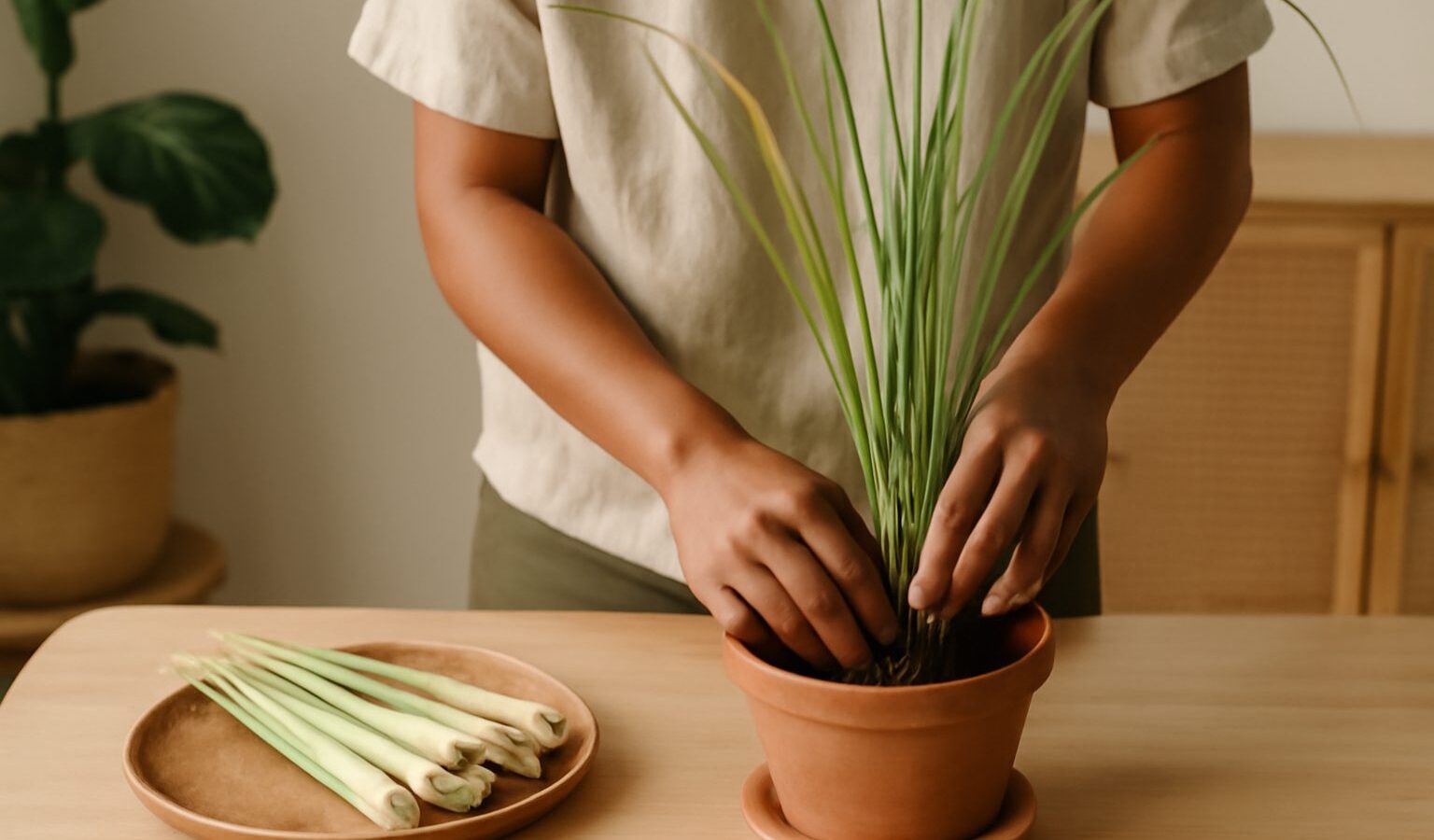
If there is one edible that seems designed for a Singapore balcony, it is lemongrass. This tall, fragrant grass loves heat, drinks up our downpours, and asks for almost nothing in return. Growing lemongrass at home is also one of the cheapest gardening wins around, because you can start a whole clump from a single stalk of serai bought for cents at the wet market. Within a few months that one stalk becomes a fountain of grassy blades and swollen bases, ready to flavour a tom yum, a rendang, or a cooling glass of lemongrass tea.
This guide takes you from a supermarket stalk to a thriving pot, covering rooting, potting, watering, feeding and harvesting for our small-space tropical setting.
Starting From a Supermarket Stalk
The simplest way to begin is with the fresh lemongrass you already cook with. Choose the plumpest stalks you can find, ideally with a bit of the base still intact, and pick ones that look fresh rather than dried out. Grow only from stalks you can positively identify as culinary lemongrass, so you know exactly what you are eating later.
Trim the tops down to about 15 to 20 centimetres, peel off any dry outer layers, and stand the bases in a glass with a couple of centimetres of water on a bright windowsill. Within one to three weeks you should see white roots pushing out of the base and a new green shoot rising from the centre. This water-rooting stage is the fun part, but it involves standing water, which breeds Aedes mosquitoes. Change the water every day or two, rinse the glass, and never leave it sitting untouched. Follow current NParks and NEA guidance to keep mosquitoes from breeding.
Not every stalk will root, so start three or four at once to be sure of a winner.
Potting Up and Where to Place It
Once a stalk has a few centimetres of root and a shoot growing, it is ready for soil. Pot it into a container at least 25 to 30 centimetres wide, because a happy lemongrass clump expands fast and will crowd a small pot within a season. Use a general potting mix with good drainage, and make sure the pot has holes at the base.
Lemongrass is a sun worshipper. Give it the brightest, hottest spot you have, ideally six hours or more of direct sun on a west-facing balcony or a sunny corridor. In too much shade it grows thin, floppy and pale instead of forming sturdy, aromatic stalks. Keep the pot secured against wind, since a tall clump can catch a gust, and follow your HDB, town council or MCST rules for balcony and corridor growing so nothing falls or drips onto neighbours below.
Watering, Feeding and Keeping It Lush
As a grass from wet tropical regions, lemongrass likes to stay evenly moist. In our heat a potted plant may need watering daily, especially once it fills out, so check the top of the mix each morning and water when it starts to feel dry. During the monsoon, ease off, as even a thirsty plant will rot if its roots sit in a waterlogged pot. Empty any saucer after watering rather than letting it collect water, both to protect the roots and to deny mosquitoes a breeding spot; tip out standing water at least weekly.
Feed regularly for lush, flavourful growth. A balanced general fertiliser or a diluted organic feed every few weeks through the year suits a leafy plant like this well. Tired, yellowing older blades are normal, but widespread yellowing usually means the plant is hungry, root-bound, or waterlogged, so run through those three before doing anything drastic.
Here is how the two easy starting routes compare.
| Starting method | What you need | Time to first harvest | Best for |
|---|---|---|---|
| Root a market stalk | A fresh stalk and a glass of water | Three to four months | Beginners on a tight budget |
| Divide an existing clump | A section with roots from another plant | One to two months | Faster results if a friend shares one |
Harvesting and Dividing Your Clump
You can start harvesting once stalks are pencil-thick or fatter at the base. To pick, grip a whole stalk low down and either snap or cut it off at ground level, taking the outer, more mature stalks first and leaving the young centre to keep growing. The swollen white base is the prized part for cooking; the tough upper blades are best bruised and used to flavour soups and teas, then removed before eating. Wash stalks before use, and use only the tender parts you would normally eat.
A well-fed clump grows so vigorously that you will need to divide it every year or so. Tip the plant out, pull or cut the clump into sections, each with roots and a few stalks, and pot them up separately or share them around. This keeps each pot productive and gives you free plants. Surplus stalks freeze beautifully: chop or bruise them, bag them up, and they keep for months, ready to drop straight into a pot.
Common Problems and Simple Fixes
Lemongrass is tough, but a few issues crop up in balcony pots.
- Floppy, thin stalks. Almost always too little sun. Move the pot to the brightest spot you have.
- Browning, crispy leaf tips. Often underwatering or salt build-up from feed. Water more consistently and flush the pot occasionally.
- Yellowing across the plant. Usually a hungry or root-bound clump. Feed it, or divide and repot into fresh mix.
- Pests. Lemongrass is largely pest-free, but if aphids or mealybugs appear, start with a jet of water, then insecticidal soap or neem. If you ever use a pesticide, follow the label exactly and keep it away from children, pets and food.
Start with one rooted stalk, give it sun and water, and you will soon have more lemongrass than you know what to do with. It is one of the most rewarding first edibles a Singapore home gardener can grow.
Explore more
Once your lemongrass is thriving, pair it with growing a curry leaf plant for another fragrant cooking staple, or dig into growing ginger and turmeric from the rhizomes in your kitchen. For fast, pickable flavour on the same sunny shelf, try growing mint and basil too.