

A wall of leafy green can turn an exposed balcony or a bare fence line into a calm, private retreat. Growing a living hedge or privacy screen in Singapore works beautifully because our warm, wet climate keeps plants growing all year, so a screen fills in faster here than in cooler places. Whether you want to block a view, soften a boundary, cut noise, or simply add greenery, a living screen does the job while giving you shade and a habitat for birds and pollinators. This guide covers choosing plants, planting, and keeping your screen tidy in a small tropical space.
Choosing the Right Plants
The best screen plant for you depends on your space, your light, and how tall you want to go. On a balcony or corridor, tall pots of dense, upright foliage or a trellis of climbers can create privacy without taking up floor space. In a landed garden, shrubs planted in a row give a fuller, taller hedge over time.
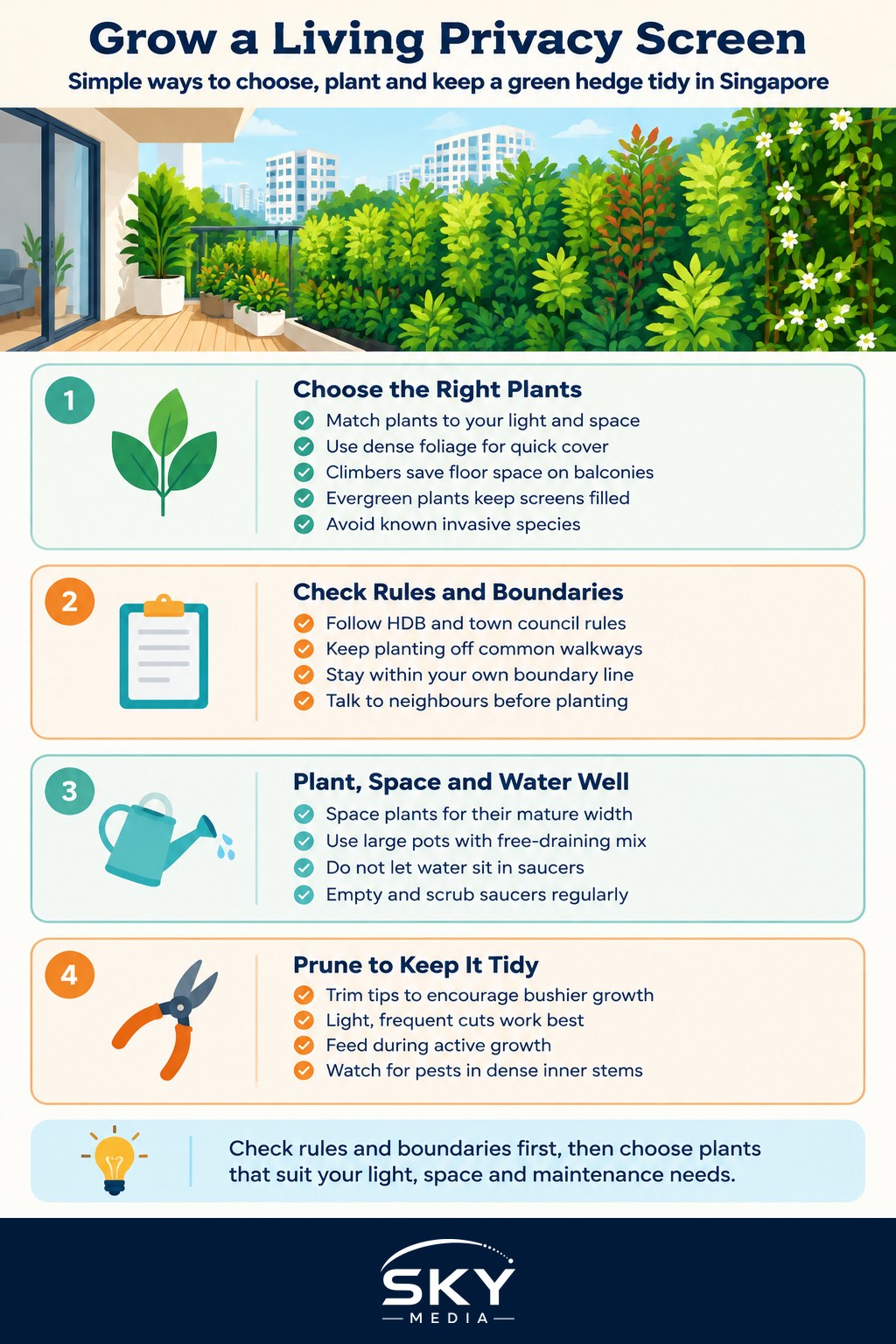
Look for plants that are naturally bushy, tolerate our heat and humidity, and respond well to trimming. Evergreen shrubs that hold their leaves year round make the most reliable screens, since they never leave a bare gap. Climbers trained on a frame are a fast, space-saving choice for narrow spots. Think about the mature size before you buy, so you are not fighting a plant that wants to be far bigger than your space allows.
One important caution: avoid known invasive species. Some fast-spreading plants escape gardens and cause problems in our green spaces, so choose responsibly and ask at the nursery if you are unsure. Our guides on container gardening for small spaces and vertical gardening and green walls offer more ideas for building height and cover in a compact way.
Check the Rules and Boundaries First
Before you plant, sort out where your screen is allowed to go. This step saves a lot of trouble later.
- HDB and town council rules. If you live in a flat, corridor and common-area planting has rules about obstruction, ledges, and safety. Nothing should block walkways or sit where it could fall. Check your town council’s guidance, and see our guide on corridor gardening and HDB rules.
- Neighbour boundaries. In a landed home, keep hedges within your own boundary line and think about how tall growth or spreading roots might affect the property next door. A friendly chat with your neighbour before planting a shared boundary saves future disputes.
- Overhang and light. A tall screen casts shade, which may be welcome or not. Consider how it affects your own windows and your neighbour’s.
Getting these basics right from the start means your screen can grow in peace.
Planting, Spacing, and Care
Once you have chosen your plants and confirmed where they can go, planting is straightforward. Space shrubs so their mature widths will just touch and knit together, rather than crowding them, since packed plants compete and grow leggy. In pots, choose containers large enough for the plant to establish, use a free-draining mix, and make sure water never sits in saucers, because standing water breeds mosquitoes in our climate. Empty and scrub saucers regularly.
Regular pruning is what turns a row of plants into a proper hedge. Trimming the tips encourages bushier, denser growth, so light and frequent cuts beat rare hard ones. Our guide on how to prune and trim your plants explains the technique. Feed during active growth, water well in dry spells, and watch for pests along the dense inner stems where they like to hide. In our fast-growing conditions you may be trimming often, which is a good sign your screen is thriving.
Enjoying Your Green Wall
A living hedge or privacy screen is one of the most rewarding features you can add to a home, giving you seclusion, shade, birdsong, and a softer view all at once. Start with plants suited to your light and space, keep them within the rules and your boundaries, space them sensibly, and prune little and often. With Singapore’s year-round growing weather on your side, your green wall will fill in steadily and reward you for years, whether it is a row of pots on a balcony or a proper hedge along a garden fence.
Further reading: Balcony Design Ideas in Singapore