
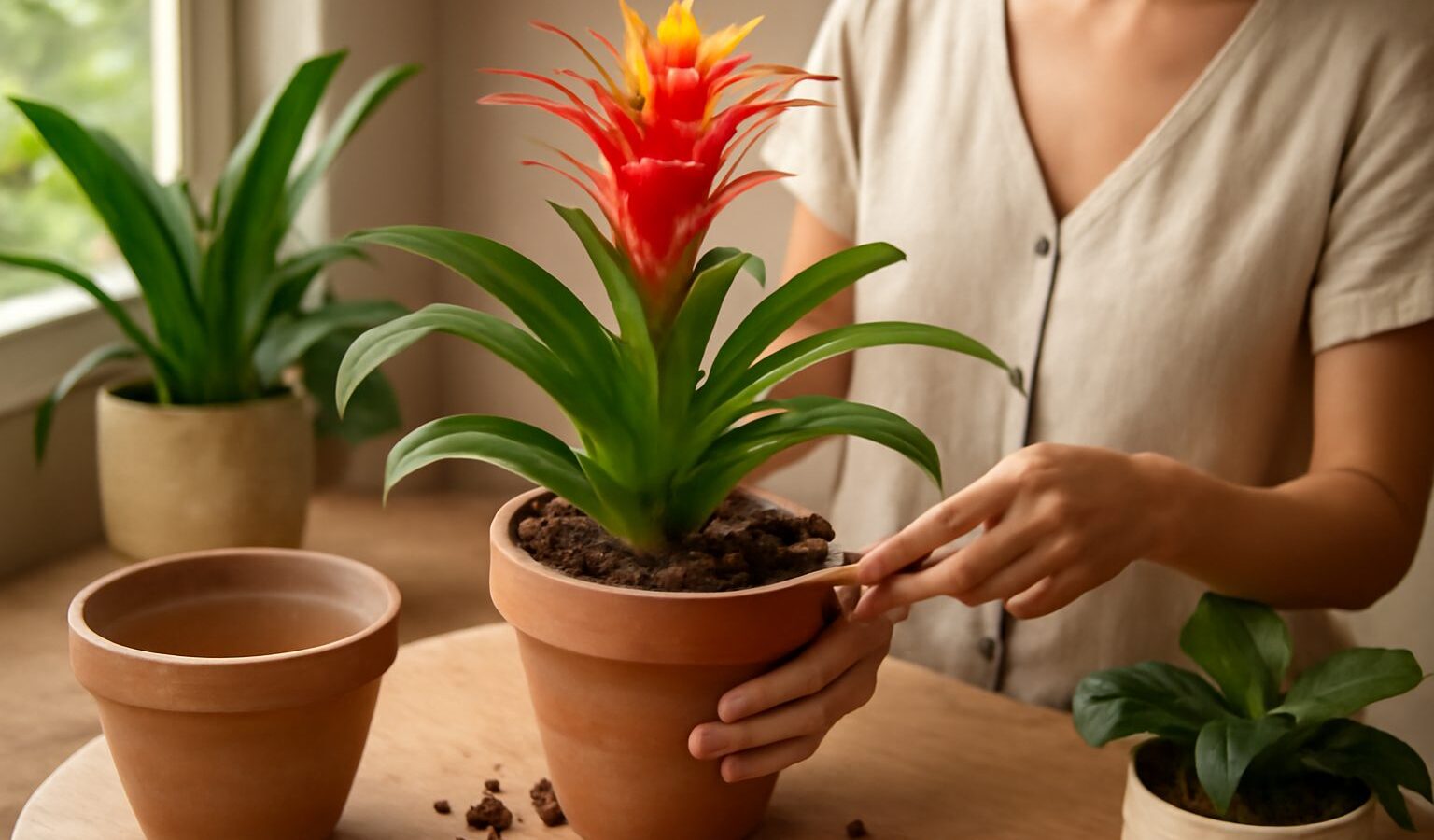
Few plants give you as much bold, lasting colour for so little effort as a bromeliad. That vivid central spike or rosette can hold its colour for months, and the strappy leaves look good even between shows. Better still, bromeliads are tropical natives, so growing bromeliads in Singapore means working with our warm, humid climate rather than against it. This guide covers light, the unusual way these plants drink from a central cup, feeding, and how to raise the baby plants known as pups. It also carries an important local safety point, because that water-holding cup can breed mosquitoes if you are not careful.
What Makes Bromeliads Different
Bromeliads belong to a large family that includes the pineapple. Many are epiphytes, meaning that in the wild they grow perched on tree branches rather than in soil, gathering moisture and nutrients from the air and rain. This changes how you care for them at home.
The most striking feature is the central cup, sometimes called the tank or vase, formed where the leaves meet in the middle of the rosette. Many bromeliads drink and feed largely through this cup rather than only through their roots. The roots often act more as anchors than as the main feeding system. Understanding this one fact makes the whole plant easy to grow.
The colourful part most people fall for is often not a flower at all but a bract, a modified leaf structure that stays vivid for weeks or months. The true flowers are usually small and short-lived within it. This is why a bromeliad in colour is such good value indoors: the display lasts far longer than a bunch of cut flowers.
Light, Cup Watering and the Mosquito Rule
Most household bromeliads want bright, indirect light. A spot near a window with plenty of daylight but shielded from the harshest midday sun is ideal. Too little light gives dull, floppy leaves and washed-out colour, while blistering direct sun can scorch the foliage. A bright corridor, a balcony under shelter or an indoor spot a little back from a sunny window all work.
Watering is where bromeliads differ from ordinary houseplants. Keep the central cup topped up with water, and keep the potting mix only lightly moist, never soggy. Use an airy, free-draining mix, such as an orchid or bromeliad blend, because wet, heavy soil rots the roots fast.
Now the essential Singapore safety point. That central cup holds standing water, and stagnant water is exactly where Aedes mosquitoes breed and spread dengue. You must not let the cup sit stale. Make it a habit to:
- Flush and refresh the water in the cup regularly, tipping out the old water and replacing it with clean water rather than just topping up.
- Do this at least weekly, and more often in a warm, still spell.
- Empty any saucer under the pot after watering or rain, so no water collects there either.
- Follow NEA guidance and the Mozzie Wipeout habits: no standing water left to stagnate anywhere on your balcony.
Refreshing the cup is a two-minute job that keeps your plant healthy and your home mosquito-safe. If you want your greenery to actively help on the mosquito front too, see our guide to plants that repel mosquitoes and insects. The same no-standing-water discipline applies to any water garden with lotus and lilies you might keep nearby.
Feeding and Everyday Care
Bromeliads are light feeders, so restraint is the rule. Too much fertiliser can spoil their compact form and dull their colour. A very dilute balanced fertiliser applied occasionally during active growth is plenty. You can add a little to the potting mix, but keep strong fertiliser out of the central cup, as it can burn the tender leaf bases. When in doubt, feed less.
A few simple habits keep them looking their best:
- Use rainwater or tap water left to stand, as bromeliads can be sensitive to mineral build-up.
- Wipe dust off the broad leaves now and then so they can breathe and shine.
- Keep them out of the direct blast of an aircon vent, which dries the air and the leaf tips.
- Enjoy the humidity. Unlike many houseplants, bromeliads relish our naturally moist air, so misting is rarely needed.
Because they are epiphytes, some bromeliads can even be mounted on driftwood or bark rather than potted, drinking mainly through the cup. That is a fun display project once you have the basics down.
From Bloom to Pups: the Life Cycle
Here is the honest part that surprises new growers. A bromeliad usually flowers only once. After that single, long-lasting display, the mother plant slowly declines over many months. This is not a failure on your part; it is simply how the plant lives.
The good news is that before it fades, the mother produces offsets called pups around its base. These are your next generation of plants, and propagating them is easy and free.
- Let each pup grow to about a third to a half the size of the mother before separating it.
- Gently pull or cut the pup away with clean tools, keeping any roots it has formed.
- Pot it into a small container of airy mix, start topping up its little cup, and grow it on.
- One healthy mother can leave you several pups, so a single plant becomes a small collection over time.
With patience, that first bromeliad becomes a rolling supply of new plants, which makes the family excellent value.
Choosing a Bromeliad for Your Space
There are many types, and they differ in size, light tolerance and how showy they are. This quick comparison helps you match a plant to your spot.
| Type | Look and habit | Best spot in an HDB or condo home |
|---|---|---|
| Guzmania | Tall, smooth star-shaped bract, vivid red or orange | Bright indoor spot away from harsh sun |
| Neoregelia | Low, spreading rosette, colour in the centre and tips | Bright balcony or corridor with strong indirect light |
| Aechmea | Silvery, sturdy leaves, pink flowering spike | Airy, bright semi-shaded balcony, tolerant of neglect |
| Tillandsia (air plant) | Small, rootless, grown mounted or in a dish | Bright indoor spot, no soil, mist or dunk to water |
| Vriesea | Flat, sword-like coloured bract, fine leaves | Sheltered bright indoor position, steady warmth |
Any of these will thrive on the same core routine: bright indirect light, an airy free-draining mix, a lightly moist rootball and a central cup that you flush and refresh often to stay mosquito-safe. Get that rhythm going and growing bromeliads becomes one of the most rewarding, low-effort ways to bring long-lasting tropical colour into a Singapore home. Pair them with a humidity-loving fittonia nerve plant for a lush, layered indoor display.