
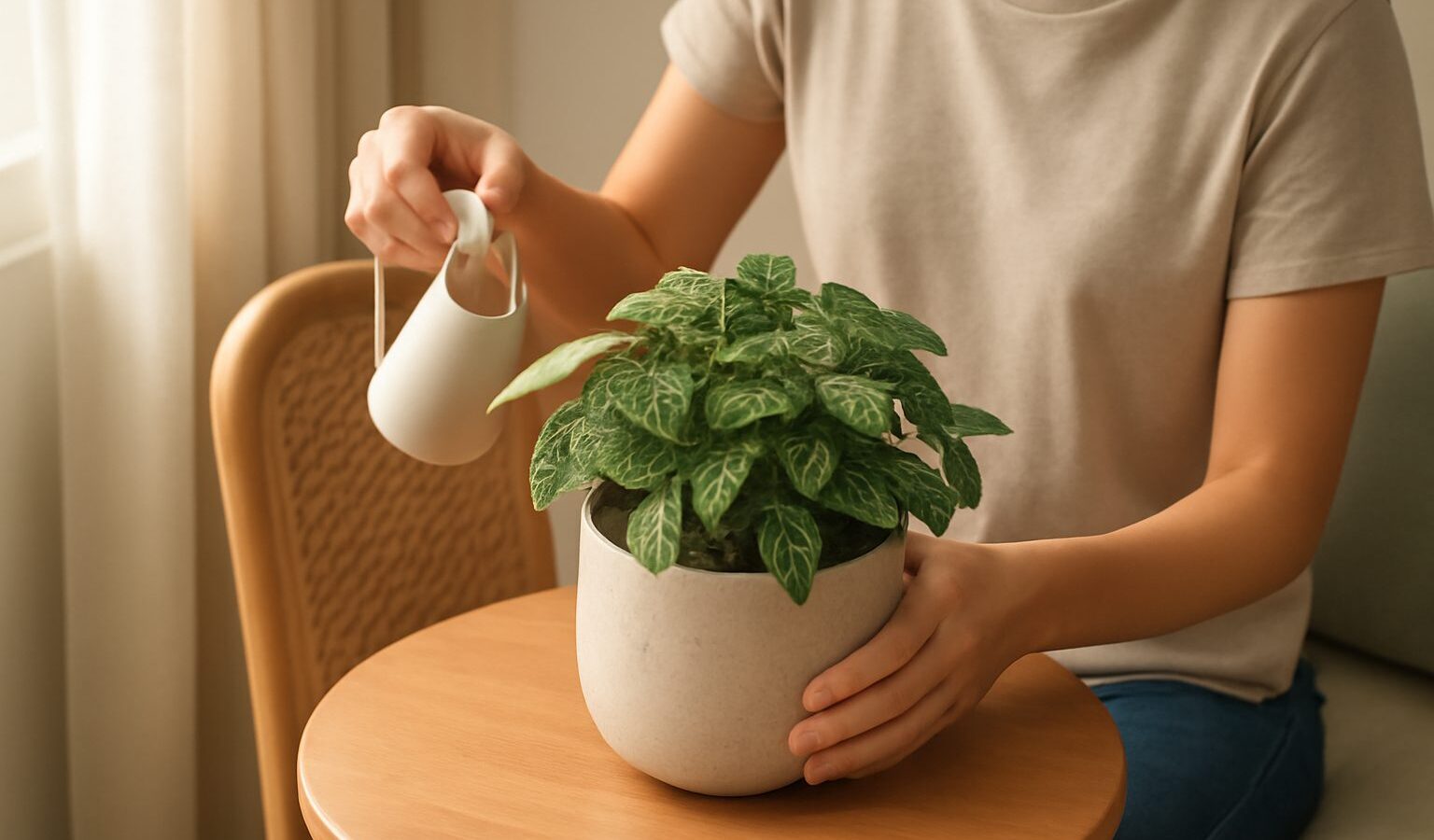
Few small houseplants pack as much pattern into a single leaf as the fittonia nerve plant. Its leaves are laced with fine veins in white, pink or deep red, like the branching lines of a nerve, which is where the common name comes from. It stays compact, thrives in shade rather than sun, and loves humidity, which makes it surprisingly well suited to indoor life in Singapore. It can also be dramatic, fainting into a flat wilt when thirsty and then reviving within hours of a drink. This guide covers watering, light, that famous wilt, terrariums and easy propagation, so beginners can keep one looking lush.
What the Nerve Plant Wants
The key to an easy relationship with a fittonia is understanding where it comes from. In the wild it grows on the shaded floor of tropical rainforests, under the canopy, in warm, moist, filtered light. Recreate a little of that and the plant is content.
Three needs sit at the heart of its care:
- Warmth, which our climate supplies year-round, so temperature is rarely a problem.
- High humidity, which it adores, and which our naturally moist air often provides free of charge.
- Gentle, indirect light rather than direct sun, as harsh rays scorch and bleach the delicate leaves.
The one modern hazard is air-conditioning. Aircon dries the air fast, and a fittonia placed in the direct path of a cold, dry draught will crisp at the edges. Keep it away from vents and, in a heavily air-conditioned room, sit it among other plants or on a pebble tray with a little water beneath the pot to lift the local humidity. This is a plant that rewards the humidity many other houseplants merely tolerate, much like a well-kept bromeliad.
Watering and the Dramatic Wilt
Fittonias like their soil kept lightly and evenly moist, never bone dry and never waterlogged. This is the balance to aim for, and it is easier than it sounds once you get a feel for the pot.
- Water when the top of the soil just begins to feel dry to the touch, before it dries out completely.
- Water thoroughly so the whole rootball is moistened, then let excess drain away.
- Always use a pot with a drainage hole, and never leave the plant standing in a saucer of water. Tip the saucer out after watering, both to protect the roots and to avoid leaving standing water where mosquitoes could breed.
- Ease off a little during a cool, wet monsoon stretch when the soil stays damp longer.
Now the theatrical part. When a fittonia gets too dry, it collapses dramatically, its leaves and stems going limp and flat as if it has given up entirely. It looks alarming, but it is usually not fatal. Give the plant a thorough watering and, more often than not, it perks back up within a few hours as if nothing happened.
That said, do not use the faint as your watering schedule. Repeated severe wilting stresses the plant and can cost you leaves over time. Treat an occasional collapse as a forgiving safety net, not a routine, and aim for steady moisture instead.
Terrariums and Humid Corners
Because it stays small and craves humidity, the fittonia is one of the best plants you can grow in a terrarium, which is simply a planted glass container that traps moisture. The enclosed, humid air of a terrarium is close to its rainforest home, and inside one a fittonia often thrives with very little effort.
If you want to try this:
- Choose a glass container, open or partly closed, and add a drainage layer of small stones at the base.
- Add a thin layer of charcoal if you have it, to keep the closed air sweet, then a layer of suitable potting mix.
- Plant your fittonia, perhaps with one or two other humidity-loving miniatures, and mist lightly.
- Keep the terrarium in bright, indirect light, never direct sun, which would cook the plants inside the glass.
- Watch the moisture. A closed terrarium needs only occasional watering, so err on the dry side to avoid mould, and crack it open to air if it fogs up heavily.
Even without a terrarium, a fittonia does well grouped with other plants in a bright bathroom or a shaded, humid corner. Its love of low light and moist air makes it one of the easier picks for a spot that would starve a sun-lover such as a desert rose adenium.
Easy Propagation and Keeping It Bushy
One of the joys of the nerve plant is how easily it multiplies, so you can turn a single plant into several for free, or share cuttings with friends. It propagates readily from stem cuttings.
- Snip a healthy stem tip just below a node, the small point where leaves emerge, keeping a few leaves on the cutting.
- Root it in a small glass of water, changing the water every few days to keep it fresh and free of stagnation, or pot it straight into moist mix.
- Once a decent set of roots has formed on a water-rooted cutting, pot it up into its own small container.
- Keep new cuttings warm, humid and out of direct sun while they establish.
Regular pinching keeps a fittonia full and stops it growing leggy. Pinch out the growing tips every so often and the plant branches out, staying dense and compact rather than sprawling. Use the pinched tips as your next batch of cuttings, so nothing is wasted.
Quick Troubleshooting Guide
Most fittonia problems come down to water and air, and they are easy to read once you know the signs.
| Symptom | Likely cause | What to do |
|---|---|---|
| Sudden dramatic wilt | Soil dried out too much | Water thoroughly, expect recovery within hours |
| Crispy, brown leaf edges | Air too dry, often aircon draught | Move from vent, raise humidity, group plants |
| Yellowing, mushy lower leaves | Overwatering or waterlogged soil | Ease off, ensure drainage, empty the saucer |
| Faded, scorched pale patches | Too much direct sun | Move to bright, indirect light |
| Leggy, sparse growth | Too little light or no pinching | Brighten the spot and pinch tips to bush out |
Caring for a fittonia nerve plant really comes down to a few simple habits: steady moisture, shade rather than sun, and plenty of humidity, all of which our climate makes easy to provide indoors. Keep it out of the aircon’s path, pinch it to stay bushy, and it will reward a shaded shelf or a bright bathroom with its intricate, veined leaves for a long time. If you enjoy the humidity-loving crowd, pairing it with bromeliads makes for a lush, low-light green corner.