
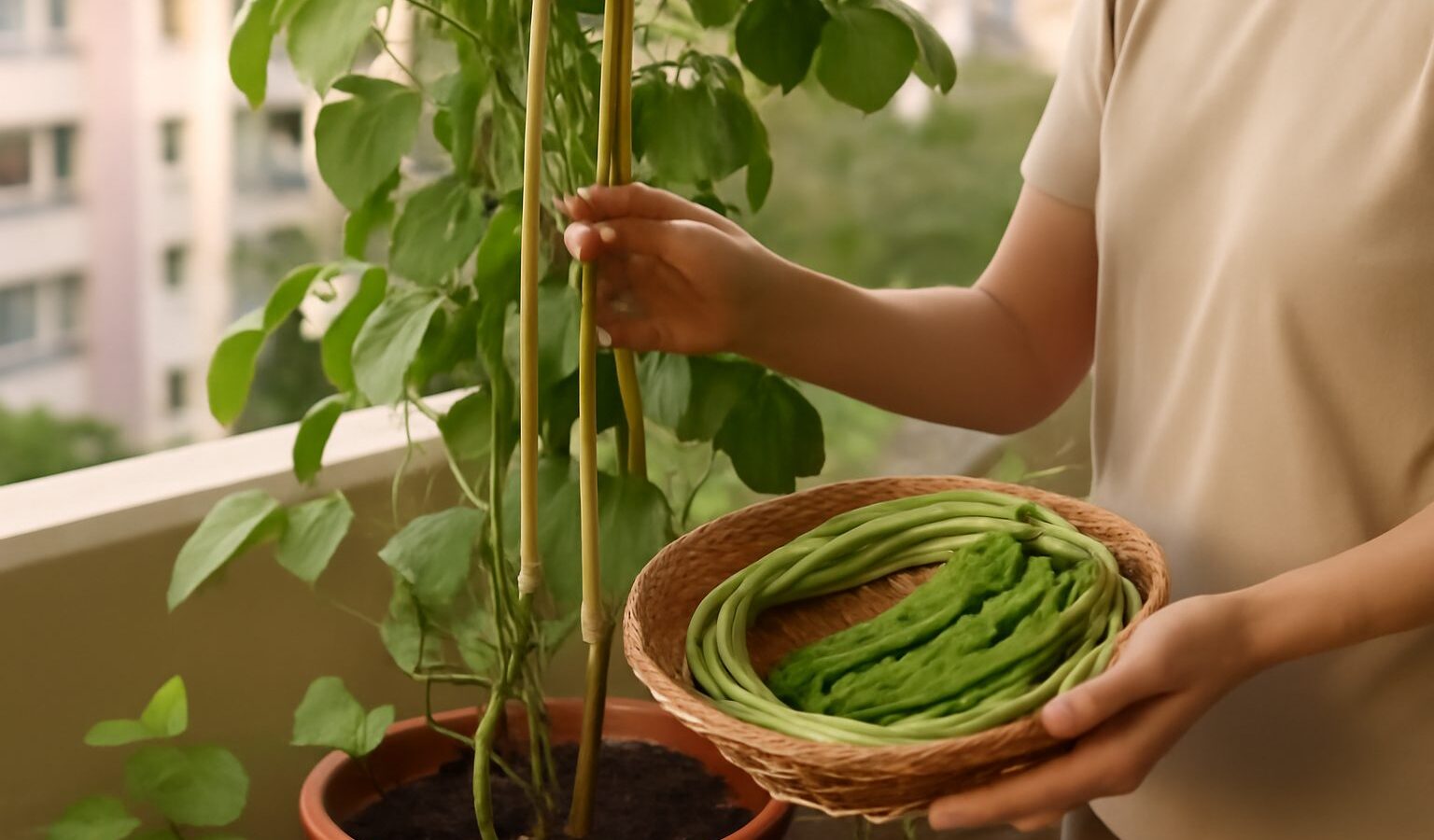
Few crops reward a small tropical garden as quickly as climbing beans. Growing long beans is one of the friendliest starting points for a beginner in Singapore, because the plants relish our year round heat, climb happily up a simple support, and keep cropping for weeks once they get going. Winged beans, sometimes called the four angle bean, are their slightly slower but equally generous cousin. Both thrive on an HDB or condo balcony as long as you give them sun, something to climb and steady water. This guide walks you through the whole cycle, from sowing to harvest, with realistic notes on effort and the common problems you will meet.
Treat everything here as general information for home gardeners rather than professional horticultural advice. When in doubt, check the seed packet and the plant tag.
Why Climbing Beans Suit Singapore Balconies
Long beans (also known as snake beans or yardlong beans) and winged beans are true tropical vegetables. They enjoy the same warm, humid conditions that make many temperate crops struggle here, so you are working with the climate rather than against it. Because they grow upward on a trellis, they use very little floor space, which matters on a narrow balcony or along a corridor ledge where town council rules allow.
Both are legumes, meaning they fix some of their own nitrogen with the help of soil bacteria. That makes them forgiving of average soil and a sensible first edible for anyone who has only grown leafy greens before. They also flower and fruit almost continuously in our seasonless climate, so a couple of healthy plants can keep a household in beans for a stir fry every few days.
Setting Up Sun, Soil and a Trellis
Give your beans the sunniest spot you have, ideally five to six hours of direct light. A west or east facing balcony usually works; a shaded north facing one will give thin, sulky plants. If you only have part sun, winged beans tend to cope a little better than long beans.
For containers, choose a pot at least 25 to 30cm deep with good drainage holes. Fill it with a free draining potting mix enriched with compost. Beans dislike soggy roots, so avoid heavy garden soil that stays wet after our monsoon downpours.
The support is the part people underestimate. Both plants are vigorous vines that will reach two to three metres, so a flimsy stake will topple. Build a proper structure before you sow:
- Push tall bamboo canes or a ready made trellis firmly into the pot or bed.
- Tie the tops together into an A frame or wigwam for stability against wind.
- Add horizontal string or netting so the young shoots have plenty to grab.
- Site it where the mature vine will not shade your other crops.
Sowing, Watering and Feeding
Sow seeds directly where they will grow, since beans resent root disturbance. Push each seed about 2 to 3cm deep, water gently, and expect germination within a week in our warmth. If you want to save your own seed for the next round, our companion guide to saving and storing seeds explains how to dry and keep them properly.
Water consistently, especially once flowers and pods appear. In a sunny spot a container may need watering daily, sometimes twice on very hot afternoons. Do not let the mix dry out completely, as drought stress makes pods tough and stringy. At the same time, tip away any water that collects in the pot saucer after rain, because stagnant water breeds Aedes mosquitoes and dengue. Follow NEA guidance and the Mozzie Wipeout habits and keep saucers empty.
Feed lightly. Because legumes make their own nitrogen, a high nitrogen fertiliser gives you lush leaves and few pods. A balanced or slightly higher potassium feed every couple of weeks once flowering starts encourages more beans. Check the product label for the correct dose.
Pollination, Pests and Harvest
Long beans are largely self pollinating and set pods readily. Winged beans also self pollinate but can be shy, so a gentle daily shake of the flowering stems, or a light touch with a soft brush, helps. If your balcony sees few insects, our guide to hand pollinating fruiting plants covers the technique in more detail.
Watch for these common problems and act early:
- Aphids and whiteflies cluster on soft shoot tips. Wipe them off or use a gentle spray, and encourage ladybirds.
- Pod borer caterpillars tunnel into pods. Pick affected pods off and inspect daily.
- Powdery mildew shows as a white dusting in humid, still air. Improve airflow and avoid wetting the leaves late in the day.
- Rats and birds occasionally take pods on ground level plots; a covered trellis helps.
If you use any spray, even a natural one, test it on a few leaves first, spray in the cooler hours out of direct sun, keep it away from food preparation, eyes, children and pets, and respect any pre harvest interval noted on the label.
Harvest is the fun part. Pick long beans while they are still slim and snap cleanly, usually 40 to 60cm long, before the seeds bulge. Winged beans are best picked young at around 8 to 12cm, while the four frilly edges are tender; older pods turn fibrous. The more you pick, the more the plant produces, so harvest every day or two.
A Quick Comparison for Choosing
| Feature | Long Beans | Winged Beans |
|---|---|---|
| Speed to first harvest | Faster, often within two months | Slower to establish |
| Sun needs | Full sun preferred | Tolerates a little less sun |
| Pod picked at | 40 to 60cm, slim | 8 to 12cm, young |
| Edible extras | Pods mainly | Pods, leaves, flowers and tubers |
| Best for beginners | Very easy | Easy but needs patience |
Keeping the Harvest Going
Once cropping slows after several weeks, a tired vine rarely bounces back to its early vigour, so many local growers simply sow a fresh batch every month or two for a continuous supply. Pull spent plants, refresh the mix with compost, and start again. The old roots, being legumes, leave a little nitrogen behind, which is handy if you rotate in a leafy crop next.
If you enjoy this and want more edibles from small spaces, a raised bed gives climbing beans deeper, cooler root run than a pot and makes watering easier during the hottest months. With a decent trellis, honest daily attention and regular picking, growing long beans and winged beans is one of the most satisfying ways to put a genuinely home grown vegetable on the table in Singapore.
Explore more: growing cucumber and gourds.