
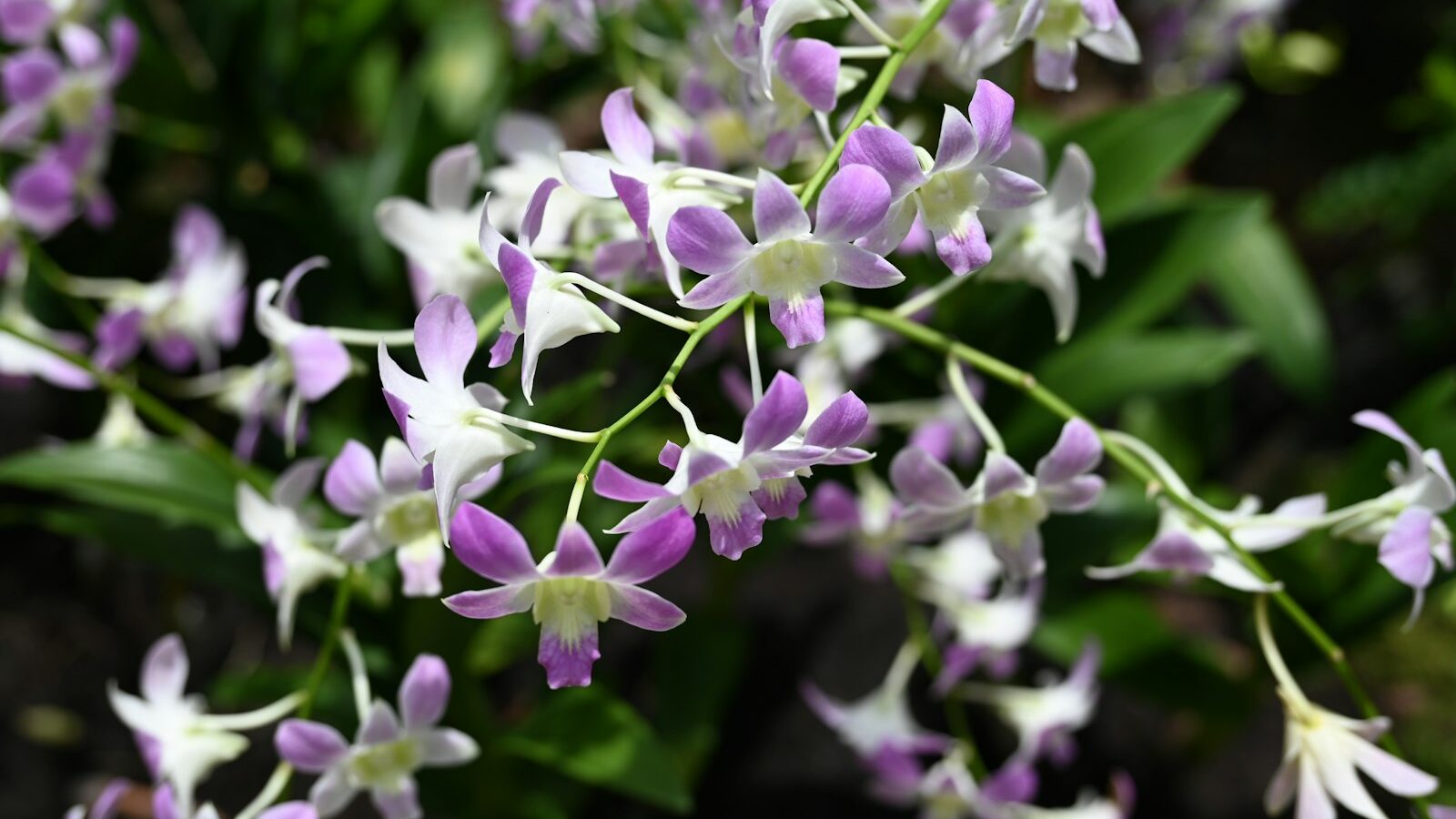
Dendrobiums are the friendly, hard-working orchids of the tropics. They flower generously, they tolerate our heat, and they take up little room, which makes them a favourite for balconies and corridors. If you have wanted to try orchids but felt they seemed fussy, growing dendrobium orchids singapore gardeners keep is a good place to build confidence. They ask for bright light, a snug pot and a steady watering rhythm, and they reward you with sprays of blooms that can last for weeks.
Many local nurseries carry potted dendrobiums, and you will spot them everywhere from HDB corridors to hotel lobbies. They are so common here that they have become a signature tropical orchid. If orchids are all new to you, skim a beginners guide to orchids in singapore first so the general terms make sense.
Light, air and where to put them
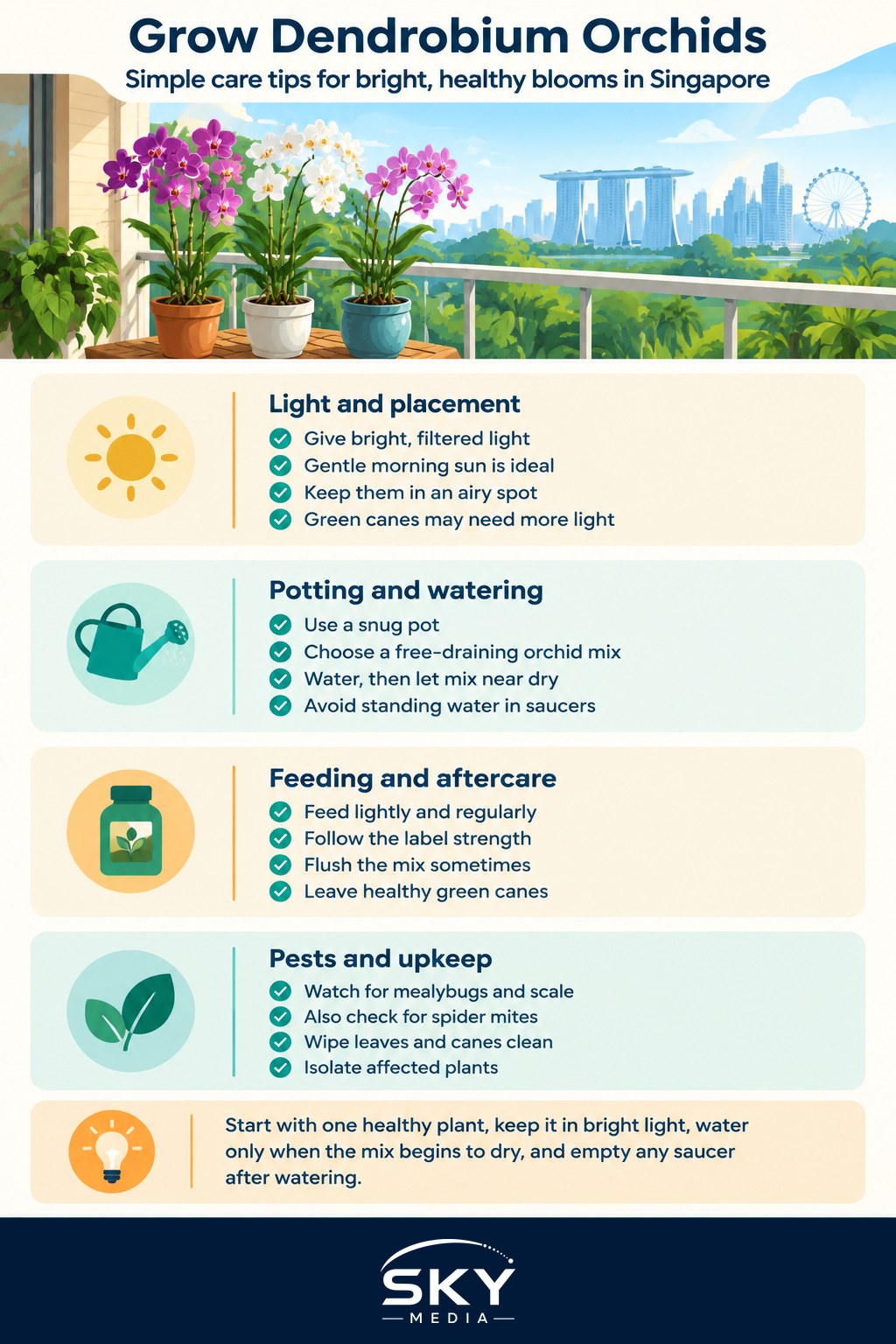
Dendrobiums want plenty of bright light, though usually a little less fierce than a vanda needs. A spot with strong, filtered light or gentle morning sun is ideal. Think of a bright balcony that avoids the harshest midday glare, or an airy corridor that stays light through the day. If the tall cane-like stems stay green but never flower, the plant is most likely asking for more light.
Good airflow keeps these orchids healthy. In our humidity, still, stuffy corners invite rot and fungus, so choose an open, breezy spot. On a windy high floor, make sure pots are stable and set back from any ledge so nothing can fall. In HDB and shared spaces, keep your plants within your own area and check your town council’s rules, which you can read more about in corridor gardening and hdb rules singapore.
Potting, watering and feeding
Dendrobiums like to be a little snug in their pots rather than swimming in space. Use a free-draining orchid mix such as bark or a similar chunky medium that lets water rush through and air reach the roots. A pot that is too big holds too much moisture and can rot the roots, so pot up only when the plant has clearly outgrown its home.
Water thoroughly, then let the mix approach dryness before watering again. In our heat that often means watering every day or two, but always check first by feeling the mix and the weight of the pot. The roots should be moist, not constantly soggy. During cooler, wetter monsoon spells the mix stays damp longer, so ease off and let it dry more between drinks.
Feed with a balanced orchid fertiliser at the strength stated on the label, given weakly and regularly through the main growing period. Flush with plain water occasionally to clear any salt buildup in the mix. Always follow the current product instructions rather than guessing a stronger dose.
Any saucer or tray under the pot deserves attention. Do not let water collect and sit there, because standing water is a breeding spot for Aedes mosquitoes. Empty and scrub saucers and trays regularly, and follow NParks and NEA guidance on preventing mosquito breeding. Growing dendrobium orchids singapore style is easiest when your watering keeps the roots happy without leaving pools behind.
Blooming, care after flowering and pests
Once a dendrobium settles in and gets enough light, it will send out flower sprays, sometimes more than once a year. After the blooms fade, do not cut down the old canes right away. The tall canes store energy and can push out new growths or even more flowers later, so leave healthy green canes in place and remove only those that have shrivelled and browned.
Keep an eye out for the usual pests in warm, still air, such as mealybugs, scale and spider mites. Wipe the leaves and canes clean, isolate any affected plant, and treat gently, following the label on any product you use. If you catch the orchid bug and want to branch out, vandas are a brighter-light cousin covered in growing vanda orchids singapore, while phalaenopsis suit shadier homes.
Dendrobiums are generous, forgiving orchids that fit neatly into small tropical spaces. Give one bright light, a snug free-draining pot and a simple watering rhythm, keep saucers empty, and you will likely be enjoying blooms before long. Start with a single healthy plant, learn its habits, and let our climate carry it through the year.
Frequently Asked Questions
Why does my dendrobium have tall canes but no flowers? Too little light is the usual cause. Move it to a brighter, airy spot with strong filtered light or gentle morning sun. Keep feeding weakly and give it time, since blooms come once the plant is settled.
Should I cut the canes after my dendrobium finishes flowering? Leave healthy green canes in place, because they store energy and can push out new growths or flowers later. Remove only canes that have shrivelled and browned. Cutting everything back too soon can weaken the plant.
When should I repot a dendrobium? Only when it has clearly outgrown its pot or the mix has broken down, as these orchids like to be snug. A pot that is too large holds too much moisture and risks root rot. Use fresh bark-type orchid mix.
What is the difference between a dendrobium and a vanda for beginners? Dendrobiums are more forgiving, grow in a snug pot with bark mix and need slightly less intense light. Vandas want blazing light and hang bare-rooted, with more frequent watering. Beginners usually find dendrobiums easier to start with.
Can I water dendrobiums with leftover rice water or tap water? Plain tap water is fine for most growers. Rice water is a common home tip, but it can leave residue that breeds fungus in humid conditions, so it is safer to stick to plain water and a labelled orchid fertiliser. Occasional flushing clears salt build-up.
Further reading: How to Grow Canna Lilies in Singapore · Growing Oncidium and Cattleya Orchids in Singapore · How to Grow Phalaenopsis Moth Orchids in Singapore