
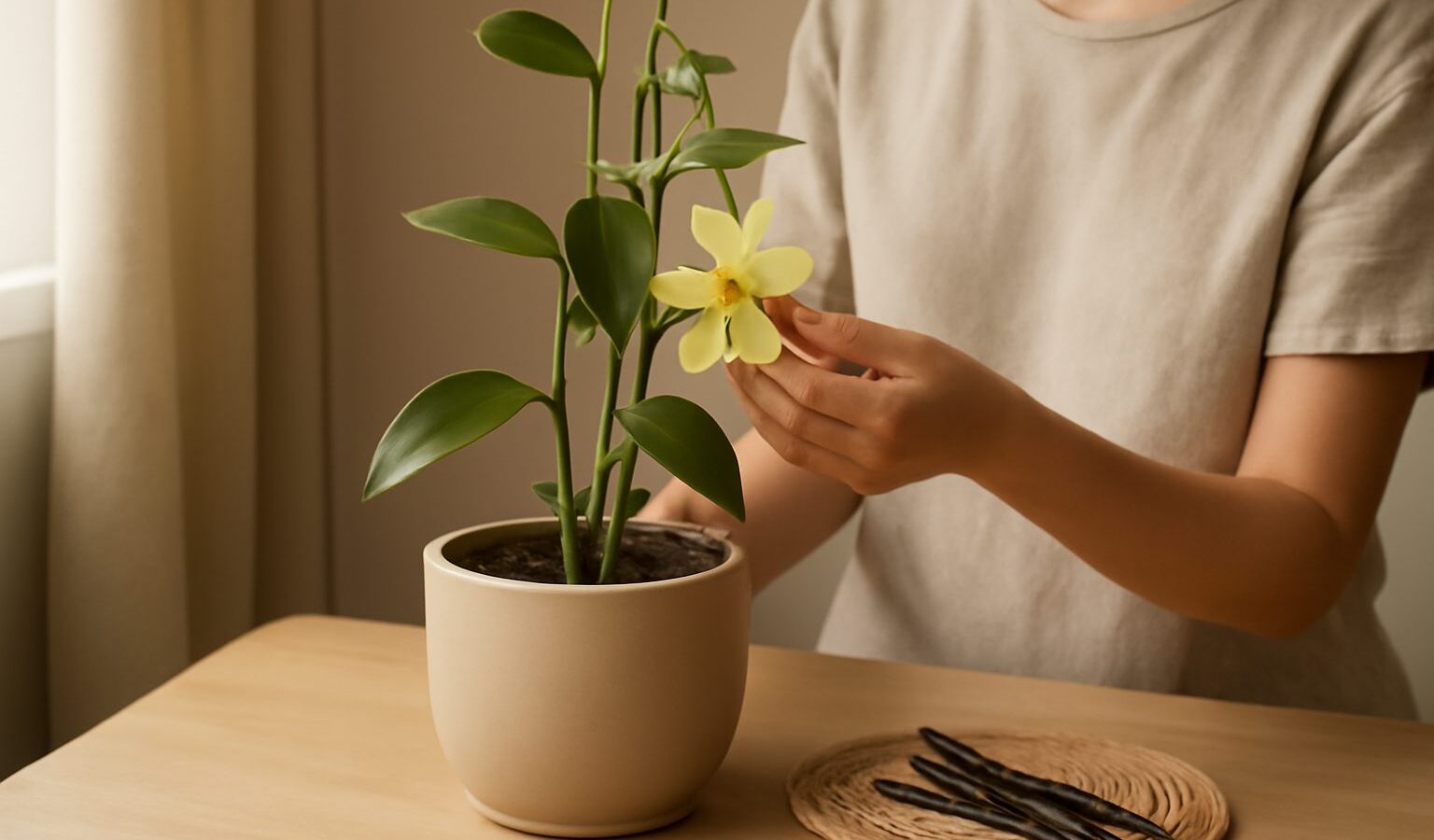
Vanilla is the only orchid grown for something we eat, and the plant behind that famous flavour is a vigorous, climbing vine rather than the neat potted orchid you might picture. Growing a vanilla orchid singapore gardeners will be pleased to hear is genuinely feasible here, because this tropical climber loves exactly the warm, humid, year-round conditions we have. It asks for patience, room to climb, and something to scramble up, but it rewards you with a lush, glossy vine and, in time, the possibility of your own vanilla pods. This guide covers what the plant needs, how to support it, and the honest truth about getting it to flower and fruit.
Understanding the Vanilla Orchid
Unlike the compact orchids sold in flower shops, vanilla is a thick, fleshy vine that in the wild clambers up tree trunks, reaching many metres. It has succulent green stems, glossy leaves, and aerial roots that grip whatever it climbs. Because it is a tropical species, it thrives in the steady warmth and high humidity that we have all year, which is a real advantage compared with growers in cooler countries who must fuss over heated greenhouses.
What vanilla wants is bright but filtered light, not harsh direct midday sun, along with warmth, humidity, and a moist but airy root run. Think dappled shade under a pergola or against a bright wall rather than a blazing, exposed balcony ledge. If you are new to orchids in general, our beginner’s guide to orchids in Singapore is worth reading first to get comfortable with how these plants behave.
Vanilla is a climber at heart, so give up on keeping it small in a pot. It grows and flowers best when allowed to run upward along a support, developing the length and maturity it needs before it will bloom.
Planting, Support and Care
Start with a healthy cutting or young plant, and set it up to climb from the start. Here are the essentials:
- Support: give it a moss pole, a trellis, a wooden post, or a sturdy wall fixing to climb. As it grows, loosely tie the vine to the support so its aerial roots can grip. Our guide to staking and supporting your plants covers tying techniques that will not damage the stem.
- Soil and roots: vanilla likes a loose, airy, free-draining medium, similar to what other orchids enjoy, with plenty of chunky material so roots get air. It hates sitting in dense, soggy soil.
- Watering: keep the medium lightly moist and the air humid, but never waterlogged. In our climate, regular light watering plus the ambient humidity usually keeps it happy. Let the surface dry a little between waterings to avoid rot.
- Light: bright, filtered light. Protect it from scorching afternoon sun, which can burn the leaves.
- Feeding: a diluted, balanced feed during active growth supports the vigorous climbing, but go gently rather than overloading it. Our notes on how to fertilise plants in Singapore explain sensible feeding.
Humidity is your friend here, and our air usually provides plenty, but in a very breezy or air-conditioned spot you may need to mist or group plants to keep moisture up around the leaves and aerial roots.
Flowering, Pods and Patience
Here is the honest part. A vanilla vine typically needs to grow long and mature for a few years before it flowers, so this is a project for the patient gardener, not a quick harvest. When it does bloom, the flowers are pale, elegant, and famously short-lived, often opening for just a single day.
Getting actual vanilla pods adds another hurdle. In the plant’s native range, specific insects pollinate the flowers, but outside that range the blooms usually must be hand-pollinated on the very morning they open. This is a delicate, fiddly job done with a small tool to transfer pollen within the flower. Even then, the green pods take many months to develop and then need a long curing process before they smell of vanilla at all. So enjoy the vine for its lush, tropical good looks first, and treat any pods as a bonus rather than a guarantee.
A quick safety note: while vanilla pods are edible once properly cured, do not eat unknown plant parts or unripe pods, and if you are unsure about any plant material, do not put it in your mouth. Keep the plant out of reach of pets and small children who might chew the leaves.
A Rewarding Tropical Climber
A vanilla orchid is a wonderful project for a Singapore grower who has a bright, humid, sheltered spot and the patience to let a vine mature. Give it something to climb, keep its roots airy and lightly moist, protect it from harsh sun, and enjoy watching it grow. Flowers and pods may take years and some hand-pollination effort, but even as a handsome, glossy climber, vanilla earns its place. Start it now, support it well, and let our tropical warmth do the rest.