
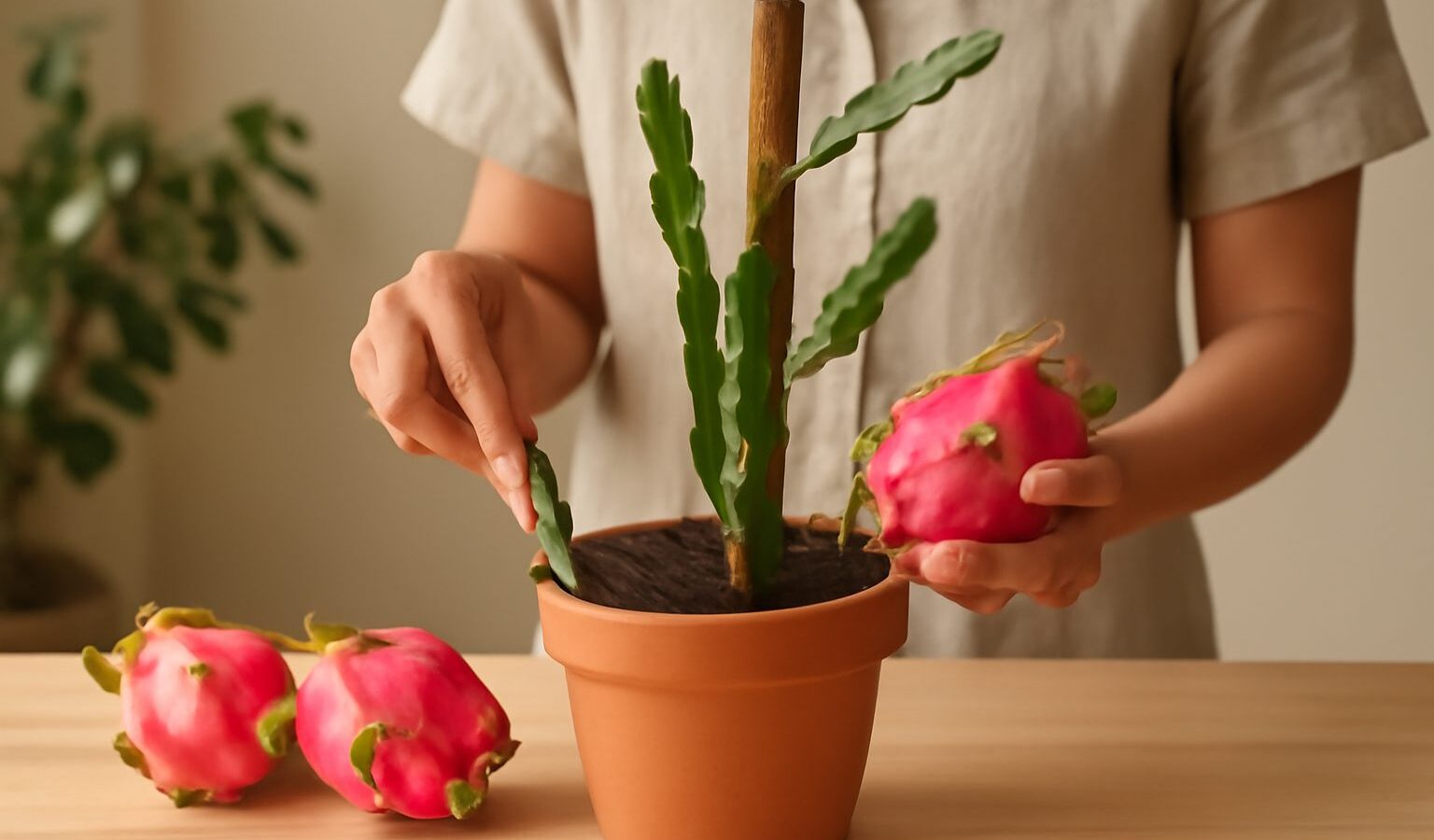
Few plants reward a tropical gardener quite like the dragon fruit. With its dramatic climbing stems and startling pink or yellow fruit, it looks exotic yet is surprisingly at home in our heat and humidity. If you have been thinking about growing dragon fruit singapore conditions are genuinely well suited to the plant, provided you can give it sun, support and a little patience. This guide walks through everything from choosing a cutting to coaxing your first flowers into fruit.
Why Dragon Fruit Thrives Here
Dragon fruit is not really a fruit tree at all. It is a climbing cactus, native to Central America but long grown across South East Asia. Because it evolved in warm, bright regions, it loves the steady heat we have all year round. There is no winter dormancy to manage and no frost to fear, which removes a whole layer of difficulty that temperate gardeners struggle with.
The plant produces long, three-sided green stems that scramble and climb. In the wild these stems clamber over rocks and trees. In your garden or on your balcony, they will need something sturdy to climb instead, because a mature plant becomes heavy and top-loaded once it starts branching and fruiting.
That climbing habit is the single most important thing to understand before you begin. This is not a compact potted herb. A healthy dragon fruit plant can grow several metres of stem, and it needs a strong post or trellis to carry that weight.
Space, Sun and Support
Before buying a cutting, be honest about your space. Dragon fruit needs at least six hours of direct sun a day to fruit well. A west or south facing HDB balcony that catches strong afternoon light is ideal. A shaded corridor or a north facing ledge will keep the plant alive but is unlikely to give you fruit.
Support is non-negotiable. The classic method is a single stout post, around 1.5 to 2 metres tall, with a circular frame or old tyre fixed at the top. You train several stems up the post, then let them cascade over the frame, which is where flowers and fruit form. On a balcony, a heavy planter with a firmly anchored timber or metal post does the same job. Make sure the post cannot topple, because a fruiting plant is genuinely heavy.
Give the roots a large container if you cannot plant in the ground. A pot of at least 40 to 50 litres, with excellent drainage, suits one plant. Cactus soil or a free-draining mix works best, as the roots dislike sitting in water despite our frequent rain.
Planting and Everyday Care
The easiest way to start is from a stem cutting rather than seed, as seed-grown plants take years to fruit and may not come true. Take or buy a cutting around 30 centimetres long, let the cut end dry and callus for a few days in the shade, then plant it a few centimetres deep against your support.
Watering is where many beginners go wrong. Because it is a cactus, dragon fruit prefers to dry out between waterings. Water deeply, then wait until the top of the soil is dry before watering again. During heavy monsoon spells you may barely need to water at all. Overwatering causes soft, yellowing stems and root rot far more often than underwatering does.
Feed lightly during active growth with a balanced fertiliser, switching to one higher in potassium as flowering approaches. Tie stems loosely to the post as they climb, and once they reach the top, let them drape over so the tips hang down. This drooping habit encourages flowering.
Here is a quick reference for the growing essentials.
| Factor | What dragon fruit needs |
|---|---|
| Sunlight | At least six hours of direct sun daily |
| Support | Strong post or trellis, 1.5 to 2 metres tall |
| Water | Deep but infrequent; let soil dry between |
| Soil | Free-draining cactus or gritty mix |
| Container size | 40 to 50 litres minimum per plant |
| First fruit | Often one to two years from a cutting |
Flowers, Pollination and Fruit
The flowers are a spectacle in themselves. They are enormous, white and heavily scented, and they open for a single night before wilting by morning. In the wild, moths and bats pollinate these night blooms. On a high balcony, those pollinators may simply never arrive, which is why so many home plants flower beautifully but set no fruit.
This is where hand-pollination comes in. When a flower opens in the evening, use a small soft brush to transfer pollen from the stamens to the central stigma. If you grow a self-sterile variety, you will need a second plant of a different variety for pollen. Many gardeners choose self-fertile types precisely to avoid this complication. Doing this by hand, on the same night the flower opens, dramatically improves your chances of fruit.
Once pollinated, fruit swells over roughly a month. It is ripe when the skin has coloured fully and the little wings soften slightly. Twist gently; a ripe fruit releases easily.
A Note on Safety and Patience
Always wash home-grown fruit before eating, and be certain of what you are harvesting. Dragon fruit is unmistakable once formed, but the plant is a cactus, so handle stems with care as some varieties carry small spines.
Be patient. A cutting may take a year or two before it flowers, and the first season often brings only a handful of fruit. Each year after that, an established plant becomes more productive. Given a sunny spot, a sturdy post and consistent but restrained watering, dragon fruit is one of the most rewarding edible plants you can grow in our climate.