
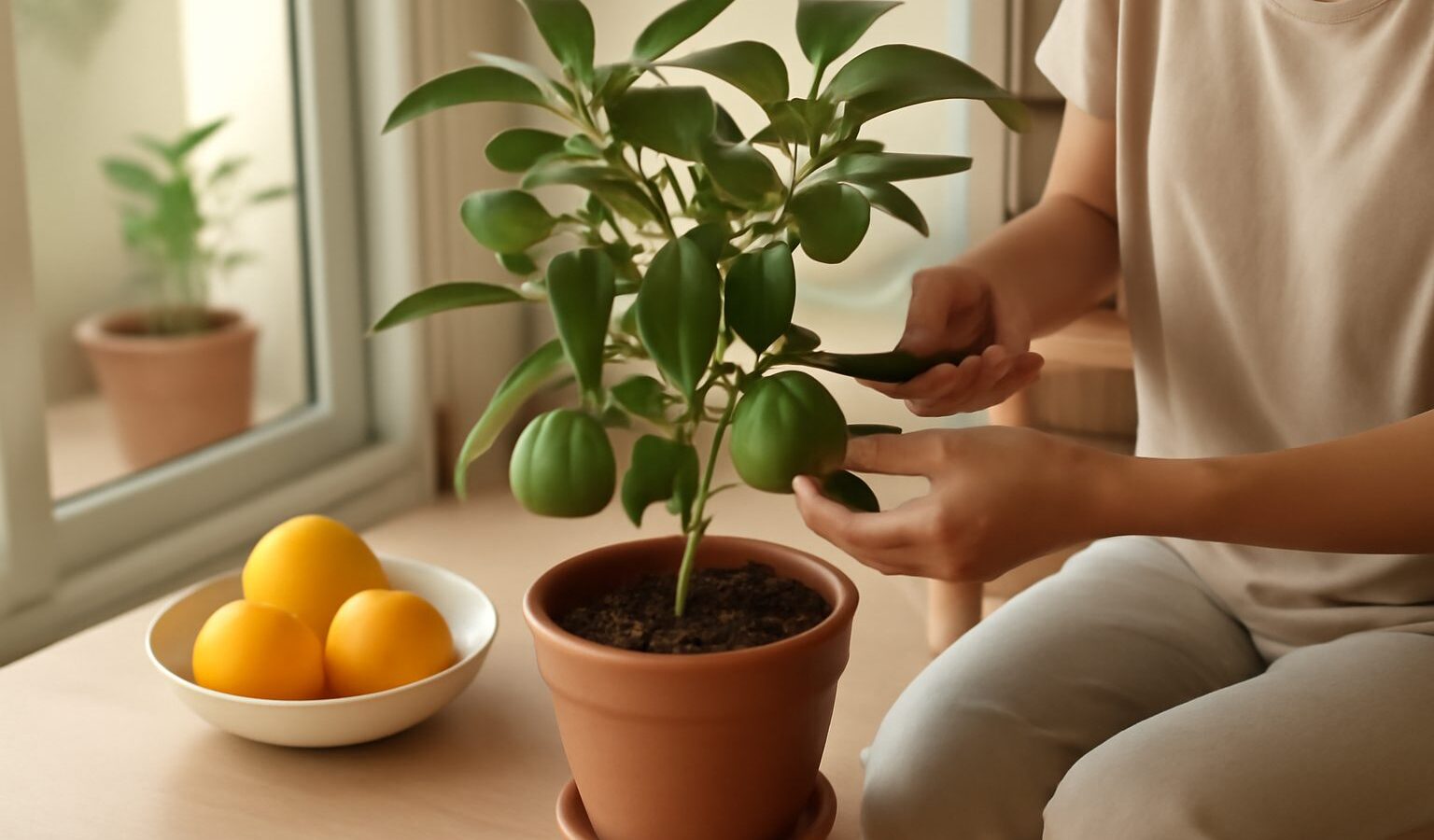
Citrus is the container fruit that actually works on a Singapore balcony. Growing citrus in pots, whether a lime, a calamansi (limau) or a small lemon, gives you fragrant flowers and tangy fruit in a footprint you can move around to chase the sun. Unlike a papaya or banana, a potted citrus stays a manageable size for years, which makes it one of the few fruiting plants genuinely suited to HDB and condo living. This guide covers pot choice, soil, sun, watering and the pests that most often trouble citrus in our humid climate.
Everything here is general information for home gardeners, not professional horticultural advice.
Why Citrus Thrives in Containers Here
Citrus plants are naturally shrubby and respond well to being kept in a pot, which restrains their size and lets you position them precisely. Calamansi in particular is a Singapore kitchen staple, cropping almost year round in our warmth, and it is the friendliest citrus for a beginner. Limes and small lemons follow the same care.
A pot also solves a local problem: our heavy monsoon rain can waterlog citrus in open ground, and citrus roots hate sitting wet. In a well drained container you control the moisture. And because the plant is portable, you can shuffle it into the brightest corner, which matters because citrus fruits poorly in shade.
Choosing a Pot, Soil and Spot
Start with a pot at least 30 to 40cm across with generous drainage holes; too small a pot dries out constantly and starves the roots. A slightly heavy pot also resists toppling in a gust on a windy ledge.
Use a free draining potting mix rather than dense garden soil. Citrus wants moisture that drains away quickly, not a soggy sponge. Mixing in some compost feeds the plant, while a little coarse material improves drainage. Raise the pot on feet or bricks so water escapes freely and never let it stand in a saucer of water, which both rots roots and, importantly, breeds Aedes mosquitoes and dengue. Empty saucers after rain and follow NEA guidance and the Mozzie Wipeout habits.
Place the pot where it gets at least six hours of direct sun. A bright, sunny balcony or a rooftop is ideal. In too much shade you will get a healthy looking bush with few flowers and little fruit.
Watering, Feeding and Pollination
Watering is a balancing act. Citrus dislikes both drought and waterlogging. Aim to water when the top few centimetres of mix feel dry, then water thoroughly until it runs from the base. In full sun a pot may need this daily, but always let excess drain away. Inconsistent watering causes flower and fruit drop and can split fruit.
Feed regularly through the year, as potted citrus relies entirely on you for nutrients. A fertiliser formulated for fruiting plants, applied according to the label, keeps leaves green and supports flowering. Yellowing leaves often signal hunger or a drainage problem, so review both feeding and watering when you see them.
Calamansi and most limes set fruit readily on a balcony, as their flowers are largely self fertile and our insects usually assist. If your enclosed balcony sees few pollinators and fruit set is poor, a gentle daily shake of the flowering branches, or a light touch of each open flower with a soft brush, helps move pollen. Our guide to hand pollinating fruiting plants explains the technique for shyer croppers.
Pests, Diseases and Pruning
Citrus attracts a familiar cast of pests in our climate. Inspect the plant often, especially new growth, and act early:
- Citrus leaf miner tunnels silvery, wiggly trails through soft new leaves, curling them. Trim badly affected flush and encourage sturdy growth.
- Scale insects look like small brown or white bumps on stems and leaves and produce sticky honeydew. Wipe them off or dab them away.
- Aphids and mealybugs cluster on new shoots and buds; a firm water spray or wiping helps.
- Sooty mould, a black film, grows on the honeydew left by these pests; controlling the pest clears the mould.
- Ants farm the sap suckers for honeydew, so a trail of ants up the trunk is a clue to inspect closely.
If you use any spray, including horticultural oils or a natural mix, test it on a few leaves first, spray in the cooler hours out of direct sun, keep it away from food preparation, eyes, children and pets, and respect any pre harvest interval on the label. Home mixes are not approved pesticides.
Light pruning keeps the plant open, airy and easy to harvest. Snip out crossing or dead twigs, and trim leggy shoots after a flush of fruit to encourage a bushier, more productive shape.
Which Citrus to Start With
| Citrus | Ease in a pot | Fruiting habit | Best use |
|---|---|---|---|
| Calamansi (limau) | Very easy | Almost year round | Drinks, sambal, marinades |
| Key or common lime | Easy | Flushes through the year | Juice, cooking |
| Small lemon | Moderate | Less free fruiting here | Juice, zest |
| Kaffir type (makrut) | Easy | Grown mainly for leaves | Fragrant leaves for curries |
Getting the Most From a Potted Citrus
A well kept potted citrus can crop for years, so a little routine care pays off. Repot every couple of years into fresh mix, teasing out circling roots and trimming them lightly, to keep the plant vigorous. Top dress with compost between repottings, and keep the pot in its sunniest possible position.
Harvest fruit as it colours and feels heavy for its size; calamansi is often used while still green and juicy. Regular picking, like regular pruning, encourages the plant to keep flowering. If you enjoy this and want to expand your edible balcony, pair your citrus with butterfly pea flowers for colour or a low maintenance aloe vera nearby. Manageable, fragrant and genuinely useful in the kitchen, growing citrus in pots is one of the most practical fruit projects for a Singapore home.
Explore more: growing papaya at home.