
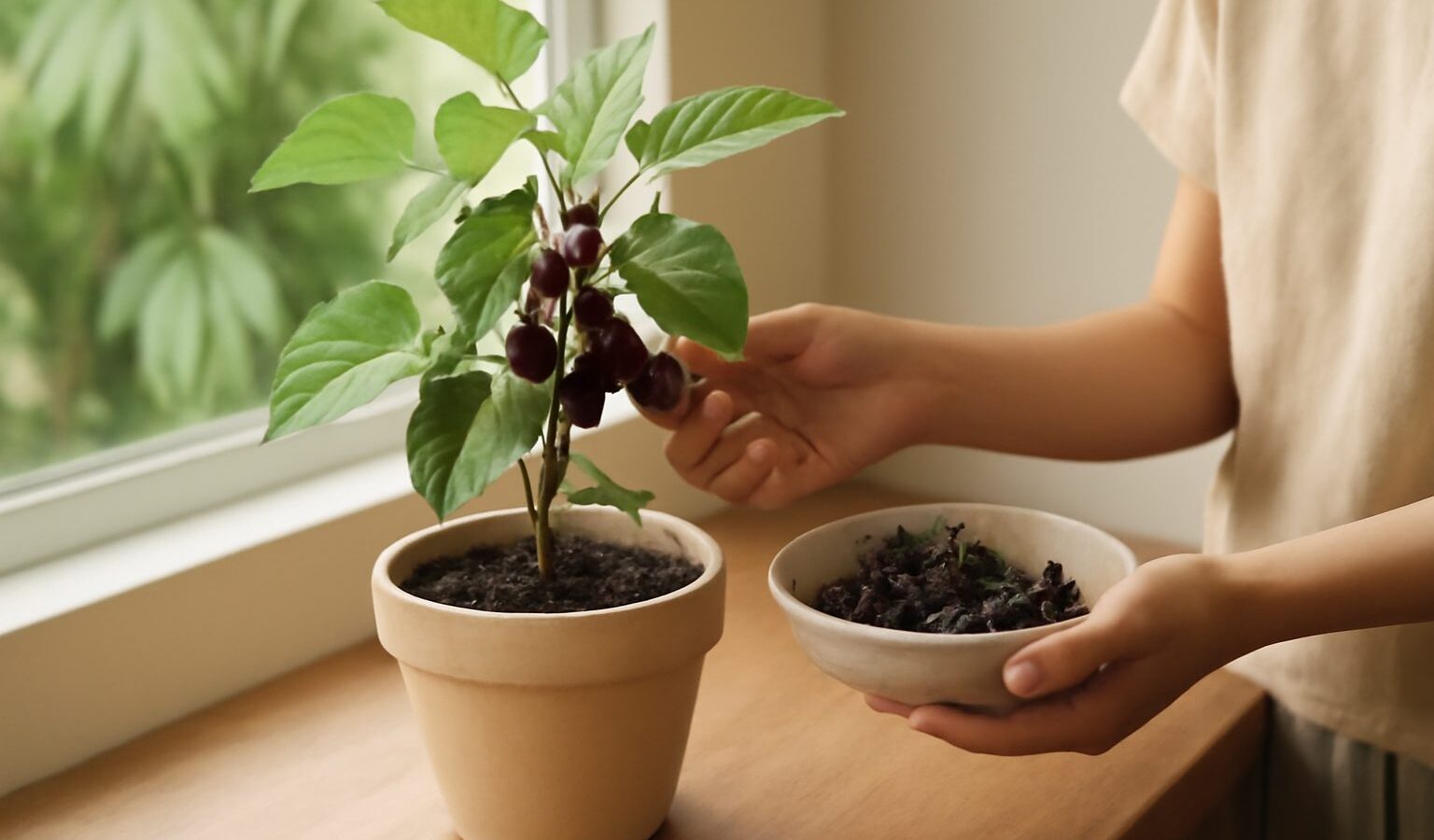
If you want a fruit tree that actually thrives in our climate, mulberry is a brilliant choice. Growing mulberry singapore style is easy and rewarding, because these plants love heat, root readily from cuttings and fruit generously even in a pot. Unlike temperate crops that struggle without cold winters, mulberries take to our hot, humid tropics with enthusiasm, and a well pruned plant can give you sweet, juicy berries again and again. It is one of the most beginner-friendly fruits for a small Singapore balcony or corridor garden.
This guide covers starting a plant, keeping it happy in a container, and pruning it so it stays compact and productive.
Starting Your Mulberry
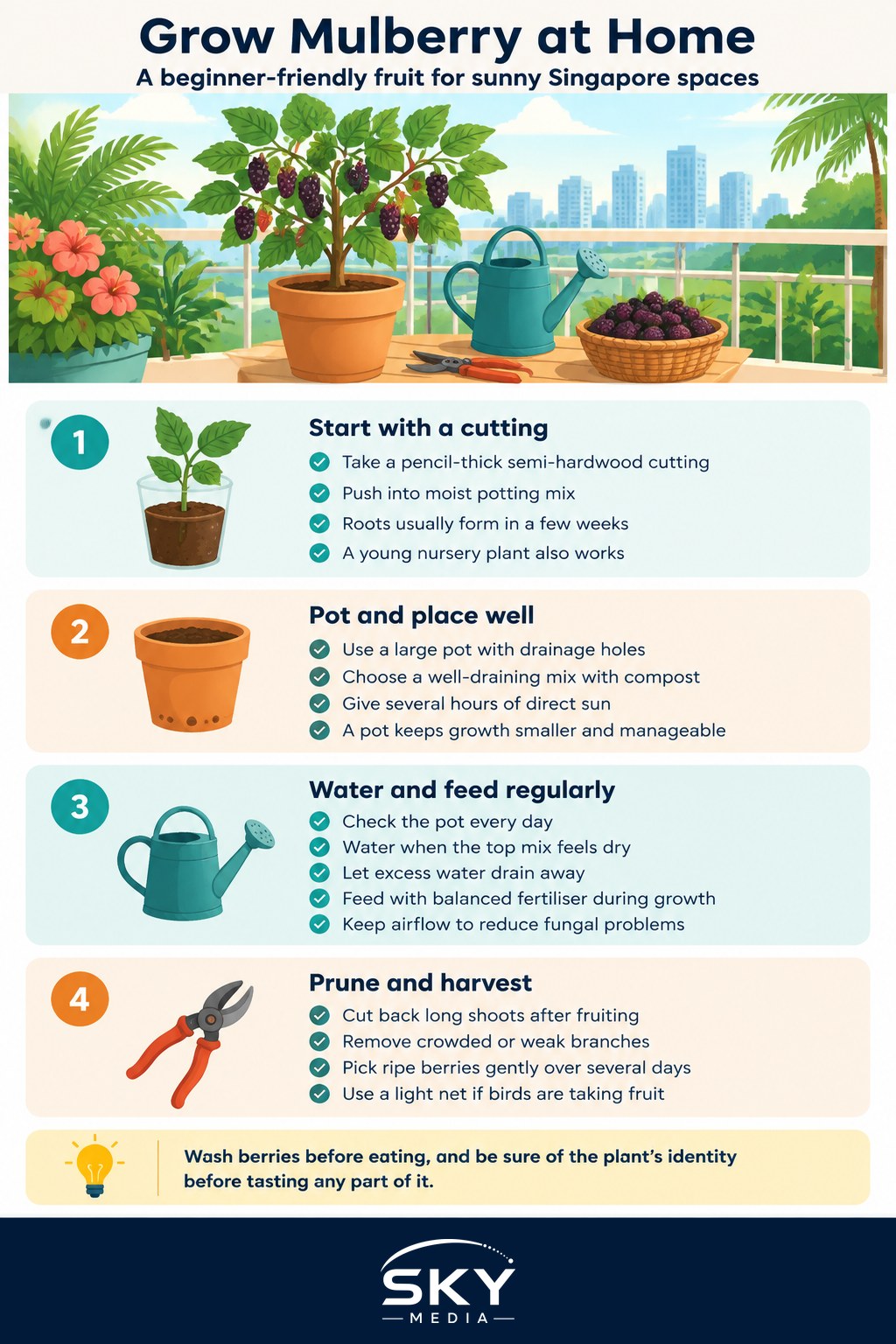
The easiest way to begin is with a cutting. Mulberries strike so readily that a pencil-thick, semi-hardwood cutting pushed into moist potting mix will usually root within a few weeks. If a friend or a community garden has a healthy plant, ask for a cutting. This makes mulberry a favourite for plant swaps, and our guide on how to propagate plants from cuttings explains the steps.
You can also buy a young plant from a nursery. Either way, pot it up well:
- Use a large pot, at least 35 to 45 cm wide, with good drainage holes.
- Fill with a well draining potting mix enriched with some compost.
- Place it in a bright spot with several hours of direct sun a day.
Mulberries can grow into large trees in the ground, but in a pot the restricted roots keep them smaller and easier to manage, which suits HDB and condo living. Choosing a generous but movable pot is the balance you want, and our notes on choosing the right pot size for your plant can help.
Care Through the Heat and Rain
Mulberries are thirsty growers in our climate. Check the pot daily and water when the top few centimetres of mix feel dry, giving enough that water drains from the base. In hot dry spells you may need to water more than once a day, but never let the pot sit in a full saucer of stagnant water, which invites mosquito breeding. Tip out any collected water regularly.
Feed during active growth with a balanced fertiliser at the label rate. Mulberries respond well to steady, moderate feeding and a top-up of compost, which keeps the leaves lush and the berries coming. Avoid heavy nitrogen alone, as it pushes leaves at the expense of fruit.
Our humidity can bring fungal leaf spots and the occasional pest. Keep airflow around the plant, remove badly affected leaves and check regularly for common troubles. Because our climate has no true winter, a potted mulberry may fruit at various times through the year rather than in one neat season, which is perfectly normal here.
Pruning and Harvesting
Pruning is the secret to a productive potted mulberry. Left alone the plant grows tall and leggy, but a firm cut back keeps it bushy, within reach and fruiting from fresh growth. After a fruiting flush, trim back the long shoots and remove crowded or weak branches. Regular pruning also keeps the plant a sensible size for a balcony. Our guide on how to prune and trim your plants covers the basics.
Mulberries ripen unevenly, so you harvest a little at a time over several days. A ripe berry turns deep and glossy, softens, and drops into your hand with the lightest touch; under-ripe ones are firm and tart. Pick gently, as ripe mulberries stain easily and crush without care. Birds adore them, so a light net helps if you want more for yourself.
As with all home-grown fruit, wash the berries before eating and be sure of your plant’s identity before tasting any part of it. Enjoy them fresh, as they do not keep long once picked.
Mulberry is proof that you do not need a big garden or a temperate climate to grow your own fruit here. If it gives you the growing bug, explore more tropical-friendly options in our a guide to growing fruit at home. Keep it sunny, watered and well pruned, and growing mulberry singapore style will keep your balcony in sweet berries for years.
Frequently Asked Questions
How big will a mulberry plant get in a pot? In a pot it stays much smaller than it would in the ground, because the restricted roots limit its growth. Even so, left alone it turns tall and leggy, so regular pruning after each fruiting flush is what keeps it bushy and within reach on a balcony.
How long does a mulberry cutting take to fruit? The cutting itself usually roots within a few weeks, but fruit takes longer while the plant builds up growth. Pruned, well-fed plants in full sun tend to fruit sooner. Because we have no true winter, berries may appear at various times through the year.
Why are my mulberries dropping before they ripen? Uneven watering is a common culprit, since mulberries are thirsty and dislike drying out then flooding. Poor light and too much nitrogen fertiliser, which favours leaves over fruit, can also hurt. Water steadily, give several hours of sun, and feed in moderation.
Do I need two mulberry plants to get fruit? The article does not require a pair, and a single potted plant fruits for many home growers. Varieties differ in how they flower, so if yours is slow to fruit, ask the nursery about the specific type rather than assuming you need a second plant.
What can I do with mulberries since they do not keep long? Eat them fresh soon after picking, ideally the same day. Since they ripen unevenly and you harvest a few at a time, small daily pickings suit snacking, while a larger handful can go on yoghurt or into a quick jam. Wash them before eating.