
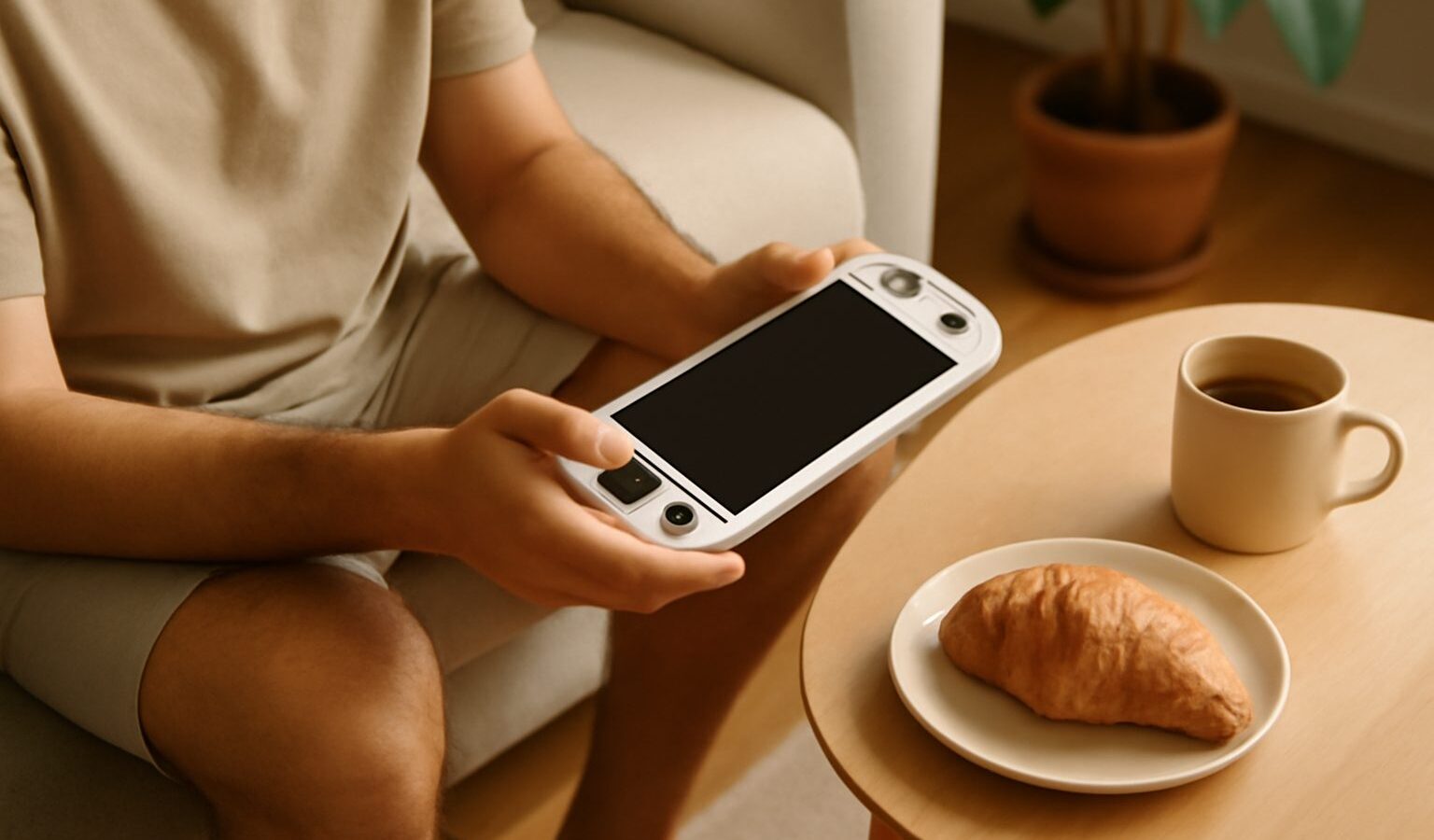
Handheld gaming devices let you play proper games in your hands, wherever you are, from the MRT on the way to work to the sofa at home when the television is taken. They range from all-in-one consoles you switch on and play, to pocket-sized computers that run a full games library. This guide explains the main types of handheld gaming devices in plain language, so a complete newcomer can work out which style suits how and where they like to play in Singapore.
This is a general overview for beginners. Hardware models, specifications and prices change quickly, so treat the examples here as categories to understand, and always check current details before you buy.
What Counts as a Handheld Gaming Device
A handheld gaming device is any self-contained system with its own screen and controls that you hold to play, rather than plugging into a television. The screen, buttons, battery and speakers are all built in, so you can pick it up and go.
The category has grown well beyond the pocket consoles many of us remember from childhood. Today it stretches from simple, family-friendly consoles to powerful little machines that behave like a gaming PC you can hold. What they share is portability, the idea that your games come with you rather than staying anchored to one room.
Understanding handheld gaming devices really comes down to understanding a handful of distinct types, because each is built with a different kind of player in mind.
The Main Types of Handheld Gaming Devices
Broadly, handhelds fall into four families. Knowing which family a device belongs to tells you most of what you need to know about it.
- Dedicated handheld consoles. These are made by a single company to play that company’s games, often as an easy, plug-and-play experience. Some are hybrids that also connect to a television when you want a big-screen session. They are the friendliest starting point because everything is designed to work together, and support and warranty are straightforward.
- Handheld gaming PCs. These are essentially small Windows-style computers with a screen and controls attached. They can run large PC game libraries and storefronts, which means huge choice, but they ask more of you: managing settings, updates and storage, much like looking after any computer.
- Retro and emulation handhelds. These focus on the look and feel of older games. Many are inexpensive and great fun, but they come with an important legal point covered below.
- Cloud and phone-based options. Some handhelds stream games over the internet instead of running them locally, and your own smartphone paired with a clip-on controller is a capable handheld in its own right. These lean heavily on a strong, stable connection.
Comparing the Main Handheld Types
Here is a simple comparison to help you match a type to the way you like to play.
| Type | Best for | Things to keep in mind |
|---|---|---|
| Dedicated handheld console | Beginners and families who want simple, reliable play | Games mostly limited to that company’s library; easy setup and support |
| Handheld gaming PC | Players who want a big PC library and lots of choice | More powerful but pricier; needs some tinkering and storage management |
| Retro and emulation handheld | Fans of older, classic-style games on a budget | Only use games you legally own; battery and screen quality vary widely |
| Cloud or phone-based | Casual play using devices you may already own | Depends on a strong connection; running costs may include subscriptions |
How to Choose the Right One for You
There is no single best handheld, only the one that fits your habits. A few honest questions will narrow it down quickly.
- Where will you mostly play? Short commutes on the MRT reward light devices with good battery life. Playing at home in bed matters less for weight and more for screen comfort.
- How much fuss do you want? If you want to switch on and play, a dedicated console is calmer. If you enjoy tinkering and want the widest library, a handheld gaming PC rewards the effort.
- What is your budget, honestly? Handhelds span a wide range. Set a figure that includes the extras below, not just the device itself.
- Do you already own games or a platform? Cross-progression, where your progress follows your account across devices, means a handheld from a family you already use can pick up where your console left off. It is worth checking whether the games you love are available on the device you are considering.
Take your time and, where you can, try holding a device before buying, since comfort in your hands over a long session matters more than any spec sheet suggests.
Buying and Living With a Handheld in Singapore
Once you have a type in mind, a little local know-how saves money and headaches.
- Where to buy. You will find handhelds at the major electronics retailers, the IT malls dotted around the island and reputable online stores. Compare the official local set against parallel imports, since a set bought through official channels usually comes with local warranty support that is far easier to claim if something goes wrong.
- Check the warranty and charger. Confirm what warranty covers and for how long, and make sure the charger suits Singapore’s three-pin sockets rather than needing an adaptor you will keep losing.
- Plan for storage and accessories. Games can be large, so budget for extra storage if the device allows it. A screen protector, a carry case and, for phone-based play, a comfortable controller clip are small buys that protect a bigger one.
- Mind the heat and the connection. Our climate is warm, so avoid leaving a device in a hot car or in direct sun, and give it airflow during long sessions. For cloud and streaming handhelds, a solid home fibre broadband connection or reliable mobile data is essential, because these devices are only as good as the connection feeding them.
The Legal Point on Retro and Emulation
Retro handhelds are hugely appealing, but they come with a clear rule. Emulation, the practice of running old games through software that imitates the original hardware, is a legitimate technology. What matters is where the games come from. Only back up or play games you legally own, and do not download, share or distribute pirated game files or copyrighted titles you have not purchased. Plenty of retro handhelds also sell or include legally licensed classic collections, which is the simplest way to enjoy older games with a clear conscience.
Playing Well Wherever You Are
Handheld gaming devices have made it easier than ever to fit play into a busy Singapore life, whether that is a quick round on the train or a relaxed evening away from the family television. The trick is to be honest about how and where you play, choose the type that matches those habits rather than the flashiest option, and factor in the small extras that keep a device happy in our climate. Get that right and your games will simply travel with you, ready whenever a spare ten minutes appears.