
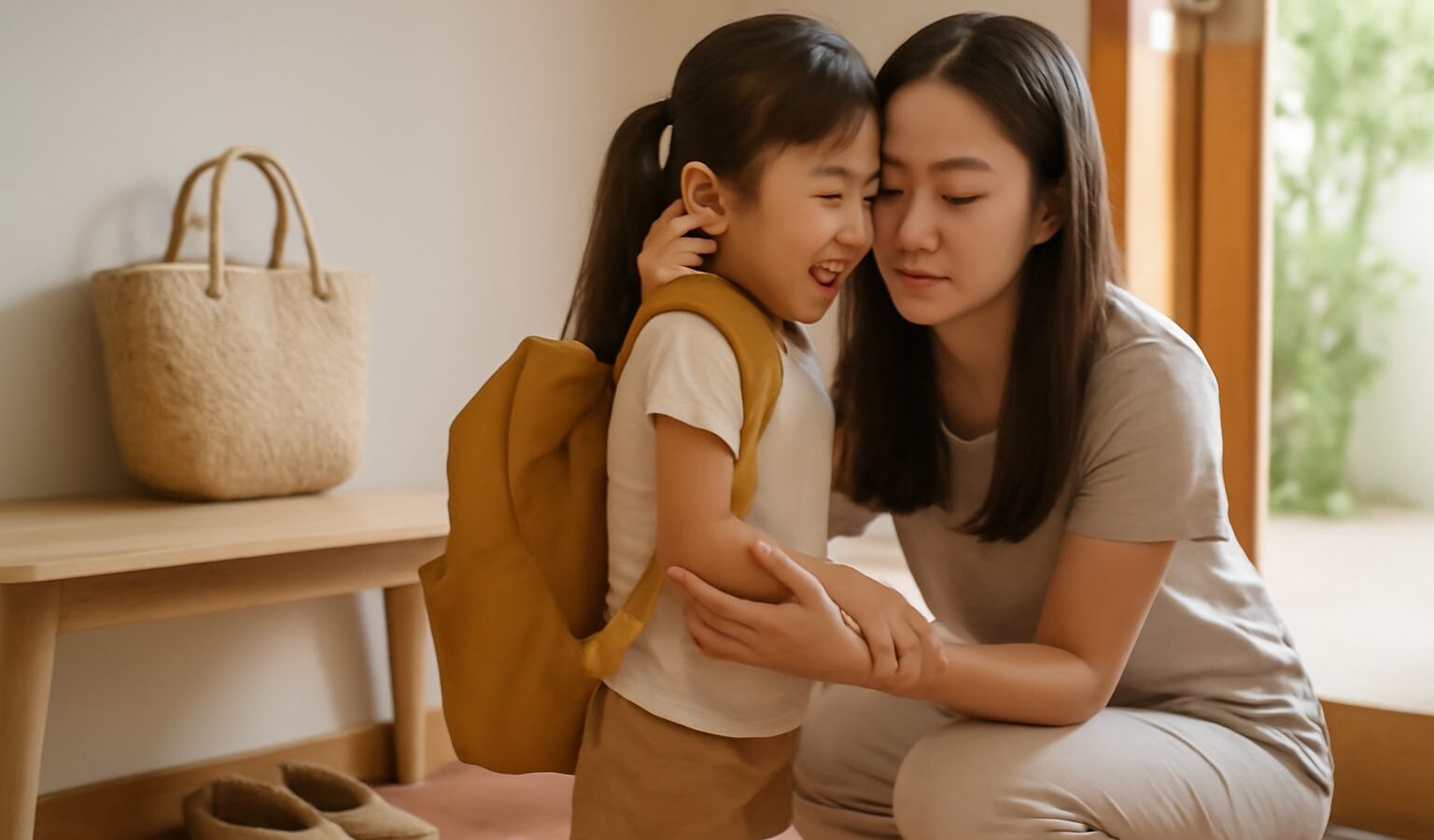
The clinging, the wobbling lip, the wail as you turn to leave: preschool drop off tears can make a parent’s heart sink, and can leave you feeling guilty for the rest of the morning. Take a breath. For most children, some crying at drop-off is a completely normal part of settling into a new place, and it usually fades as the days go by. This guide offers warm, practical ways for Singapore parents to make goodbyes calmer, for both of you. Every child is different, so lean on your preschool’s teachers, who see this every single day.
Why Drop-Off Tears Happen
Tears at the door are usually a sign of attachment, not a sign that anything is wrong. Young children feel safest with their familiar people, so being handed to a new adult in a new space triggers separation anxiety. This is a healthy developmental stage, and it shows your child trusts and loves you.
Drop-off can be harder on certain days: after a weekend or a holiday, when your child is tired or coming down with something, or when a home routine has changed. Newcomer families in Singapore may find the settling period longer if the language, food or environment feels unfamiliar. None of this means your child will not settle. Most do, often within minutes of you leaving, even when the goodbye looked dramatic.
It helps to remember that the tears you see at the gate are often the peak, not the whole morning. Teachers frequently report that a child who sobbed at drop-off was happily playing soon after.
Preparing The Night Before And The Morning Of
A calmer morning starts well before you reach the preschool gate. When the day is rushed, children pick up the stress, which makes separation harder. A little preparation smooths the whole handover.
- Lay out the uniform, bag and water bottle the night before to avoid a frantic scramble.
- Wake early enough that breakfast and dressing are unhurried.
- Talk positively about the day ahead: the friends, the toys, a favourite teacher.
- Read a simple picture book about starting school to name the feelings in advance.
- Let your child bring a small comfort item if the preschool allows it.
Keep your own tone light and confident. Children are expert readers of adult emotion, so if you sound anxious about drop-off, they sense that something must be worth worrying about.
A Goodbye Routine That Works
The single most effective tool is a short, predictable goodbye ritual. A drawn-out, hesitant farewell tends to fuel more tears, because it signals that leaving is a big, uncertain event. A brief, warm, consistent goodbye tells your child that this is normal and that you will be back.
Build a simple sequence and use the same one every day: a hug, a specific phrase such as “I’ll pick you up after snack time”, a wave at the window, then go. Hand your child to a teacher rather than peeling them off yourself, and trust the staff to take over. Resist the urge to sneak away without saying goodbye, which can leave a child more anxious the next day because they never know when you might vanish. Once you have said your goodbye, leave promptly and confidently, even if there are tears.
If you are worried about how your child settles after you go, ask the teacher to message you or tell you at pick-up. Many centres are happy to reassure a parent that their child calmed quickly.
Do This, Not That
When emotions run high, it is easy to slip into habits that unintentionally prolong the tears. The table below contrasts approaches that tend to help with ones that often make drop-off harder.
| Moment | Try this | Rather than |
|---|---|---|
| Saying goodbye | A short, cheerful ritual | A long, tearful farewell |
| Your own nerves | Calm, confident tone | Visible worry or hovering |
| Leaving | A clear goodbye, then go | Sneaking off unseen |
| If they cry | Reassure once, then trust staff | Coming back repeatedly |
| At pick-up | Warm, positive reunion | Grilling about every upset |
Helping The Settling Process Along
Settling in is a process measured in days and weeks, not a single perfect morning. Consistency is your friend: going every scheduled day, rather than keeping your child home after a teary drop-off, usually helps them adjust faster because the routine becomes familiar. Reunions matter too. A warm, unhurried pick-up, with real interest in their day, builds the sense that mornings apart always end with coming back together.
At home, play can ease the transition. Acting out drop-off with toys, or letting your child be the parent who says goodbye, helps them process big feelings in a safe way. Celebrate small wins, a braver goodbye, a new friend’s name, without piling on pressure.
Give it time. In Singapore’s preschools and childcare centres, staff are experienced at helping little ones settle, and the ECDA-regulated system is built around supporting this stage.
When To Check In With Someone
Some ongoing tears are normal, but trust your instincts if something feels off. It is worth a conversation with the teachers or a professional if:
- The distress is severe and shows no sign of easing after several weeks
- Your child seems withdrawn, unusually clingy or anxious at home too, not just at drop-off
- There are physical complaints, tummy aches or sleep changes, that persist
- You have any worry about how your child is treated or feels at the centre
Start with your child’s teachers or centre principal, who know your child in that setting. If concerns about anxiety or mood persist across situations, your doctor, polyclinic or a paediatrician can advise, and school counselling support may be available. Reaching out is a sign of good parenting, not failure.
Drop-off tears are one of those parenting moments that feel enormous in the moment and shrink in the rear-view mirror. Stay calm, keep the goodbye short and loving, and trust that most mornings will get easier.
Explore more
Building your child’s confidence at home makes the wider world feel safer, so see our guides on encouraging independent play in young children and learning through play at home. For another common early-years hurdle, our piece on winning the toothbrushing battle with toddlers offers the same calm, routine-based approach.