
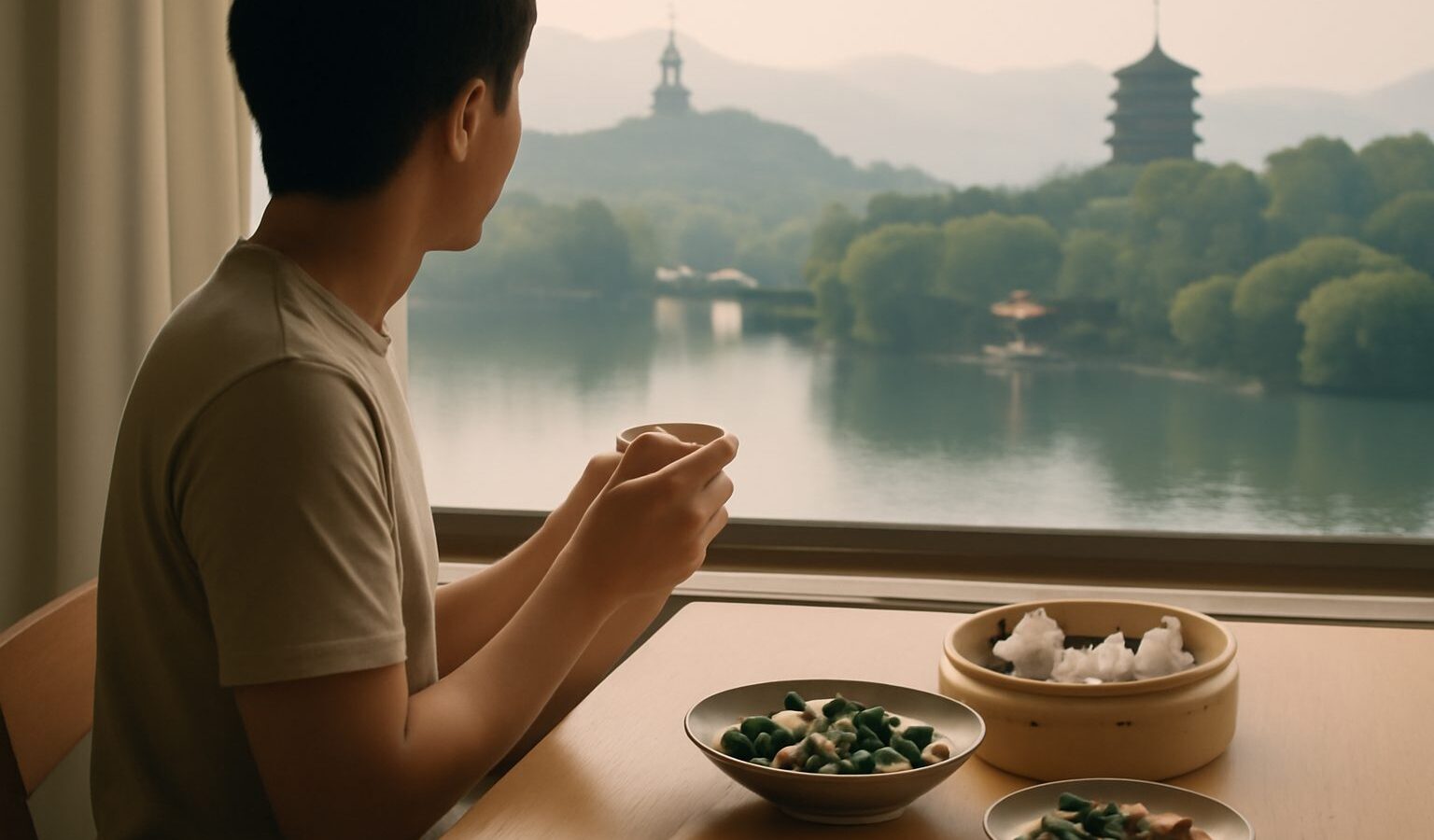
For centuries Chinese poets have called Hangzhou a paradise on earth, and its serene West Lake still lives up to the billing. Just a short train ride from Shanghai, this graceful city pairs willow-lined causeways, tea-covered hills and ancient temples with the polish of a modern tech hub. For Singaporeans who want a calmer, more romantic slice of China alongside good food and easy transport, planning a trip to Hangzhou from Singapore is a lovely idea. This guide covers getting there, when to go, what to see and how to eat well, including halal and vegetarian options.
Getting to Hangzhou From Singapore
Hangzhou sits in eastern China near the coast, and while it has its own international airport, connections from Singapore vary. Total travel time typically lands somewhere in the region of five to eight hours depending on the routing. Some seasons see direct flights between Changi and Hangzhou Xiaoshan International Airport, while other itineraries transit through a hub such as Shanghai, Guangzhou or Shenzhen. Direct services shift with demand, so compare current schedules and fares before you book.
One of the easiest approaches is to fly into nearby Shanghai, which has abundant connections from Singapore, then take China’s fast and comfortable high-speed rail on to Hangzhou in around an hour. This makes Hangzhou a natural add-on to a Shanghai trip. Whichever way you go, leave a sensible buffer for any transit stop, especially if you need to clear immigration and recheck bags.
On entry requirements, check the latest official guidance rather than relying on old advice. China has adjusted its rules for Singapore passport holders in recent years, so confirm your specific situation with the Chinese embassy or consulate and cross-check ICA before finalising dates.
Best Time to Visit
Hangzhou has a humid subtropical climate with four seasons, and the lake looks completely different through the year, so timing shapes the whole experience.
| Season | Months | What to expect |
|---|---|---|
| Spring | Mar to May | Mild, green and blossoming; tea harvest season and lovely lake walks |
| Summer | Jun to Aug | Hot, humid and busy, especially when lotus flowers bloom on the lake |
| Autumn | Sep to Nov | Cool, comfortable and often clear; a favourite time to visit |
| Winter | Dec to Feb | Cold and quiet, occasionally snowy, giving the lake a hushed beauty |
Spring and autumn are the standout windows, with mild weather ideal for strolling the causeways and cycling the shore. Spring also brings the fresh Longjing tea harvest in the surrounding hills. Summer is warm and humid in a way Singaporeans will recognise and coincides with the famous lotus blooms, but it draws big domestic crowds. Winter is quiet and can be genuinely cold, so pack warm layers.
Top Things to See and Do
West Lake is the undisputed star, and the best way to enjoy it is slowly. Walk or cycle the willow-shaded Bai and Su causeways, take a boat out to the little islands, and pause at classic scenic spots with poetic names that have drawn visitors for a thousand years. Sunrise and dusk are especially magical.
Beyond the lake, there is plenty to fill several days:
- Visit the tranquil Lingyin Temple, one of China’s most important Buddhist sites, set among wooded hills and carved grottoes.
- Explore the tea-growing village of Longjing, where terraced slopes produce the famous dragon-well green tea and teahouses invite you to sample it.
- Wander the restored Hefang Street in the old town for snacks, crafts and traditional medicine shops.
- Take a boat or stroll along the ancient Grand Canal, a UNESCO-listed waterway lined with old bridges and neighbourhoods.
- Consider the large, atmospheric evening light and water shows staged in the area for a memorable night out.
Where to Stay
Where you stay depends on the mood you want. The neighbourhoods around West Lake are the most scenic and popular, putting the water and its walking paths on your doorstep, ideal for couples and first-time visitors. The downtown and Wulin Square areas are more central for shopping, dining and metro connections, handy for a city-focused stay.
For a quieter, greener escape, some travellers choose stays in the hills near the tea villages. You will find everything from budget guesthouses to comfortable lakeview hotels, so pick by whether you prioritise scenery, convenience or price. Staying near a metro line makes reaching the station and airport connections much simpler.
Food and Dining
Hangzhou cuisine is known for being fresh, delicate and slightly sweet rather than fiery, making it approachable for many palates. Classic dishes include Longjing shrimp stir-fried with the local tea, West Lake vinegar fish, and Dongpo pork, a rich braised belly named after a famous poet. Being near the water and canals, the city also does lovely freshwater fish and seasonal vegetables.
Halal travellers should plan ahead, as dedicated halal, or qing zhen, restaurants are less widespread here than in northwestern China, though a big cosmopolitan city like Hangzhou does have options. Look for the qing zhen label or Muslim noodle houses, and verify ingredients directly with staff. Vegetarians are well served, partly thanks to the strong Buddhist tradition around temples like Lingyin, where you can find dedicated vegetarian restaurants doing creative meat-free dishes. As always, confirm that soups and sauces meet your requirements before ordering.
Getting Around
Hangzhou has a clean, expanding metro that links the main districts, the railway stations and airport connections, and it is an easy way to get around. Buses reach many lake-side and hill spots, and cycling is a genuine pleasure along the flat causeways, with shared bikes widely available. For the tea villages and outlying temples, a booked car or an organised tour can save time.
As across China, daily payment runs largely on mobile apps, so set that up before you arrive and keep some cash as backup. English is limited outside major hotels, so save destinations in Chinese on an offline map and lean on translation apps.
Practical Tips
- Currency: the renminbi (yuan). Arrange mobile payment where possible and carry some cash.
- Language: Mandarin with local dialect; English is limited, so translation and offline map apps are helpful.
- Connectivity: many familiar apps and sites are restricted in China, so research a reliable data or VPN option before flying.
- Budget: Hangzhou is generally mid-range for China, more affordable than Singapore, with free lake access but paid admission at some sites.
- Safety: Hangzhou is broadly considered safe for tourists; take normal precautions in crowds and check the latest MFA travel advisory before you go.
- Health: for any vaccinations or precautions, see a doctor or travel clinic before departure; this is general information, not medical advice.
Hangzhou offers one of China’s most soothing city breaks, easy to reach via Shanghai and easy to fall for. For Singaporeans wanting beauty, culture and calm in one trip, the West Lake makes a compelling case.
Explore more
Hangzhou pairs naturally with a bigger eastern China trip, so combine it with the capital via our Beijing from Singapore guide, or add history and food with Xian from Singapore. For a change of pace towards nature, see our Guilin from Singapore guide. Any of these complements a Hangzhou itinerary.