

As Chinese New Year approaches, dried goods shops and supermarket aisles fill with strings of glossy sausages and flattened, burnished ducks. For many families, a pot of rice fragrant with lap cheong waxed meat is one of the defining smells of the season. This guide explains what the different waxed meats are, how to choose good ones, how to stop them going mouldy in Singapore’s humidity and how to cook them simply at home.
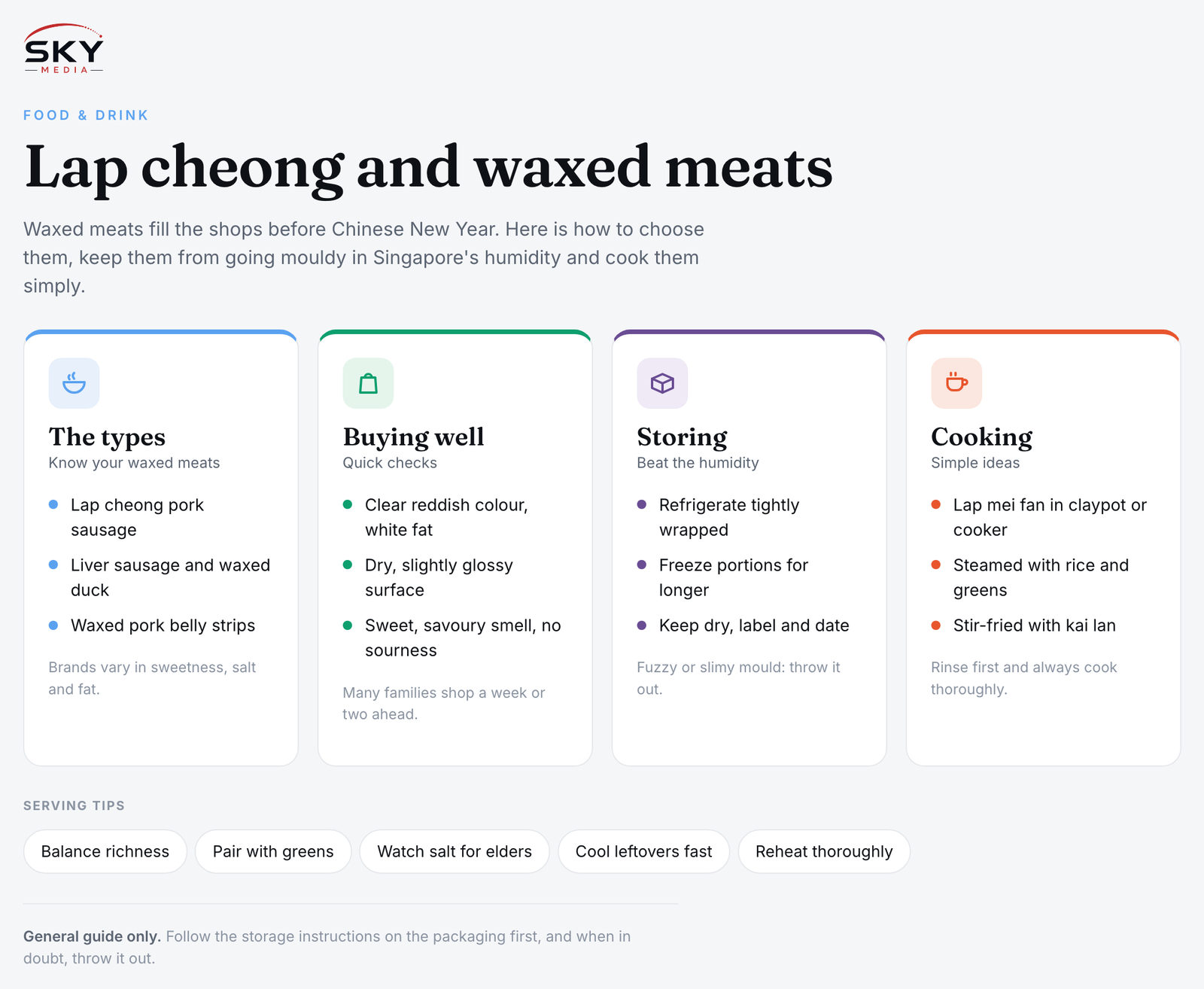
What Counts as Waxed Meat
“Waxed meat” (la wei, or lap mei in Cantonese) is a family of cured, air-dried meats traditionally made in the cold, dry winter months in southern China. The name refers to the twelfth lunar month, not actual wax, although the finished meats do have a shiny, waxy look. The common types you will see in Singapore:
- Lap cheong (pork sausage). The classic Chinese sausage: sweet, savoury and studded with fat, usually seasoned with sugar, soy sauce and rice wine.
- Liver sausage (yun cheong). Darker and richer, made with pork or duck liver. It has a deeper, slightly earthy flavour.
- Waxed duck (lap ngap). A whole or half duck, salted and pressed flat, then dried. Intensely savoury, with flavour that seeps into rice beautifully.
- Waxed pork belly (lap yuk). Strips of cured belly with layers of fat and lean, often flavoured with soy sauce and spices.
Different regions and brands vary in sweetness, saltiness and fat ratio, so it is worth trying a few to find what your household likes.
How to Choose Good Lap Cheong and Waxed Meats
Whether you buy from a dried goods shop, a wet market stall or a supermarket, these checks help:
- Look at the colour. Good sausages have a clear, natural reddish tone with visible white fat. Avoid pieces that look dull, overly dark or have grey patches.
- Check the surface. It should be dry and slightly glossy, not sticky, wet or slimy.
- Smell it. It should smell sweet, savoury and of wine or soy. Any sour, rancid or off smell is a warning sign.
- Feel the texture. Sausages should be firm but not rock hard. Very hard pieces may be over-dried.
- Read the label. For packaged products, check the ingredients, the best-before date and the storage instructions. Imported food sold in Singapore is regulated by the Singapore Food Agency (SFA).
- Consider the fat ratio. Leaner sausages are popular, but some fat gives flavour and keeps the meat moist when steamed.
Buy closer to when you plan to use it if you can. Prices rise and stock thins out in the final days before the festival, so many families shop a week or two ahead.
Storing Waxed Meats in Singapore’s Humidity
Waxed meats were designed for cold, dry winters. In Singapore’s heat and humidity, leaving them hanging in the kitchen is a common way to end up with mould. Follow the storage instructions on the packaging first, and use these general habits:
- Refrigerate after opening. Wrap sausages tightly in cling film or put them in an airtight container or zip bag.
- Freeze for longer storage. If you have bought more than you will use in the next few weeks, freeze portions. They keep their flavour well and you can slice them while partly frozen.
- Keep them dry. Moisture encourages mould. Pat dry before wrapping and avoid storing near wet produce.
- Label and date. It is easy to lose track of packets at the back of the freezer after the festive rush.
If you see white powdery spots on a sausage, it may be salt or fat bloom, which some people wipe off. Fuzzy, coloured or slimy mould is a different matter. When in doubt, throw it out. Food safety is not worth the risk, especially for children, older relatives or anyone pregnant.
Storage Options Compared
| Storage method | Suitable for | Things to watch |
|---|---|---|
| Room temperature in the kitchen | Only very short periods if the label allows | Heat and humidity encourage mould quickly |
| Refrigerator, tightly wrapped | Opened packs you will use within a few weeks | Keep dry and away from raw meat and wet produce |
| Freezer, portioned | Larger festive purchases or slow users | Thaw in the fridge, use promptly after thawing |
| Hanging to dry at home | Traditional cold climates, not Singapore homes | High risk of mould and pests here |
Preparing Waxed Meats Before Cooking
Most waxed meats benefit from a quick clean before use:
- Rinse in warm water. This removes surface dust and some excess salt.
- Soak waxed duck or pork belly briefly in warm water if you find them too salty. Taste a small cooked piece to judge for next time.
- Slice on the diagonal. Thin diagonal slices cook evenly and look attractive on rice.
- Cook thoroughly. Waxed meats are cured, but they should still be cooked before eating.
Easy Ways to Cook Lap Cheong and Waxed Meats
Claypot or rice cooker lap mei fan. The festive classic. Wash your rice and cook it as usual. When the water has mostly absorbed and small holes appear on the surface, lay slices of lap cheong, liver sausage and waxed duck on top. Cover and let the rice finish cooking so the fat and juices drip into the grains. Drizzle with a mix of light soy sauce, dark soy sauce, a little sugar and sesame oil, then garnish with spring onions. In a rice cooker, add the meats about halfway through. In a claypot, a few minutes of low heat at the end helps create a crispy crust at the bottom.
Simple steamed lap cheong. Steam whole sausages over boiling water until plump and glossy, then slice. Serve with plain rice and blanched greens for a quick weeknight meal.
Stir-fried with vegetables. Thinly sliced lap cheong works well with Chinese broccoli (kai lan), snow peas or leeks. Fry the sausage first to release its fat, then add the vegetables and a splash of water or Shaoxing wine.
In turnip cake and glutinous rice. Diced lap cheong is a classic ingredient in steamed radish cake (lo bak go) and in lo mai gai style glutinous rice. Dice it small and fry briefly before mixing in.
Waxed duck with steamed rice. Steam pieces of rinsed waxed duck on top of a plate of rice or over taro slices. The rich, salty flavour goes a long way, so a small amount feeds several people.
Tips for Serving at CNY Gatherings
- Balance the richness. Waxed meats are salty and fatty, so pair them with plain greens, soup or pickles.
- Watch salt for older relatives. If anyone is managing blood pressure, keep portions modest and offer lighter dishes alongside, and follow their doctor’s advice.
- Cook ahead carefully. Cooked rice and meats should be cooled quickly and refrigerated, then reheated thoroughly.
If you enjoy the cured and roasted side of Cantonese cooking, our guide to char siew and roast meats and the round-up of roast meats in Singapore are good next reads. For general technique, see how to braise meat until it is tender.
A few well-chosen, well-stored pieces of lap cheong and waxed duck can carry a whole festive meal. Buy with care, keep them cold and dry, and let the rice do the rest.
Further reading: How to Soak and Cook Dried Abalone and Sea Cucumber at Home · How to Buy and Prepare Bird’s Nest in Singapore · Asking for Chinese-Style Meat and Fish Cuts in Singapore · Home Charcuterie and Curing