
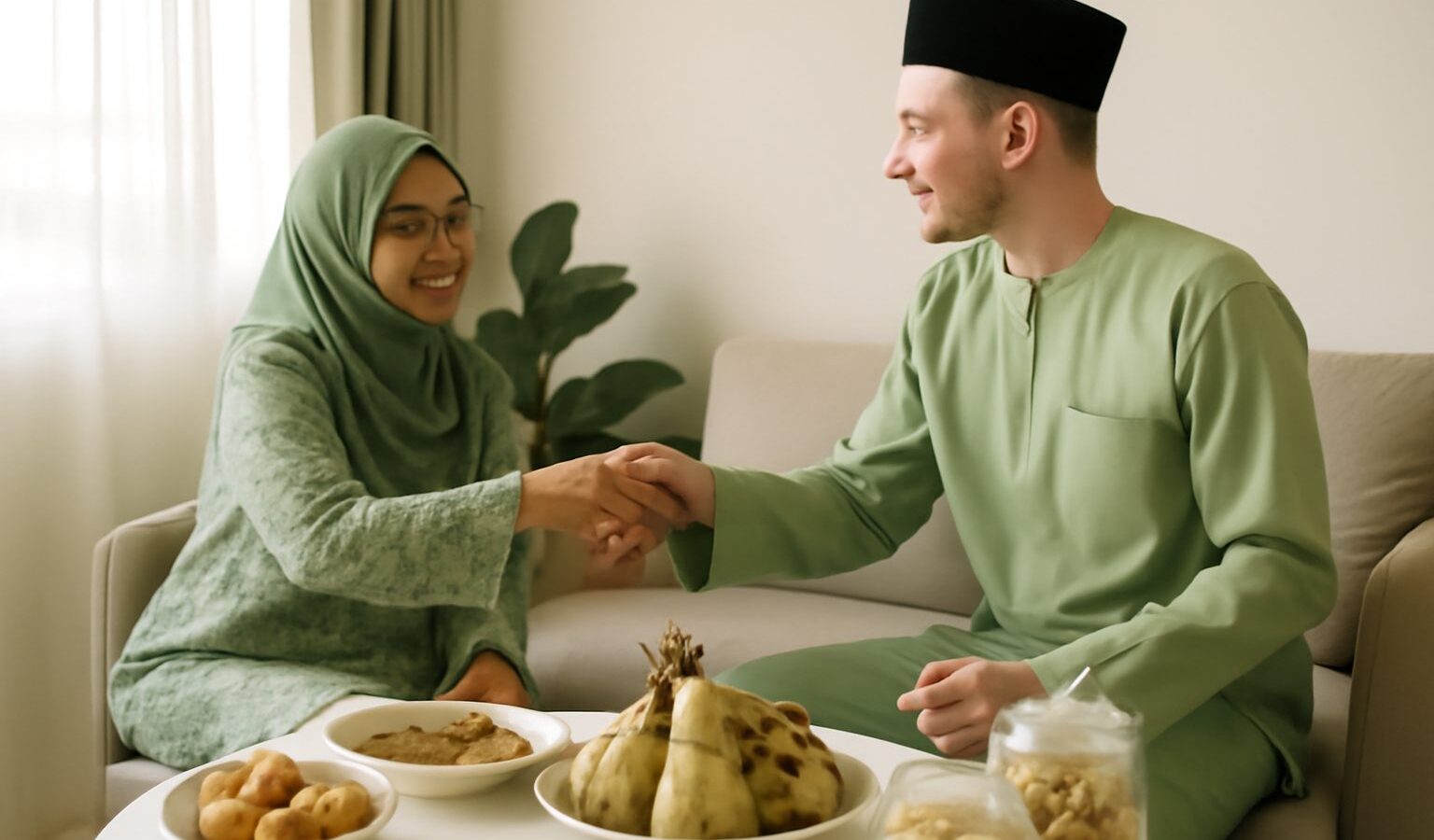
If a Malay colleague, classmate or neighbour has invited you to their Hari Raya open house, congratulations. It is a sign of friendship, and one of the warmest experiences of living in Singapore. If you have recently moved here, perhaps from mainland China, you may also feel a little nervous. What happens inside? What if you do something wrong?
This guide to Hari Raya open house etiquette explains what to expect, step by step, with comparisons to customs you may already know. The good news: hosts are generally relaxed and generous with guests, and a respectful attitude covers almost everything.
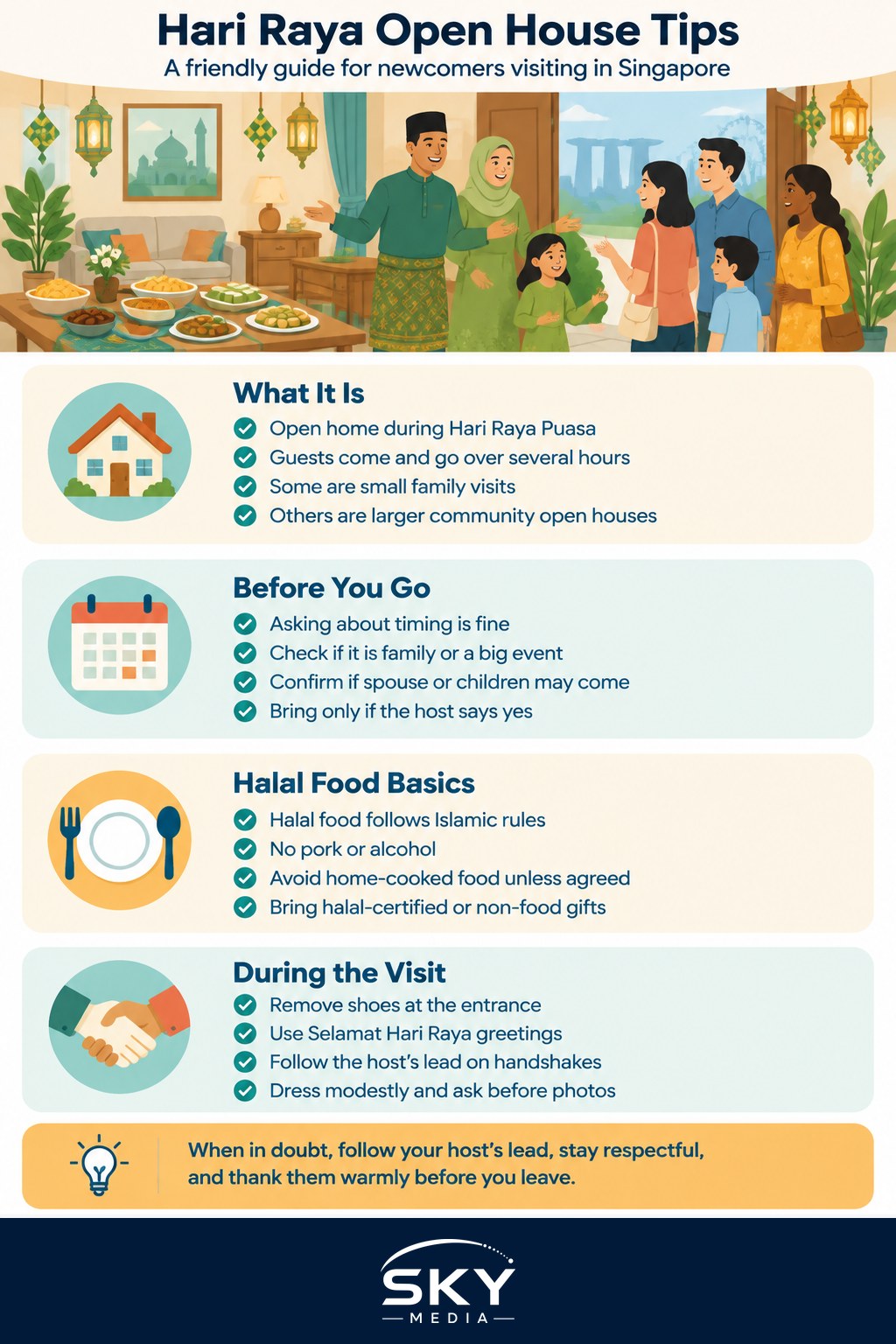
What a Hari Raya Open House Actually Is
Hari Raya Puasa celebrates the end of Ramadan, a month in which many Muslims fast from dawn to sunset. The festival is about gratitude, forgiveness and visiting family and friends.
An open house is exactly what it sounds like. The host family opens its home, often over several hours, and guests come and go. You may hear the term “rumah terbuka”, Malay for open house. Some families hold them on the first days of the festival; others on a weekend later in Syawal, the month after Ramadan. Workplaces, community clubs and religious organisations sometimes hold larger open houses too.
If you are from China, a helpful comparison is Chinese New Year visiting (拜年). Both festivals involve going from home to home, greeting elders, eating festive food and giving small money packets to children. The main differences come from religious practice, especially around food, dress and physical contact.
Before You Go: Questions Worth Asking
It is perfectly fine to ask your host a few simple questions in advance. Most will be glad you asked.
- What time should I come? Open houses often run as a window of time. Arriving any time within it is normal.
- Is it a family gathering or a big open house? A small family visit is more intimate; a large open house is more casual.
- Can I bring my spouse or children? Usually yes, but confirm the number.
- Is there anything you would like me to bring? Most will say no, which is a polite and genuine answer.
If you want a small gift, choose shop-bought cookies, cakes or dates with halal certification from MUIS (the Islamic Religious Council of Singapore), or a non-food item. Never bring alcohol or anything containing pork.
Understanding Halal and Why It Matters
For newcomers, halal is the most important concept to understand. Halal means permissible under Islamic law. For food, it rules out pork and alcohol, and also covers how meat is prepared and how kitchens are kept.
This is why:
- You should not bring home-cooked food unless your host has agreed to it. Utensils and pots that have touched pork can make food unacceptable, even if the dish itself has none.
- All food served at the open house will be halal. You can eat everything freely.
- Some guests ask whether they can bring a famous dish from their hometown. Unless it comes from a halal-certified source, it is kinder to bring something else.
Think of it less as a restriction and more as respect for what your host can share with their own family.
What to Do at Each Stage of the Visit
| Situation | What usually happens | What you can do |
|---|---|---|
| Arriving at the door | Shoes are left outside or at the entrance | Remove shoes; wear clean socks or go barefoot |
| Greeting the family | “Selamat Hari Raya” and the salam, a light hand clasp then hand to chest | Say the greeting, follow your host’s lead on handshakes |
| Being offered food | A buffet or table of festive dishes and drinks | Take a reasonable portion and try a little of several dishes |
| Prayer time arrives | Some family members step away to pray | Continue quietly; no need to stop eating or leave |
| Leaving | Hosts thank you for coming | Thank them, greet elders again and say goodbye |
Greetings, Handshakes and Body Language
The greeting. “Selamat Hari Raya” means Happy Hari Raya. Hosts may add “maaf zahir dan batin”, asking forgiveness for any wrongs. You can reply with the same words. Do not worry about pronunciation; the effort is what people appreciate.
Handshakes. Some Muslim men and women prefer not to shake hands with someone of the opposite sex who is not a close relative. This is about religious practice, not unfriendliness. A simple approach:
- Wait to see if a hand is offered.
- If the person places a hand on their chest, smile, nod and do the same.
- Handshakes between people of the same sex are usually fine.
Respect for elders. Greet the oldest family members first if you can. You may see younger relatives kiss an elder’s hand, a gesture of respect that guests are not expected to copy.
Right hand. Use your right hand to give, receive and eat. This is a small but noticed courtesy.
Food, Eating and Table Manners
Typical dishes include ketupat (rice cakes in woven palm leaves), rendang (slow-cooked spiced meat), lontong (rice cakes in a vegetable coconut gravy), sambal goreng and many cookies. For a fuller introduction, see our Hari Raya food guide.
- Some families eat with their right hand, but cutlery is usually available. Use whichever you are comfortable with.
- Try a little of different dishes. Asking “what is this?” is a friendly conversation starter.
- If something is too spicy, it is fine to leave it. Simply say you are full.
- Do not pressure anyone to share a drink with you or ask why they do not drink alcohol.
Unlike some Chinese banquets, there is usually no formal toasting or seat order. You serve yourself, sit where there is space and chat.
Dress, Photos and Conversation
Dress modestly. Cover shoulders and knees. Bright, cheerful colours suit the festive mood. Avoid very short skirts, sleeveless tops and anything see-through.
Photos. Families love group photos at Hari Raya, and you may be invited to join. Ask before taking pictures of others, and check before posting them on WeChat, Xiaohongshu or other social media.
Conversation. Safe topics include food, family, work and how you are finding Singapore. Avoid debating religion or politics. Asking respectful questions about the festival, such as “how was Ramadan for you?”, is usually welcomed.
Children. Kids are often given green duit raya packets. Your children may receive some too. A simple “thank you” is enough. You are not expected to give packets in return, though a small one for the host’s children is a kind gesture.
Settling In and Making Connections
Attending an open house is one of the best ways to understand Singapore’s multicultural daily life. If you enjoyed it, our newcomer’s guide to Deepavali and Hari Raya explains more about both festivals, and our guide to Deepavali open house etiquette will help when an Indian friend invites you later in the year.
Remember the core of good Hari Raya open house etiquette: arrive with a smile, respect halal and modesty, follow your host’s lead, and say thank you. Most hosts will remember that you came, not whether you got every detail right.
Further reading: Ordering Halal Catering for a Hari Raya Open House · Visiting Family Graves on Hari Raya: Ziarah Kubur Etiquette in Singapore