
Sometimes a family finds itself between homes. A new flat is still being built, a flat has been sold to clear debts, a marriage has ended, or a sudden loss of income means the current home is no longer affordable. HDB interim rental housing exists for these in-between moments. It is a temporary place to stay while a household gets back on its feet or waits for a permanent home.
This guide explains what the scheme is, who it is generally meant for, how it differs from the long-term Public Rental Scheme, what to expect when living there, and how families typically move on. It is general information only. Eligibility rules, rents and procedures are set by the Housing & Development Board (HDB) and can change, so check the latest details on the HDB website or with HDB directly.
What Interim Rental Housing Is
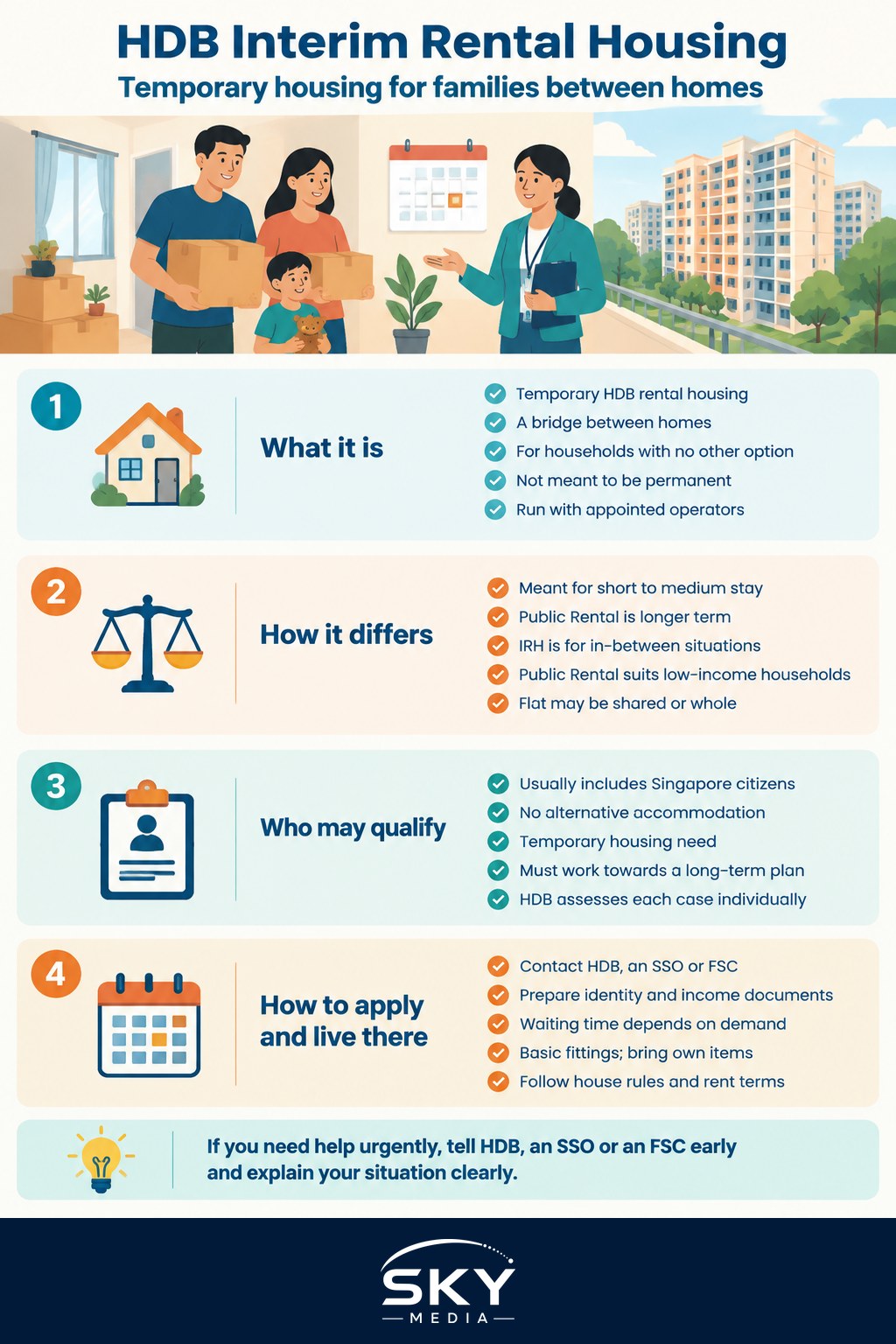
Interim Rental Housing (often shortened to IRH) is a temporary rental scheme run under HDB. It provides basic housing for households who have no other housing option for a period of time, typically while they:
- Wait for a new HDB flat they have already booked to be completed
- Rebuild their finances so they can buy or rent a home again
- Deal with a family situation, such as a divorce or family conflict, that leaves them without a place to stay
The emphasis is on interim. The scheme is designed as a bridge, not a permanent home. Households are expected to work towards a long-term housing plan while they live there.
IRH flats are typically managed on HDB’s behalf by appointed operators, who handle day-to-day matters such as tenancy, maintenance and house rules. Some households may be placed in a flat they share with another family, while others may have a whole flat; this depends on the household’s situation and what is available.
How It Differs From the HDB Public Rental Scheme
The two schemes are often confused, but they serve different needs. If your household’s need is long-term and low-income, see our guide to the HDB Public Rental Scheme.
| Feature | Interim Rental Housing | Public Rental Scheme |
|---|---|---|
| Purpose | Temporary bridge between homes | Longer-term housing for low-income households with no other options |
| Typical situation | Waiting for a new flat, recovering from a financial setback or family crisis | Persistent low income and no family support for housing |
| Length of stay | Short to medium term, with tenancy reviewed periodically | Tenancy renewed over longer periods if still eligible |
| Expectation | Work towards owning or renting a permanent home | Stable housing, with support to move to ownership if circumstances improve |
| Shared or whole flat | May be shared with another household | Usually a whole rental flat |
In practice, the boundary is not always clean. Some households start in interim housing and later move to public rental, or vice versa, depending on their circumstances. HDB assesses each case.
Who Generally Qualifies
HDB sets the detailed criteria, and these can change, so treat this as a broad overview. Households typically considered for interim rental housing are those who:
- Include Singapore citizens (HDB sets the citizenship and household composition rules, so check what applies to your family)
- Have no alternative accommodation, for example no property and no family member able to house them
- Are in a temporary situation, such as waiting for a booked flat or recovering financially after selling a home
- Are willing to work with HDB and social service agencies on a plan towards permanent housing
Factors that can affect eligibility include property ownership (current or recent), household income, whether there are family members who could reasonably provide housing, and the household’s history with HDB. Because each case is assessed individually, do not assume you will or will not qualify. Ask.
How to Apply
The usual starting points are:
- Contact HDB. Visit or call your nearest HDB Branch, or check the HDB website for the current application channel. Explain your situation honestly, including when and why you need housing.
- Approach a Social Service Office (SSO). SSOs, under the Ministry of Social and Family Development (MSF), help families in financial or housing difficulty. They can assess your needs, link you to other help and support your case with HDB.
- Contact a Family Service Centre (FSC). If your housing need comes from family conflict or a crisis, an FSC social worker can help you work out options and may support a referral.
- Prepare documents. You will likely be asked for identity documents, income information, details of any property you own or recently sold, and documents about your current situation. HDB or the SSO will tell you exactly what they need.
Waiting times for interim flats vary with demand and location, and you may not get your preferred area. If you face immediate homelessness, tell the officer clearly so they can consider urgent options, such as shelters or other temporary arrangements.
What Living in an Interim Rental Flat Is Like
Expectations help. Interim flats are basic, functional homes meant for temporary stays.
- Furnishing and fittings: Flats usually come with basic fittings. You may need to bring your own furniture and appliances. Ask the operator what is provided.
- Sharing: If you are placed in a shared flat, you will share common areas such as the kitchen and bathroom with another household. House rules on cleanliness, noise and visitors matter more in shared living.
- Rent and utilities: Rent is set by HDB and depends on the scheme’s rules and your circumstances. Utilities are usually paid separately. Check the latest rent details with HDB or the operator; do not rely on figures quoted by others.
- Tenancy terms: Tenancies are for fixed periods and are reviewed. Keeping up with rent, following house rules and making progress on your housing plan all affect renewal.
- Support: Many families in interim housing also receive help from SSOs, FSCs or community organisations on jobs, finances, schooling and caregiving.
Moving On to a Permanent Home
Because the scheme is temporary, it helps to plan your exit from day one:
- Know your target. Are you waiting for a BTO flat, planning to buy a resale flat, or hoping to rent on the open market? Each route has different timelines.
- Check housing grants. If you are eligible to buy, grants may help lower the cost. See HDB Housing Grants Explained for an overview, and confirm your eligibility with HDB.
- Rebuild savings and CPF. Even small, regular savings help when the time comes to pay downpayments, stamp duties or deposits.
- Stay in touch with your caseworker. If you have an SSO or FSC caseworker, keep them updated. They can flag schemes and support you may not know about.
- Understand the BTO process. If you are applying for a new flat, learn how the queue works in How HDB BTO Balloting and Queue Numbers Work.
Common Questions
Can I choose where I stay? You can state preferences, but placement depends on availability. Being flexible may shorten the wait.
Can non-citizens apply? HDB sets the citizenship rules for the scheme. Check with HDB on how they apply to mixed-nationality households.
What if my situation changes? Tell HDB or the operator. A change in income, family composition or flat completion date can affect your tenancy.
How is interim rental housing different from living in a shelter? Interim rental housing is a temporary HDB rental scheme providing basic housing, with a tenancy that is reviewed periodically. If you face immediate homelessness, tell the officer clearly so they can consider urgent options such as shelters or other temporary arrangements while housing is arranged.
Will I have to share a flat with another family? Possibly. Some households are placed in a shared flat, using common areas such as the kitchen and bathroom with another household, while others may have a whole flat. It depends on your situation and what is available, so ask the operator about house rules.
Do I need to bring my own furniture to an interim rental flat? You may need to. Flats usually come with basic fittings only, so ask the operator exactly what is provided before you move in. Rent is set by HDB and utilities are usually paid separately, so confirm the latest details with HDB or the operator.
How long can a household stay in interim rental housing? It is meant for short to medium term, with tenancies for fixed periods that are reviewed. Paying rent, following house rules and making progress on your housing plan all affect renewal, so plan your exit from the start.
How can a Social Service Office or Family Service Centre help with my application? An SSO under MSF can assess your needs, link you to other help and support your case with HDB. An FSC social worker can help you work out options if your housing need comes from family conflict or a crisis, and may support a referral.
Asking for housing help can feel difficult, but interim rental housing exists precisely for families going through a hard patch. Reach out early, be open about your situation and use the support available.
Official sources: HDB
Further reading: Co-Living and Shared Housing in Singapore Explained